
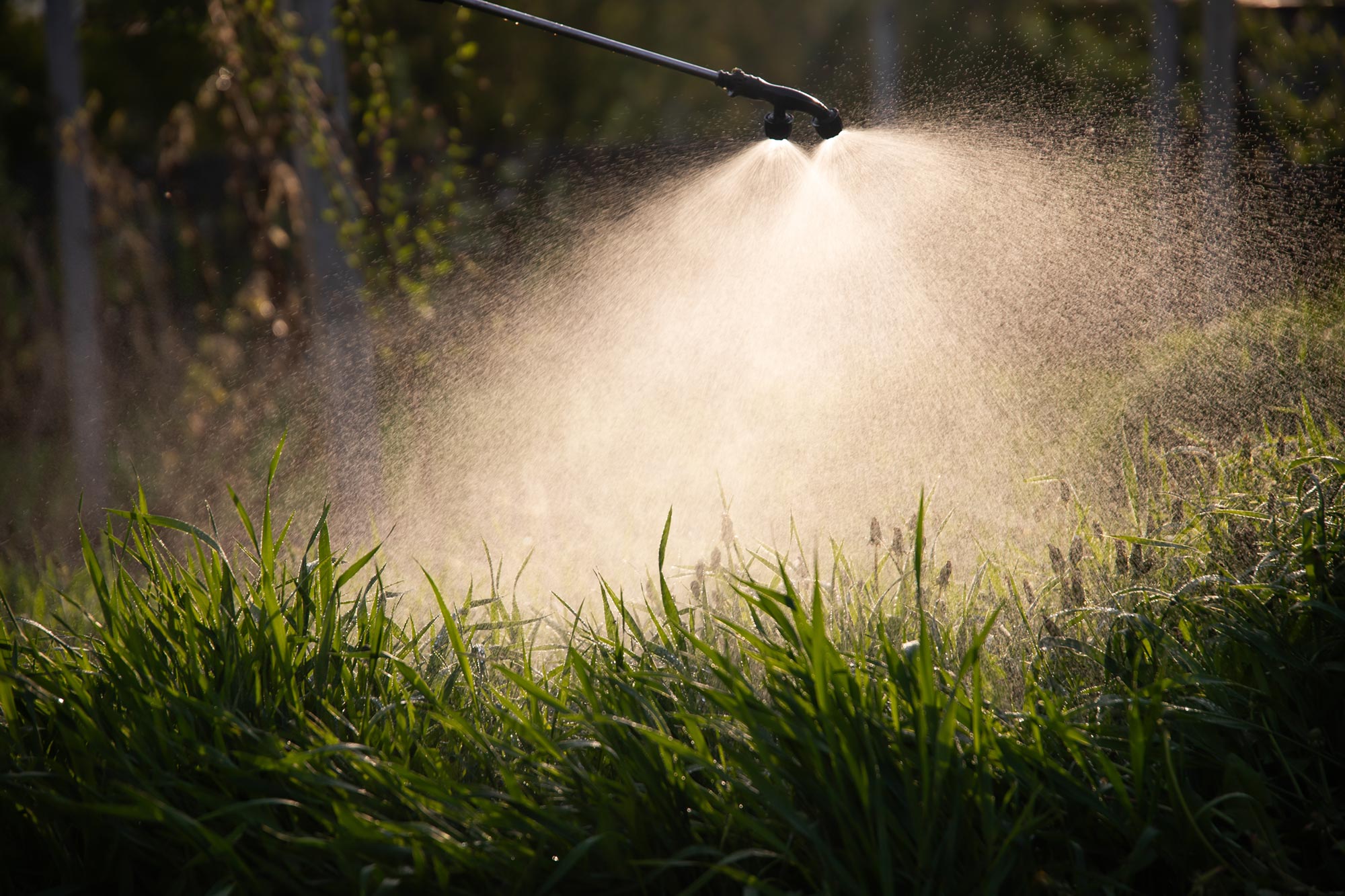
New research suggests a widely used herbicide may have subtle but significant effects on honeybees.
Growing flowering plants for pollinator gardens, farms, and home landscapes often requires herbicides to control weeds. Honeybees are naturally drawn to these areas and are essential for pollination. But researchers wanted to know what happens when bees are exposed to weedkillers while foraging.
A Virginia Tech study found that glyphosate, one of the world’s most widely used weedkillers, can interfere with honeybee foraging behavior and may threaten hive stability over time. The research was supported by the National Institute of Food and Agriculture and a graduate student grant from Virginia Tech’s Department of Entomology.
The findings were published in the Journal of Experimental Biology and led by Associate Professor Margaret Couvillon and Ph.D. student Laura McHenry from the College of Agriculture and Life Sciences’ Department of Entomology.
Why Glyphosate Was Considered Safe for Bees
Glyphosate is the active ingredient in many agricultural herbicides and is commonly encountered by bees searching for food. The chemical works by blocking an enzyme plants need for photosynthesis. Since honeybees do not have this enzyme, glyphosate was long considered harmless to them.
“We were interested in investigating the impact of glyphosate, the most widely used pesticide in the world, on the behavior and brains of honeybees, important pollinators that might encounter the weedkiller as they forage in the landscape,” said Couvillon.
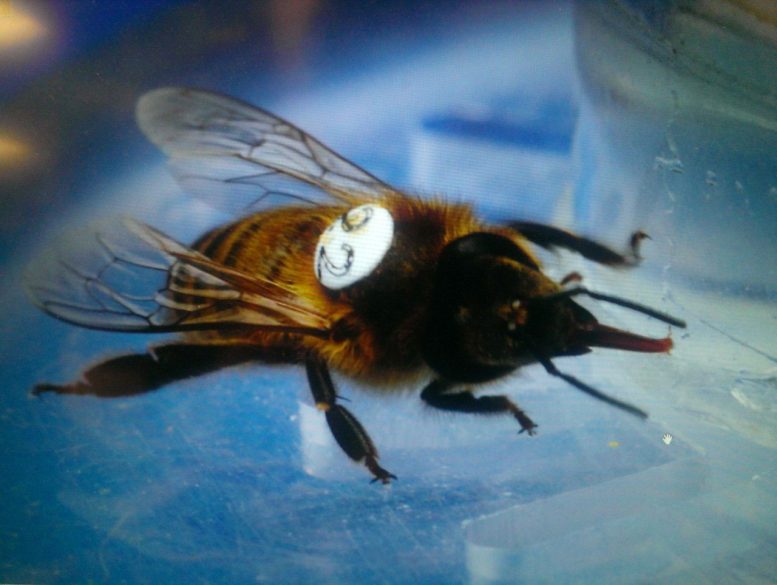
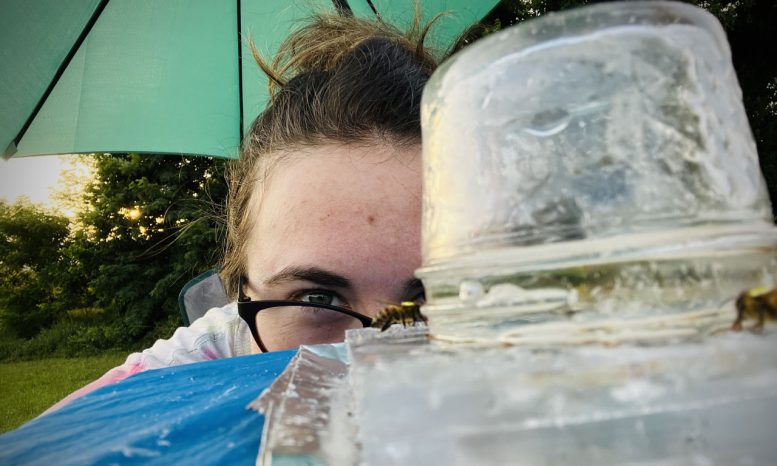
Bees drink from feeder containing a sugar solution used to test the impact of glyphosate on bees. Credit: Video by Margaret Couvillon for Virginia Tech
Although glyphosate does not usually kill honeybees outright, researchers suspected it could still produce subtle, harmful effects. They compared these effects to the drowsiness some people experience when taking over-the-counter antihistamines for allergies.
Study Finds 13 Percent Drop in Bee Foraging
To examine the effects, researchers created two artificial feeding stations, one containing glyphosate and one without it. Honeybees were trained to visit the feeders, and scientists tracked their behavior over several days. After only three days, bees exposed to glyphosate showed a 13 percent decline in foraging activity along with changes in brain chemistry.
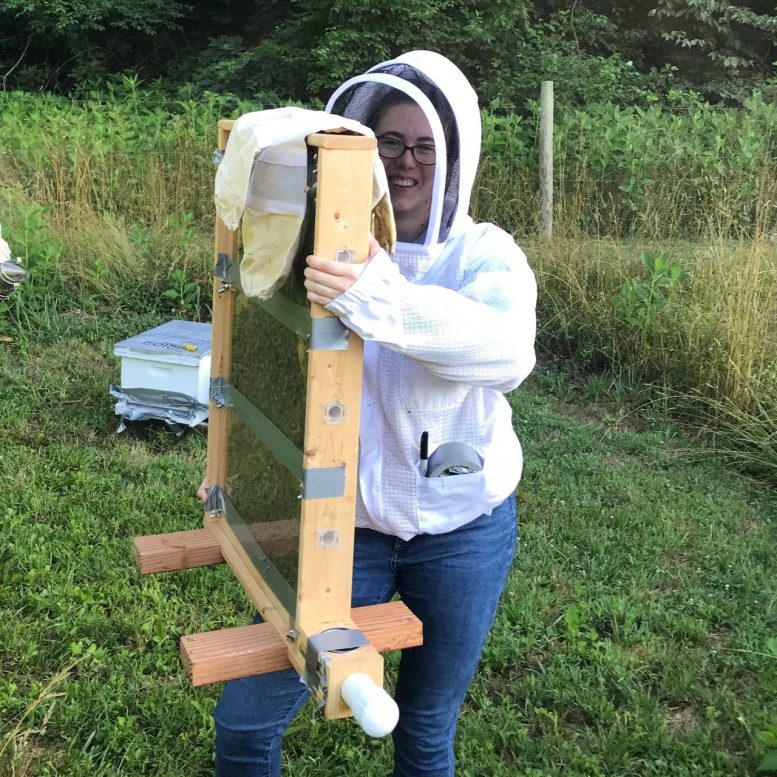
“For a colony, a 13 percent reduction in foraging can be consequential,” Couvillon said. “If the entire colony was exposed, this could lead to decreased pollination effectiveness and reduced honey production, risking colony survival and long-term stability.”
The research team also analyzed changes in amino acids and neurotransmitters in the bees’ brains. The results showed clear links between glyphosate exposure, altered brain chemistry, and reduced foraging performance.
Calls for Stronger Pollinator Protection Strategies
The findings raise concerns about how common weedkillers may affect beneficial insects and highlight the need for stronger protections for pollinators. According to the researchers, future efforts should focus on smarter regulation, better application strategies, and additional study of these chemicals.
“Understanding how weedkillers affect beneficial insects like pollinators will help us make more strategic regulatory choices about when and where to use them for maximum benefit and minimum harm,” said McHenry, now a postdoctoral researcher at Penn State, who conducted the study while a Ph.D. student at Virginia Tech.
The researchers say more work is needed to understand how glyphosate-based herbicides interact with bee biology. Because honeybees are among the world’s most important pollinators and glyphosate is one of the most heavily used herbicides, the broader impact on bee populations could be more significant than previously thought.
Reference: “Sublethal glyphosate exposure reduces honey bee foraging and alters the balance of biogenic amines in the brain” by Laura C. McHenry, Roger Schürch, McAlister Council-Troche, Aaron D. Gross, Lindsay E. Johnson, Bradley D. Ohlinger and Margaret J. Couvillon, 06 May 2025, Journal of Experimental Biology.
DOI:10.1242/jeb.250124
Never miss a breakthrough: Join the SciTechDaily newsletter.
Follow us on Google and Google News.
4 Comments
Thankyou for your research and for these important findings. I wonder if your research could be expanded to include Wasps and other pollinators.
This is so.true, 2 times i have used this weed killer and both times in separate times have found my beehives dead….within months of spraying.
This is why the EU bans it in 2033 and it’s severely restricted now
Managing both algae and aquatic weeds is critical for maintaining healthy lakes. Alpha Environmental Solutions provides integrated management programs that address multiple water quality challenges simultaneously.