
Close Menu
    Facebook X (Twitter) Instagram
    SciTechDaily
    • Biology
    • Chemistry
    • Earth
    • Health
    • Physics
    • Science
    • Space
    • Technology
    Facebook X (Twitter) Pinterest YouTube RSS
    SciTechDaily
    Home»Biology»Common Pesticides Are Severely Affecting Bees
    Biology

    Common Pesticides Are Severely Affecting Bees

    By SciTechDailyOctober 23, 2012No Comments2 Mins Read
    Facebook Twitter Pinterest Telegram LinkedIn WhatsApp Email Reddit
    Share
    Facebook Twitter LinkedIn Pinterest Telegram Email Reddit
    bumblebee-flower
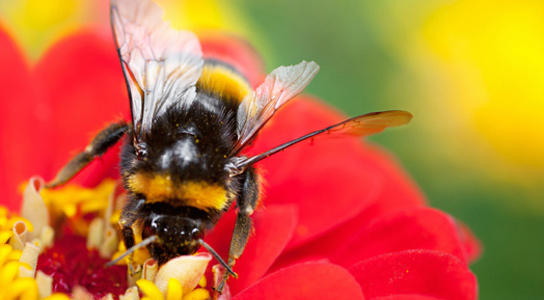
    Studies revealed severe impacts on bee colonies when exposed to neonicotinoid pesticides, commonly used on crops.

    Bees are the world’s most important pollinators, and without them, the planet would quickly go hungry. All over the world, their populations are quickly decreasing, and scientists are trying to find out why. With the widely reported Colony Collapse Disorder, which was due to a disease, finally ebbing down, new research indicates that pesticides are also to blame.

    The scientists published their findings in the journals Science and Nature. The two studies in Science, which were published earlier this year, showed that colonies were severely affected when bees were exposed to neonicotinoid pesticides, commonly sprayed on crops. In one study, exposure led to a significant loss of queens in colonies of bumblebees (Bombus terrestris). In the other study, only honeybees (Apis mellifera) were affected.
    bumblebee-close-up-flower

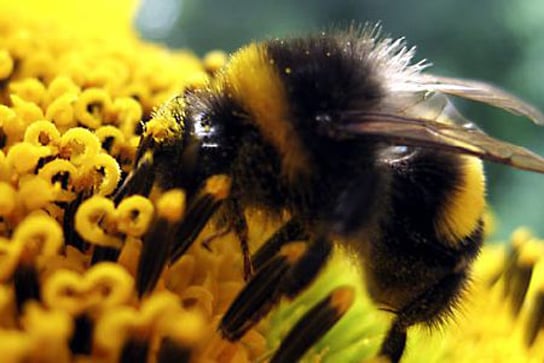
    In a new study in Nature, researchers at Royal Holloway, University of London, in Egham, UK, show that low-level exposure to a combination of two pesticides is more harmful to bumblebee colonies than either pesticide alone. This suggests that current methods for regulating pesticides are inadequate because they only consider lethal doses of single pesticides. Low doses of pesticides have subtle yet significant effects on individual bees, and can thus seriously impact colonies.

    References:

    “Neonicotinoid Pesticide Reduces Bumble Bee Colony Growth and Queen Production” by Penelope R. Whitehorn, Stephanie O’Connor, Felix L. Wackers and Dave Goulson, 29 March 2012, Science.
    DOI: 10.1126/science.1215025

    “A Common Pesticide Decreases Foraging Success and Survival in Honey Bees” by
    Mickaël Henry, Maxime Béguin, Fabrice Requier, Orianne Rollin, Jean-François Odoux, Pierrick Aupinel, Jean Aptel, Sylvie Tchamitchian and Axel Decourtye, 29 March 2012, Science.
    DOI: 10.1126/science.1215039

    “Combined pesticide exposure severely affects individual- and colony-level traits in bees” by Richard J. Gill, Oscar Ramos-Rodriguez and Nigel E. Raine, 21 October 2012, Nature.
    DOI: 10.1038/nature11585

    Never miss a breakthrough: Join the SciTechDaily newsletter.
    Follow us on Google and Google News.

    Bees Ccd Colony Collapse Disorder Entomology Environment Pesticides
    Share. Facebook Twitter Pinterest LinkedIn Email Reddit

    Related Articles

    Invasion Alert: How One Asian Hornet Sparked a European Takeover

    Common Pesticides Stop Bees and Flies From Getting a Good Night’s Sleep and Disrupts Their Memories

    “Honey Bee, It’s Me” – Gut Bacteria Is Key to Bee ID

    Baby Bee Brain Development Impaired by Pesticides – “Permanent and Irreversible”

    Surprisingly, Plants Are Better Pollinated in Cities Than in the Countryside

    Honeybees Switch Roles within the Hive

    Imidacloprid, A Major Factor in Colony Collapse Disorder

    Entomologists Recreate Colony Collapse Disorder That Affects Bee Populations Worldwide

    Parasitic Fly Could Be Responsible For Disappearing Honeybees

    Leave A Reply Cancel Reply

    • Facebook
    • Twitter
    • Pinterest
    • YouTube

    Don't Miss a Discovery

    Subscribe for the Latest in Science & Tech!

    Trending News

    Bone-Strengthening Discovery Could Reverse Osteoporosis

    Scientists Uncover Hidden Trigger Behind Stem Cell Aging

    Scientists Find Way to Reverse Fatty Liver Disease Without Changing Diet

    Could Humans Regrow Limbs? New Study Reveals Promising Genetic Pathway

    Scientists Reveal Eating Fruits and Vegetables May Increase Your Risk of Lung Cancer

    Scientists Reverse Brain Aging With Simple Nasal Spray

    Scientists Uncover Potential Brain Risks of Popular Fish Oil Supplements

    Scientists Discover a Surprising Way To Make Bread Healthier and More Nutritious

    Follow SciTechDaily
    • Facebook
    • Twitter
    • YouTube
    • Pinterest
    • Newsletter
    • RSS
    SciTech News
    • Biology News
    • Chemistry News
    • Earth News
    • Health News
    • Physics News
    • Science News
    • Space News
    • Technology News
    Recent Posts
    • Europe’s Most Active Volcano Just Got Stranger – Here’s Why Scientists Are Rethinking It
    • Why Are Giant Ants Letting Tiny Ants Crawl All Over Them?
    • Revolutionary Technique Sends Healthy Mitochondria Exactly Where They’re Needed
    • This Student Recreated the Universe in a Bottle. What She Discovered Could Help Reveal How Life Started on Earth
    • Alzheimer’s Symptoms May Start Outside the Brain, Study Finds
    Copyright © 1998 - 2026 SciTechDaily. All Rights Reserved.
    • Science News
    • About
    • Contact
    • Editorial Board
    • Privacy Policy
    • Terms of Use

    Type above and press Enter to search. Press Esc to cancel.