
Ancient ocean grains show Earth’s carbon levels were far lower than expected during key evolutionary eras. The results challenge old theories of life’s rise and hint at patterns that could shape our future.
- ETH scientists have overturned the long-standing idea that massive reserves of dissolved organic carbon in the ocean helped trigger ice ages and the rise of complex life between 1,000 and 541 million years ago.
- Using a groundbreaking technique that analyzes tiny iron oxide grains, the team was able, for the first time, to directly measure the amount of dissolved organic carbon the oceans held during that period.
- Their results reveal that ancient oceans contained 90 to 99 percent less dissolved organic carbon than they do today.
- This discovery means that scientists must now seek new explanations for the connection between Earth’s changing environment and the evolution of life.
Unearthing Ancient Carbon Clues
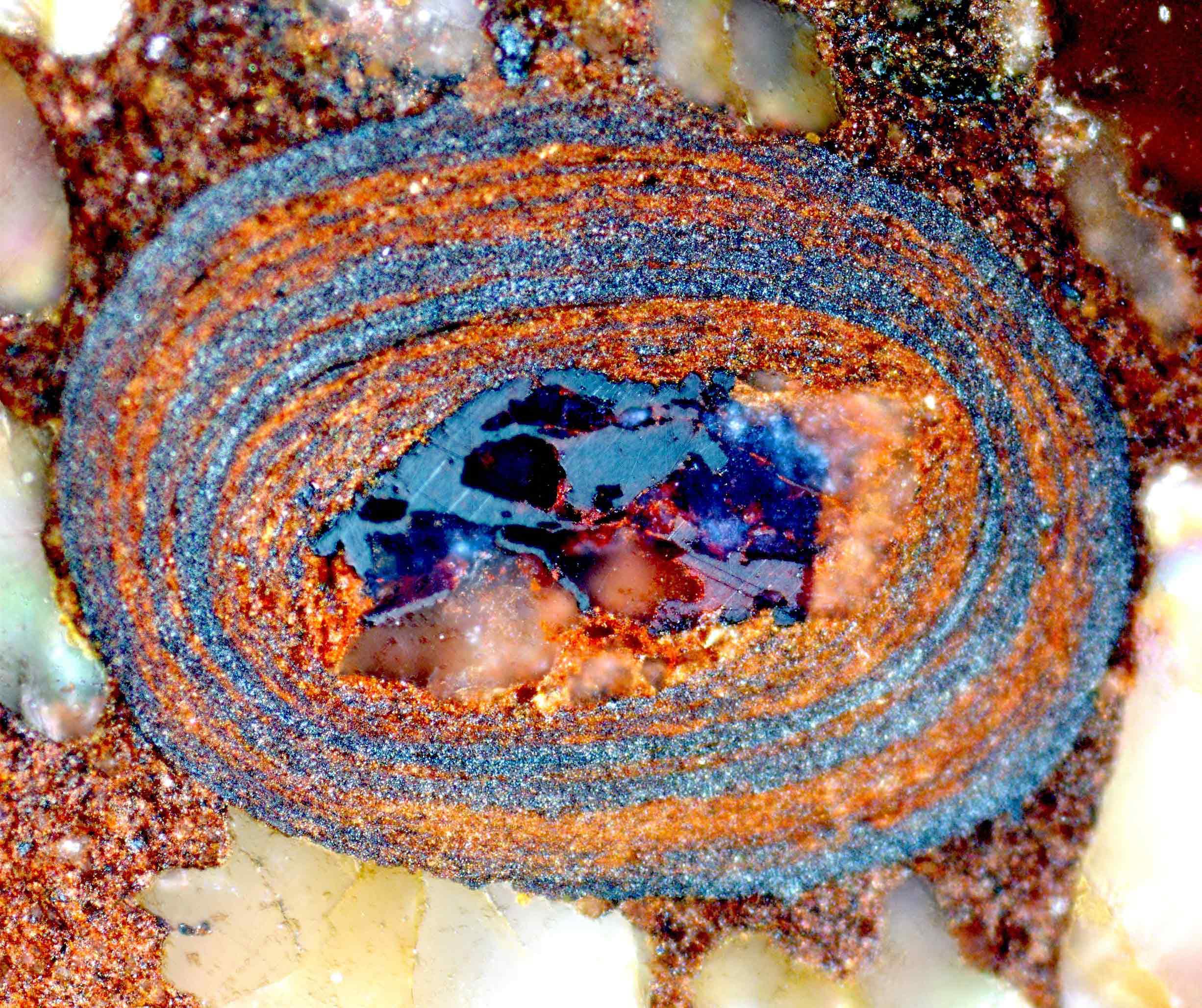
Studying Earth’s distant past is notoriously difficult, since many major events took place so long ago that little direct evidence remains. To fill in the gaps, scientists often depend on indirect signs or computer simulations. A research group led by ETH Professor Jordon Hemingway has now identified a rare natural record of that ancient world: tiny, egg-shaped stones made of iron oxide that can reveal the amount of carbon once stored in the primordial ocean.
At first glance, these stones look like ordinary grains of sand, but their growth is quite different. Known as ooids, they form like miniature snowballs, gradually building up in layers as waves move them along the sea floor. During this process, molecules of organic carbon stick to the growing surface and become locked within the mineral structure.
By analyzing these trapped molecules, Hemingway’s team reconstructed levels of organic carbon in the oceans stretching back as far as 1.65 billion years. Reporting in the journal Nature, the researchers found that between 1,000 and 541 million years ago, the ocean’s carbon reserves were far smaller than scientists had believed. This overturns widely accepted explanations for key geological and biological events of that period and offers a new perspective on Earth’s early history.
The Ocean as a Reservoir of Life’s Building Blocks
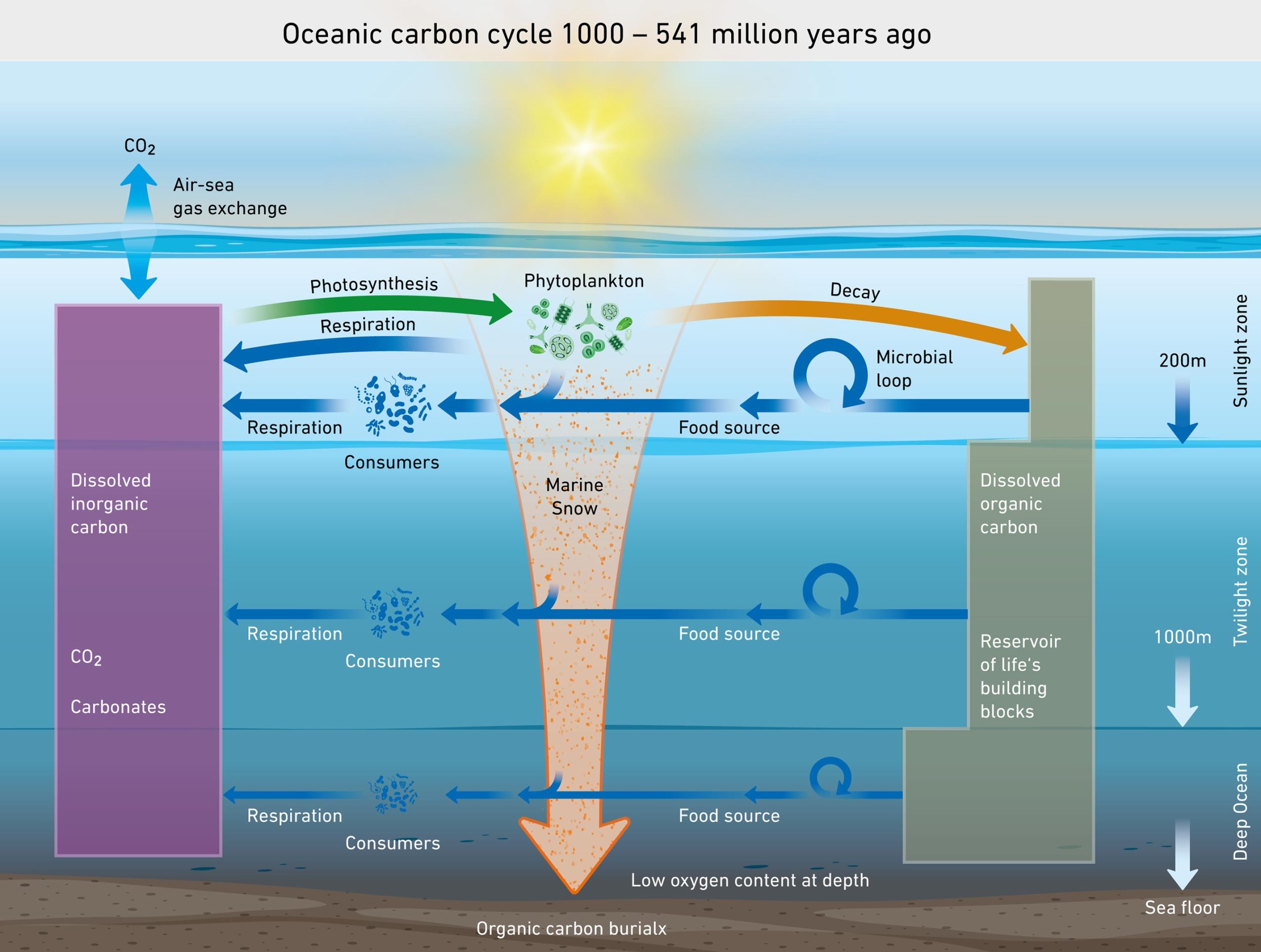
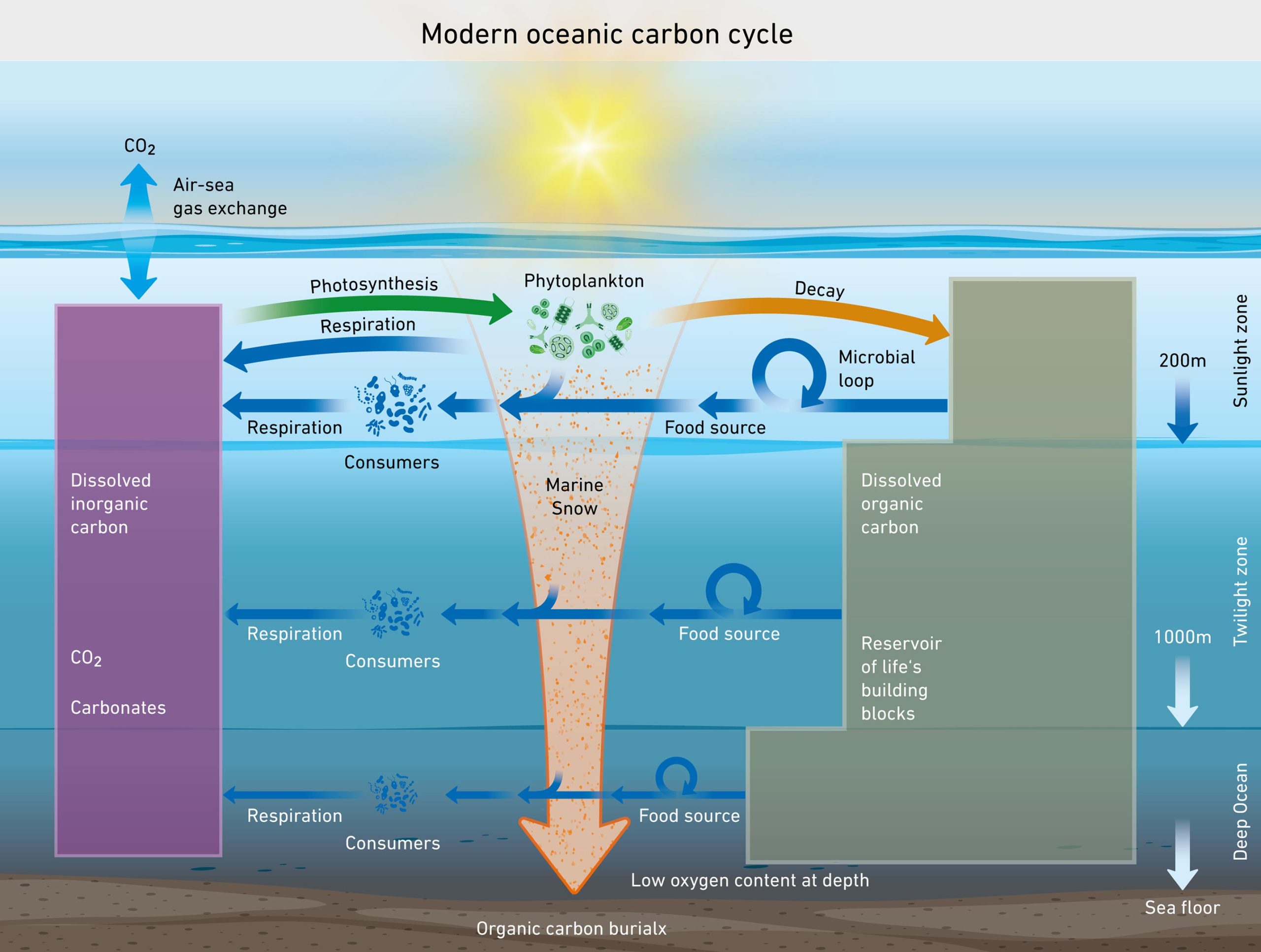
How does carbon get into the oceans? On the one hand, carbon dioxide (CO2) dissolves from the air into seawater and is transported to the depths by mixing processes and ocean currents, where it is retained for a long time. On the other hand, organic carbon is produced by photosynthetic organisms such as phytoplankton or certain bacteria. Using the energy of sunlight and CO2, these microscopic organisms produce organic carbon compounds themselves. When the organisms die, they slowly sink towards the sea floor as marine snow. If it reaches the sea floor without being eaten by organisms along the way, the carbon is stored in the sea floor for millions of years.
But it is not only phytoplankton that provides a supply of carbon components. The building blocks of life are also reused: microorganisms decompose excrement and dead organisms, thereby releasing the building blocks again. These molecules form what is known as dissolved organic carbon, which drifts freely in the ocean: a huge reservoir of building blocks that contains 200 times more carbon than is actually ‘built into’ marine life.
The Oxygen Revolution That Reshaped the Planet
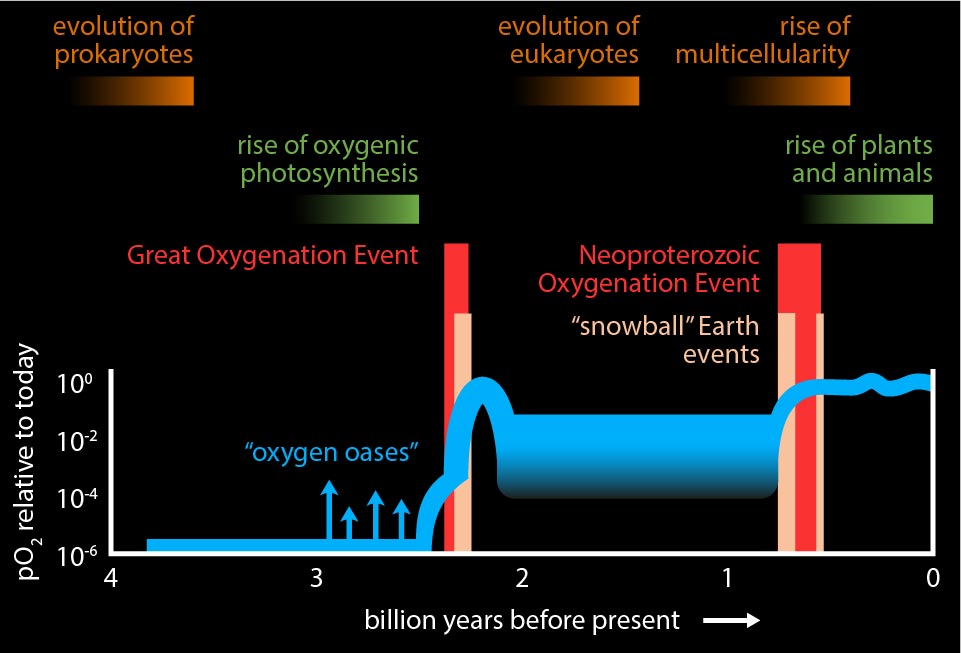
Based on anomalies in oceanic sedimentary rocks, researchers assumed that this building block reservoir must have been particularly voluminous between 1,000 and 541 million years ago. For a long time, this assumption served as the foundation for explaining how ice ages and complex life emerged at the same time. The photosynthetic production of the building blocks of life is closely linked to the development of the atmosphere and more complex life forms. It was only through photosynthesis that oxygen began to accumulate in the atmosphere.
In two waves, referred to as the oxygen catastrophes, the oxygen content rose to its current level of 21 percent. Both events were accompanied by extreme ice ages that covered the entire planet in glaciers. Nevertheless, life continued to tinker and potter with new inventions: during the first oxygen catastrophe, 2.4 to 2.1 billion years ago, organisms developed a metabolism converting food into energy with the help of oxygen. This exceedingly efficient way of generating energy enabled the development of more complex life forms.
Carbon Levels Far Lower Than Expected
Hemingway’s team is tracking such connections between geochemical and biological developments. The researchers have developed a new method that allows them to directly determine the size of the marine building block store at that particular time, based on the carbon particles in ooids.
“Our results contradict all previous assumptions,” as Hemingway summarises. According to the measurements taken by the ETH researchers, between 1,000 and 541 million years ago, the ocean did not contain more, but actually 90 to 99 percent less dissolved organic carbon than it does today. It was only after the second oxygen catastrophe that the values rose to the current level of 660 billion tonnes of carbon.
“We need new explanations for how ice ages, complex life, and oxygen increase are related,” says lead author Nir Galili. He explains the massive shrinkage of the carbon store with the emergence of larger organisms at that time: single-celled and early multicellular organisms sank faster after their death, thereby increasing marine snowfall.
However, the carbon particles were not recycled in the deeper layers of the ocean because there was very little oxygen there. They settled on the sea floor, causing the reservoir of dissolved organic carbon to decline sharply. It was only when oxygen accumulated in the deep sea that the carbon reservoir grew back to its current volume.

From Primordial Oceans to Future Risks
Although the periods studied are long past, the research findings are significant for the future. They change our view of how life on Earth and possibly also on exoplanets has developed. At the same time, they help us understand how the Earth responds to disturbances, and humans are one such disturbance. The warming and pollution of the oceans caused by human activities are currently leading to a decline in marine oxygen levels. Consequently, it cannot be ruled out that the events described could repeat themselves in the distant future.
Reference: “The geologic history of marine dissolved organic carbon from iron oxides” by Nir Galili, Stefano M. Bernasconi, Alon Nissan, Uria Alcolombri, Giorgia Aquila, Marcella Di Bella, Thomas M. Blattmann, Negar Haghipour, Francesco Italiano, Madalina Jaggi, Ifat Kaplan-Ashiri, Kang Soo Lee, Maxwell A. Lechte, Cara Magnabosco, Susannah M. Porter, Maxim Rudmin, Robert G. M. Spencer, Roman Stocker, Zhe Wang, Stephan Wohlwend and Jordon D. Hemingway, 13 August 2025, Nature.
DOI: 10.1038/s41586-025-09383-3
Never miss a breakthrough: Join the SciTechDaily newsletter.
Follow us on Google and Google News.
2 Comments
“Their results reveal that ancient oceans contained 90 to 99 percent less dissolved organic carbon than they do today.”
That isn’t very surprising considering that there wasn’t any life on the land during that time, and the life in the oceans was simple compared to today, and probably less abundant prior to the ‘Cambrian Explosion’ about 550 million years ago.
The authors of this article need to look a little more closely at the pebbles, and then they would see what the earliest life form on Planet Earth was like. It’s right there before their eyes.