
Close Menu
    Facebook X (Twitter) Instagram
    SciTechDaily
    • Biology
    • Chemistry
    • Earth
    • Health
    • Physics
    • Science
    • Space
    • Technology
    Facebook X (Twitter) Pinterest YouTube RSS
    SciTechDaily
    Home»Health»Scientists Find Chemicals Proven Harmful to Human Health in Household Dust
    Health

    Scientists Find Chemicals Proven Harmful to Human Health in Household Dust

    By Greg Basky, Canadian Light SourceNovember 16, 2020No Comments4 Mins Read
    Facebook Twitter Pinterest Telegram LinkedIn WhatsApp Email Reddit
    Share
    Facebook Twitter LinkedIn Pinterest Telegram Email Reddit
    Cleaning Dusting
    Brominated flame retardants (BFRs), including harmful PBDEs, have been added to consumer products for fire safety since the 1970s. Despite restrictions in Canada since 2008, older items still contain PBDEs, which shed over time, resulting in higher indoor concentrations and their presence in dust.

    Since the 1970s, chemicals called brominated flame retardants (BFRs) have been added to a host of consumer and household products, ranging from electronics and mattresses to upholstery and carpets. While they were intended to improve fire safety, one form — polybrominated diphenyl ethers, or PBDEs — has proved harmful to human health, specifically our hormonal systems.

    Although the use of PBDEs has been restricted in Canada since 2008, older household electronics and furniture with these compounds are still in use. Additionally, the process used to add this chemical to manufactured goods attached the particles very loosely. As a result, the compound tends to shed over time through normal wear and tear.

    A growing body of evidence suggests that concentrations of this chemical are higher indoors and that it is present in dust. A team of researchers from the Canadian Light Source (CLS) at the University of Saskatchewan and Memorial University set out to determine whether they could find bromine in household dust using synchrotron X-ray techniques.

    By identifying the presence of bromine, they could confirm if people are in fact getting exposed to the chemical at home, either by direct physical contact or by inhaling it. The scientists tested twenty dust samples collected from houses in rural Newfoundland using the VESPERS beamline at the CLS.

    Dr. Peter Blanchard with the CLS said his team was uncertain, going in, whether bromine concentrations in their samples would be high enough to register, and if so, whether they could then distinguish between different bromine species. They scored wins on both counts: “We were able to show that there was a noticeable amount of bromine present in all of the dust samples we analyzed and in a select few we were able to identify bromine species that were characteristic of brominated flame retardants,” said Blanchard. Previous studies have not been able to differentiate brominated flame retardants from other brominated compounds.

    Study co-author Dr. Atanu Sarkar, who works in Memorial University’s Faculty of Medicine, said their findings present something of a choice between bad and worse: safety from fire versus another type of hazard. He acknowledged that it is not feasible for people to rid their homes of all products and materials containing BRFs.

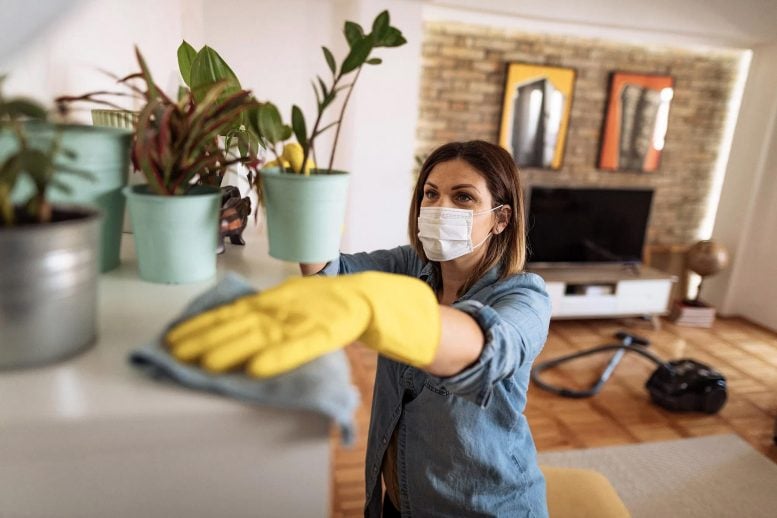
    “But if dust is one source of our exposure, how can you reduce this exposure?” said Sarkar. “Public awareness is very important. Maybe we need more frequent vacuuming of all the dust.”

    Their findings point to the need to identify — and make consumers more aware of — safer alternatives that are free of brominated compounds. The team recently published their results in Environmental Science and Pollution Research.

    The scientists added that one of the biggest benefits of using the CLS for this type of research is that, unlike other commonly used testing equipment, the synchrotron-based XRF and XANES techniques do not destroy dust samples.

    Therefore, it will be possible to collect samples from the same households down the road, compare them with the batch used in this study, and analyze the current samples five or ten years out, to see how the BRFs chemicals in our homes may change over time.

    Reference: “Evaluating the use of synchrotron X-ray spectroscopy in investigating brominated flame retardants in indoor dust” by Peter Blanchard, Nicole Babichuk and Atanu Sarkar, 29 August 2020, Environmental Science and Pollution Research.
    DOI: 10.1007/s11356-020-10623-4

    Never miss a breakthrough: Join the SciTechDaily newsletter.
    Follow us on Google and Google News.

    Canadian Light Source Environment Pollution Popular Toxicology
    Share. Facebook Twitter Pinterest LinkedIn Email Reddit

    Related Articles

    Tobacco Industry Tactics: Makers of PFAS “Forever Chemicals” Covered Up the Dangers

    Beauty’s Dark Secret: Toxic Chemicals in Cosmetics and Personal Care Products

    Scientists Discover Toxic “Forever Chemicals” in Fast-Food Packaging

    Thought To Be Safe: Replacement PFAS Used in Food Packaging Are Actually Hazardous

    Cleaning May Not Protect You From This Cancer-Causing Chemical Inside Your Car

    Warning: Bleach-Alternative COVID-19 Surface Disinfectants May Pollute Indoor Air

    Warning: More Than 200 Million Americans Could Have Toxic PFAS in Their Drinking Water

    Common Fireworks Emit Toxic Metals Into the Air – Damage Human Cells and Animal Lungs

    For Decades Researchers Claimed Potted Plants Improve Indoor Air Quality – They Don’t

    Leave A Reply Cancel Reply

    • Facebook
    • Twitter
    • Pinterest
    • YouTube

    Don't Miss a Discovery

    Subscribe for the Latest in Science & Tech!

    Trending News

    The Universe Is Expanding Too Fast and Scientists Can’t Explain Why

    “Like Liquid Metal”: Scientists Create Strange Shape-Shifting Material

    Early Warning Signals of Esophageal Cancer May Be Hiding in Plain Sight

    Common Blood Pressure Drug Shows Surprising Power Against Deadly Antibiotic-Resistant Superbug

    Scientists Uncover Dangerous Connection Between Serotonin and Heart Valve Disease

    Scientists Discover a “Protector” Protein That Could Help Reverse Hair Loss

    Bone-Strengthening Discovery Could Reverse Osteoporosis

    Scientists Uncover Hidden Trigger Behind Stem Cell Aging

    Follow SciTechDaily
    • Facebook
    • Twitter
    • YouTube
    • Pinterest
    • Newsletter
    • RSS
    SciTech News
    • Biology News
    • Chemistry News
    • Earth News
    • Health News
    • Physics News
    • Science News
    • Space News
    • Technology News
    Recent Posts
    • Scientists Create “Liquid Gears” That Spin Without Touching
    • The Simple Habit That Could Help Prevent Cancer
    • Forgotten Medicinal Plant Shows Promise in Fighting Dangerous Superbugs
    • Millions Take These IBS Drugs, But a New Study Finds Serious Risks
    • 5 Common Myths About Learning a New Language, Debunked
    Copyright © 1998 - 2026 SciTechDaily. All Rights Reserved.
    • Science News
    • About
    • Contact
    • Editorial Board
    • Privacy Policy
    • Terms of Use

    Type above and press Enter to search. Press Esc to cancel.