
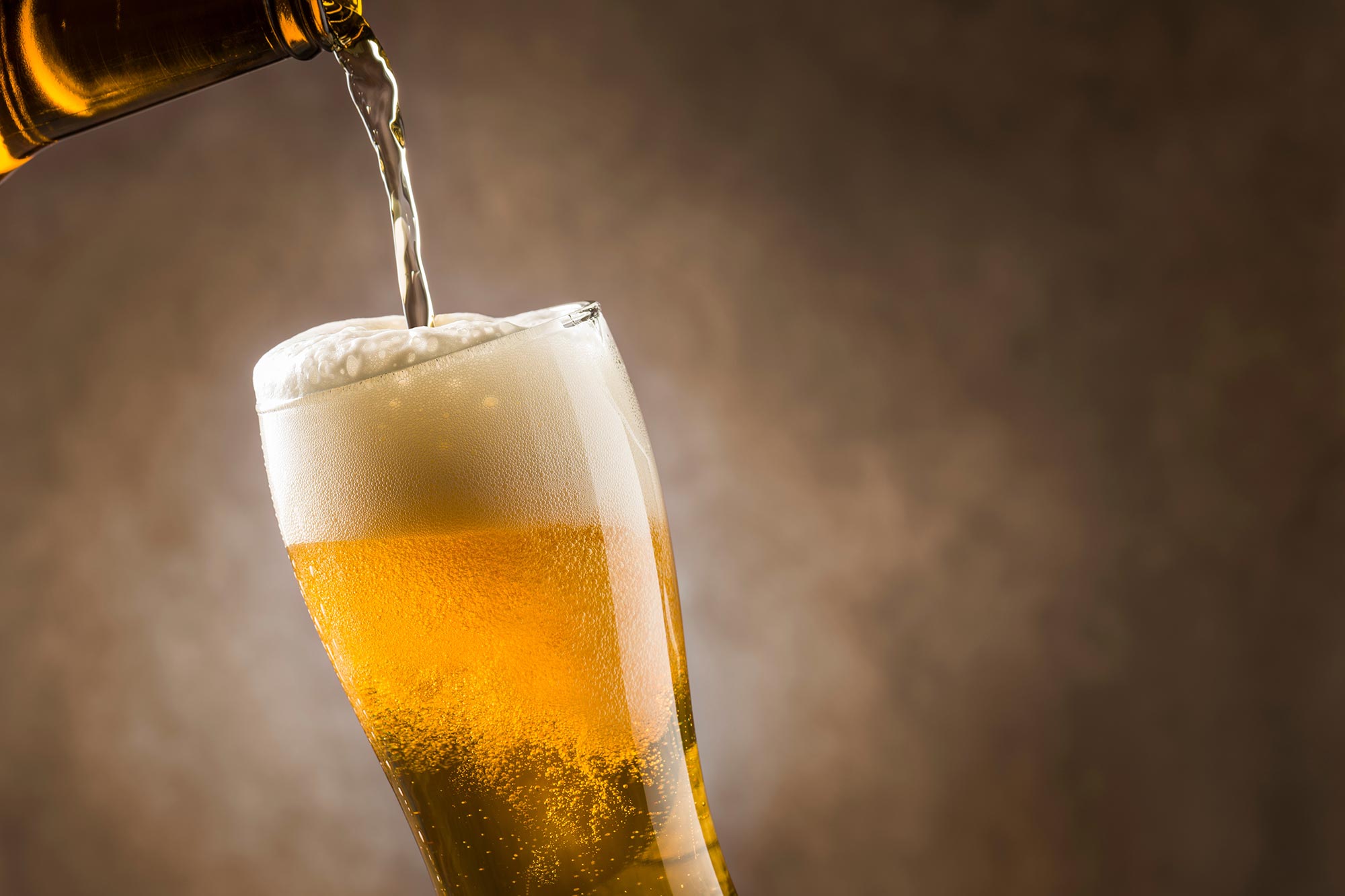
Scientists have discovered the holy grail of brewing: the formula for stable beer foam, a breakthrough whose benefits will extend far beyond the brewing industry.
As cooler weather arrives and more people turn to seasonal ales, many beer fans continue to wonder why some pours keep a tall, creamy head while others lose their foam almost instantly. For anyone who values that first look at a freshly poured glass, the rapid collapse of the bubbles can be a disappointment, although certain styles manage to hold their structure far longer.
Researchers at ETH Zurich, led by Jan Vermant, Professor of Soft Materials, have now clarified what determines these differences.
Their findings, published in the journal Physics of Fluids, come from seven years of investigation. The project began when Vermant asked a Belgian brewer a straightforward question: “How do you control brewing?” The response was brief but revealing: “By watching the foam.”
The team now has a detailed picture of the processes that create long-lasting beer foam, and their insights may eventually help beer drinkers enjoy a more stable head before taking that first sip.
Triple beats double and single
The study revealed that among the Belgian ales examined, “Tripel” beers consistently produced the most resilient foam. “Dubbel” beers followed, while beers with lower alcohol content and minimal fermentation (“Singel”) showed the weakest foam stability.
The researchers also evaluated two lager beers from major Swiss breweries. Their foam performance can approach that of the Belgian ales, although the physical mechanisms behind them differ. Notably, one of the lagers performed poorly, suggesting opportunities for improvement.
“There is still room for improvement – we are happy to help,” says Vermant.
To date, researchers have assumed that the stability of beer foam depended primarily on protein-rich layers on the surface of the bubbles: proteins come from barley malt and influence surface viscosity, i.e. the fluidity of the surface, and surface tension.
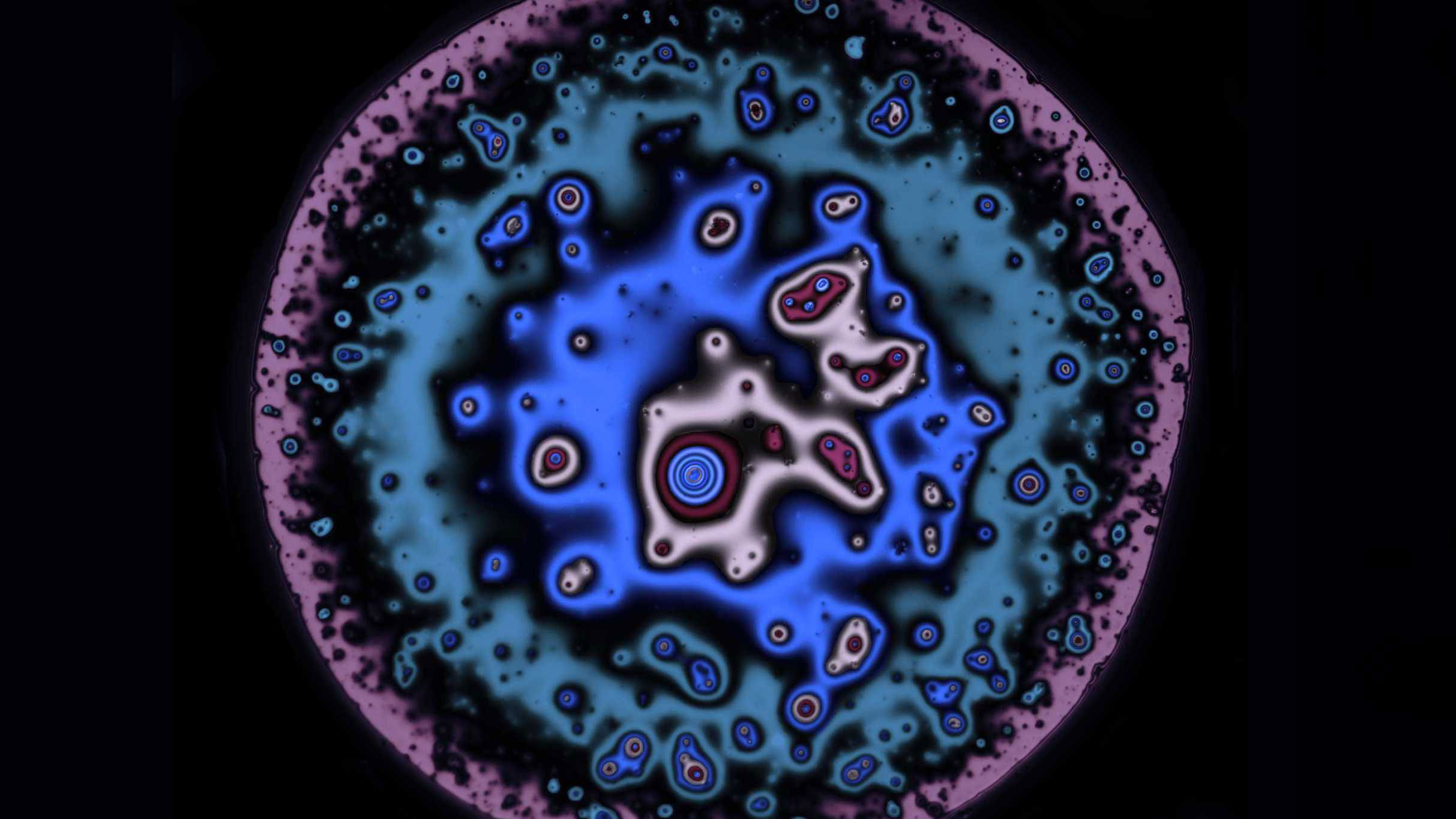
The new experiments, however, show that the decisive mechanism at work is more complex and depends significantly on the type of beer.
In lager beers, surface viscoelasticity is the decisive factor. This is influenced by the proteins present in the beer, as well as their denaturation: the more proteins the beer contains, the more rigid the film around the bubbles becomes, and the more stable the foam will be.
The situation is different with “Tripel”-style beers, where surface viscoelasticity is actually minimal. Stability is achieved through so-called Marangoni stresses – forces that arise from differences in surface tension.
This effect can be readily observed by placing crushed tea leaves on the surface of water. Initially, the fragments spread out evenly. If a drop of soap is added, the tea leaves are suddenly pulled to the edge, causing currents to circulate on the surface. If these currents persist for a long time, they stabilize the bubbles in the beer foam.
A dive into the physics of beer foam
Different beers, different brewing conditions, and thus different foam physics. The answer lies in the structure and dynamics of the protein-rich shells of the bubbles. In the Belgian “Singel,” the protein-rich shells behave as if small, spherical particles arrange themselves densely on the surface of the bubbles. This corresponds to a two-dimensional suspension, i.e. a mixture of a liquid and finely distributed solids, which in turn stabilizes these bubbles.
In the “Dubbel” beer, proteins form a net-like structure – a kind of membrane – making the bubbles even more stable. In the case of “Tripel,” the physics become even richer; the dynamics of the bubbles’ surface resemble those of simple surfactants, molecules that stabilize foams in many everyday applications.
The exact reasons for this different behavior are still unknown. However, it seems that the protein LTP1 (lipid transfer protein 1) plays a decisive role in stabilizing beer foam. The ETH researchers were able to confirm this by analyzing the structure and content of the protein in the Belgian beers they studied.
Collaboration with a major brewery
As Jan Vermant emphasizes: “The stability of the foam does not depend on individual factors in a linear manner. You can’t just change one thing and get it right.” For example, increasing the viscosity with additional surfactants can actually make the foam more unstable because it slows down the Marangoni effects too strongly. “The key is to work on one mechanism at a time – and not on several at once. Beer obviously does this well by nature!” says Vermant.
In conducting this study, the ETH professor collaborated with one of the world’s largest breweries that was working on the foam stability of their beers and wanted to understand what actually stabilizes beer foam. “We now know the precise physical mechanism and are able to help the brewery improve the foam on their beers,” says Vermant.
For Belgian beer consumers, the head is important because of the taste and as “part of the experience,” the materials researcher adds. “But foam isn’t always important wherever beer is served – it’s a cultural thing.”
Applications in technology and the environment
The findings from beer foam research are also significant beyond the art of brewing. In electric vehicles, for example, lubricants can foam – presenting a dangerous problem. Vermant’s team is now working with Shell, among other companies, to investigate how such foams can be destroyed in a targeted manner.
Another goal is to develop sustainable surfactants that are free of fluorine or silicon. “Our study is an important step in this direction,” Vermant underlines.
In an ongoing EU project, the researchers are also working on foams as carriers for bacterial systems. In collaboration with food researcher Peter Fischer from ETH Zurich, they are also working on stabilising milk foam by way of proteins. “So there are many areas where the knowledge we have gained from beer is proving useful,” Vermant concludes.
Reference: “The hidden subtlety of beer foam stability: A blueprint for advanced foam formulations” by Emmanouil Chatzigiannakis, Alexandra Alicke, Léa Le Bars, Lucas Bidoire and Jan Vermant, 26 August 2025, Physics of Fluids.
DOI: 10.1063/5.0274943
Never miss a breakthrough: Join the SciTechDaily newsletter.
Follow us on Google and Google News.