

Close Menu
    Facebook X (Twitter) Instagram
    SciTechDaily
    • Biology
    • Chemistry
    • Earth
    • Health
    • Physics
    • Science
    • Space
    • Technology
    Facebook X (Twitter) Pinterest YouTube RSS
    SciTechDaily
    Home»Health»Scientists Ranked 20 Protein-Rich Foods on Health, Affordability, and Sustainability. One Surprising Food Came Out on Top
    Health

    Scientists Ranked 20 Protein-Rich Foods on Health, Affordability, and Sustainability. One Surprising Food Came Out on Top

    By University of CambridgeNovember 12, 2026No Comments3 Mins Read
    Facebook Twitter Pinterest Telegram LinkedIn WhatsApp Email Reddit
    Share
    Facebook Twitter LinkedIn Pinterest Telegram Email Reddit
    Fresh Tofu Wooden Bowl
    Tofu is a versatile, plant-based protein made from soybeans that provides all nine essential amino acids. Credit: Shutterstock

    Tofu took the crown in a showdown of 20 protein-rich foods judged on health, affordability, availability, and their toll on the planet.

    Protein-rich foods can look very different when cost, access, health, and environmental impact all enter the picture. In a study published in Frontiers in Sustainable Food Systems, Dr. Chris Macdonald developed a framework that combines these four considerations to compare commonly consumed protein sources.

    Among the 20 foods assessed, tofu took the top spot, while cheddar cheese finished last. The results followed a clear pattern: plant-based foods occupied the entire highest-scoring fifth, and animal-based products made up the lowest-scoring fifth.

    Tofu’s lead came from strong results across both parts of the assessment. It earned a perfect 16 points for environmental performance, placing in the best-performing fifth for greenhouse gas emissions, water pollution, land use, and freshwater use. It also scored 20 out of 24 points for health and accessibility, including full marks for providing all nine essential amino acids.

    Together, these measures explain why the rankings go beyond protein content alone. They weigh the environmental costs of producing protein alongside nutritional factors and practical considerations such as price and availability.
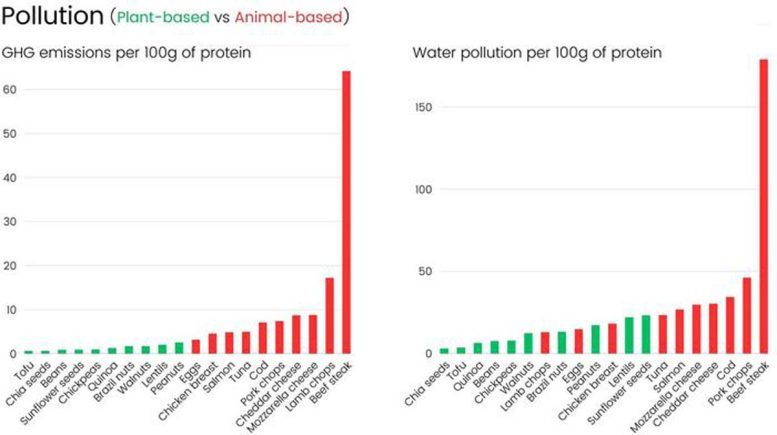
    Greenhouse Gas Emissions and Water Pollution Produced by Protein Sources
    Two bar charts comparing greenhouse gas emissions and water pollution produced by plant-based and animal-based protein sources per 100 g of protein. Credit: Chris Macdonald

    Looking Beyond A Single Food Label

    The paper argues that ratings focused on one feature can leave consumers with an incomplete picture. A product’s performance in one area does not explain its trade-offs elsewhere. Macdonald presents the framework as a way to help people understand those competing considerations and the food systems their purchases support.

    As the paper states, “Against deliberate corporate obfuscation and marketing myths, the goal of a holistic score is not to create a new label, but to foster a new literacy, one that empowers us to see the reality of the systems we are funding.

    Ultimately, beyond the spreadsheets and scores, lies a fundamental reckoning: our protein choice is a referendum on the compassion we are willing to show to animals, to the planet, and to future generations.”

    The research builds on Macdonald’s work at the Better Protein Institute, which examines how much protein people need for optimal health, how to shift consumer behavior effectively, and where investment could support future protein sources. By questioning common assumptions and starting from first principles, that work addresses some of the most frequently Googled questions about dietary protein.

    Reference: “What are the best sources of protein? Introducing the BPI Score” by Chris Macdonald, 1 July 2026, Frontiers in Sustainable Food Systems.
    DOI: 10.3389/fsufs.2026.1677796

    Never miss a breakthrough: Join the SciTechDaily newsletter.
    Follow us on Google and Google News.

    Food Science Nutrition Protein University of Cambridge
    Share. Facebook Twitter Pinterest LinkedIn Email Reddit

    Related Articles

    Beans vs. Beef: Is Reducing Red Meat Safe for Bone Health and Protein Intake?

    Humans Absorb Less Protein From Plant-Based Meat Than Normal Meat

    Just a Small Amount of Protein Supplement Helps Control Type 2 Diabetes

    Harvard Studies Show Improvements in U.S. Diet Lower Premature Deaths

    Harvard Reveals Quality and Quantity of Key Crops is Changing

    Healthier Diets and Reducing Food Waste is Vital to Reducing Climate Change

    New Research Questions Link between Fatty Acids and Heart Disease

    Study Finds That “Whole Grain” Foods Aren’t Always a Healthy Choice

    Study Suggests Whole Fruit May Prompt Kids to Make Healthier Choices

    Leave A Reply Cancel Reply

    • Facebook
    • Twitter
    • Pinterest
    • YouTube

    Don't Miss a Discovery

    Subscribe for the Latest in Science & Tech!

    Trending News

    Hidden Brain Signals Could Predict Alzheimer’s Years Before Symptoms Appear

    The Solar System May Have a 6th Dwarf Planet – and It’s Been Hiding in Plain Sight

    New Research Identifies the Hidden Rules That Help Brain Cancer Evade Treatment

    Smiling Isn’t Always Good for You, Scientists Discover

    Scientists Discover Climate Change May Have Stopped Earth’s Next Ice Age

    Quantum Discovery Reveals Why More Powerful Lasers Can Actually Slow Atoms Down

    Einstein Was Right Again: Scientists Discover Chemical Bonds That Defy Textbook Rules

    NASA Space Telescope Meets Fiery End After Nearly 22 Years in Orbit

    Follow SciTechDaily
    • Facebook
    • Twitter
    • YouTube
    • Pinterest
    • Newsletter
    • RSS
    SciTech News
    • Biology News
    • Chemistry News
    • Earth News
    • Health News
    • Physics News
    • Science News
    • Space News
    • Technology News
    Recent Posts
    • Scientists Ranked 20 Protein-Rich Foods on Health, Affordability, and Sustainability. One Surprising Food Came Out on Top
    • Popular Weight-Loss Drugs May Have a Surprising Effect on Your Brain
    • Why Did Polynesians Suddenly Sail Across the Pacific After 1,700 Years? Scientists May Have Found the Answer
    • A Natural “Varnish” May Explain How 37,000-Year-Old Cave Art Survived
    • Scientists Just Found a Key Ingredient for Superconductivity at Room Temperature
    Copyright © 1998 - 2026 SciTechDaily. All Rights Reserved.
    • Science News
    • About
    • Contact
    • Editorial Board
    • Privacy Policy
    • Terms of Use

    Type above and press Enter to search. Press Esc to cancel.