
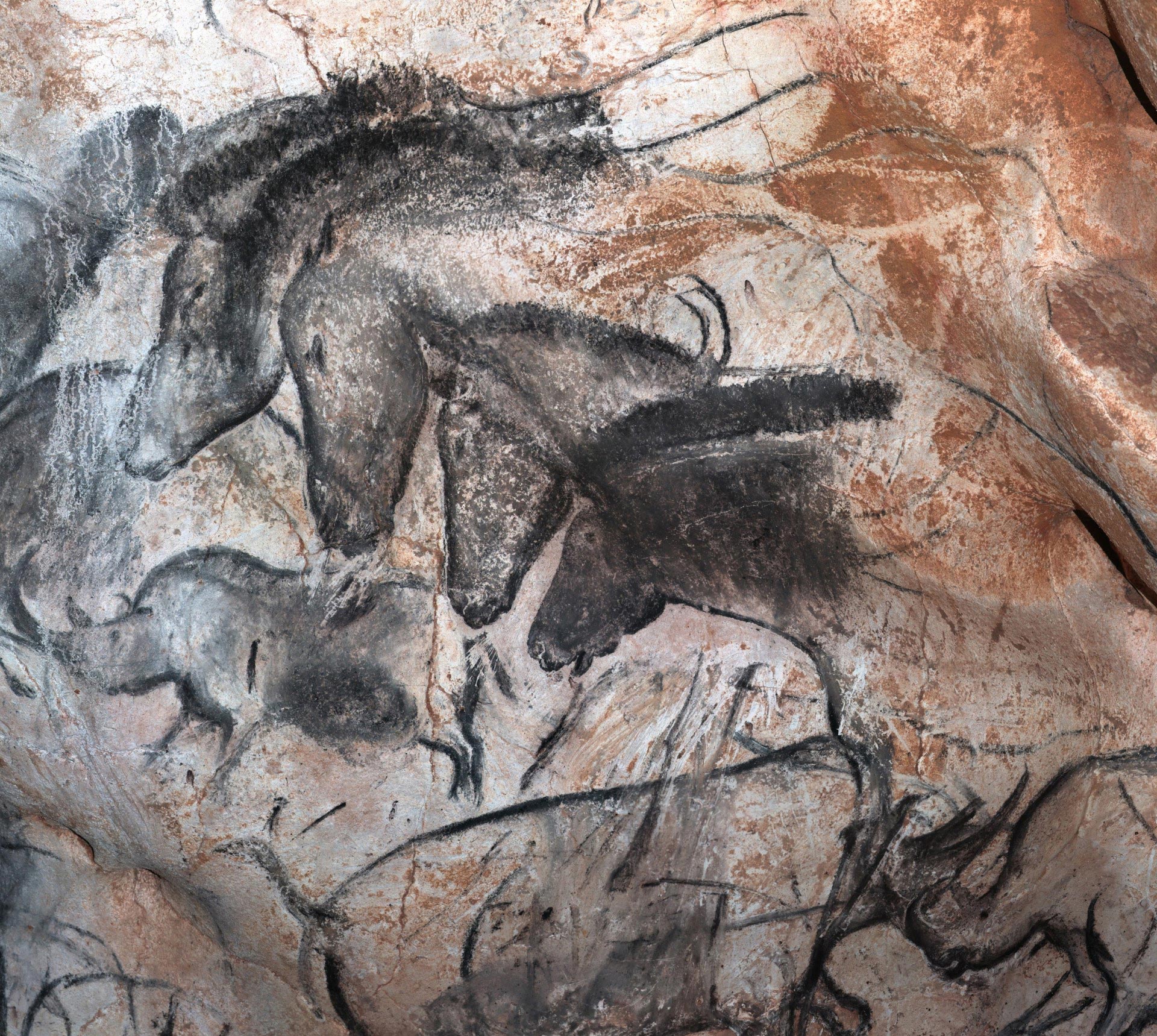
A new technique uses UV light to reveal a natural mineral varnish that may have helped preserve Chauvet Cave’s 37,000-year-old charcoal drawings.
About 37,000 years ago, Paleolithic people entered a limestone cave in southeastern France and drew the animals around them, including cave bears, cave lions, bison, and horses. An ancient rockfall later sealed away the artwork, leaving it undiscovered until the 1990s. Today, Chauvet Cave holds some of the oldest artwork in existence, along with clues to how the cave itself helped preserve it.
Getting close to those clues requires care. The site is so historically important and fragile that its location is kept secret and access is secured behind a huge steel door. Inside, prehistoric footprints lie in front of the artwork. Researchers examining the walls must also protect these traces of the people who once walked through the cave.
Researcher Philippe Walter describes the purpose of that painstaking work. “We examine every piece of evidence to decode the techniques of prehistoric artists and understand how the paintings have been preserved over time.”
Studying cave art without touching it
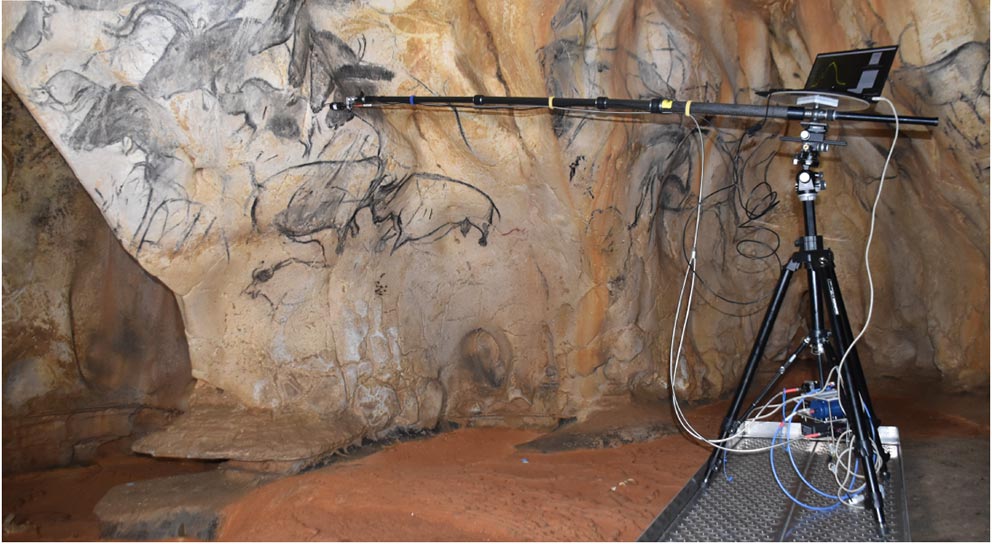
In a study reported in ACS Omega, Walter and his colleagues investigated the charcoal drawings without touching the cave walls. They focused on mineral deposits that had formed over the artwork, looking for evidence of how the drawings were created and how the cave’s geology may have contributed to their preservation.
To work around the fragile footprints, the team placed a portable spectrometer on a protective walkway about 8 feet (2.5 meters) from the wall. This instrument measures light, allowing the researchers to examine materials from a distance.
Their approach used ultraviolet, or UV, fluorescence spectroscopy, a technique researchers have used to reveal fluorescent mineral deposits invisible to the naked eye. Certain materials emit light when exposed to UV illumination. By shining a UV beam onto the wall and analyzing the resulting glow, the team could investigate both the mineral deposits and the pigments in the artwork.
Natural varnish and possible torch marks
Two different colors offered clues to what had happened on the cave walls:
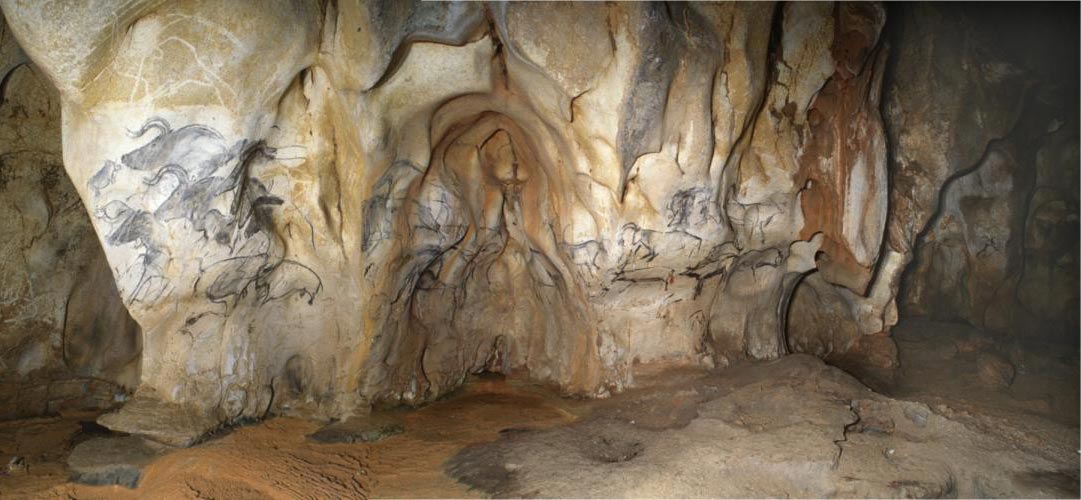
- Thin layers of calcite glowed blue under a blacklight. These mineral layers had been left behind by water flowing over the limestone surface, forming a natural varnish that covered parts of the artwork.
- Some areas fluoresced orange. That glow could come from hot charcoal or other burning materials, such as a lit torch, rubbed against the wall to create the drawings.
“Our methodology is much like forensic investigation: We examine every piece of evidence to decode the techniques of prehistoric artists and understand how the paintings have been preserved over time,” says Walter.
The team anticipates applications beyond cave art, from forensic science to monitoring biofilms aboard the International Space Station. Biofilms are communities of microorganisms that grow on surfaces. A project applying the technique to monitoring them aboard the station is already underway.
Reference: “In Situ Ultraviolet Fluorescence Spectroscopy for the Characterization of Translucent Calcite Coatings over Prehistoric Cave Art” by Yohan Boulard, Thiéry Guillou, Carole Fritz, Gilles Tosello, Maguy Jaber and Philippe Walter, 29 September 2026, ACS Omega.
DOI: 10.1021/acsomega.6c05061
The authors acknowledge funding from the French Ministry of Culture, the French National Centre for Scientific Research (Centre National de la Recherche Scientifique), and Sorbonne University.
Disclosure: One of the authors is a founder of Lumentis, a company developing imaging instruments for historical artwork analysis.
Never miss a breakthrough: Join the SciTechDaily newsletter.
Follow us on Google and Google News.