
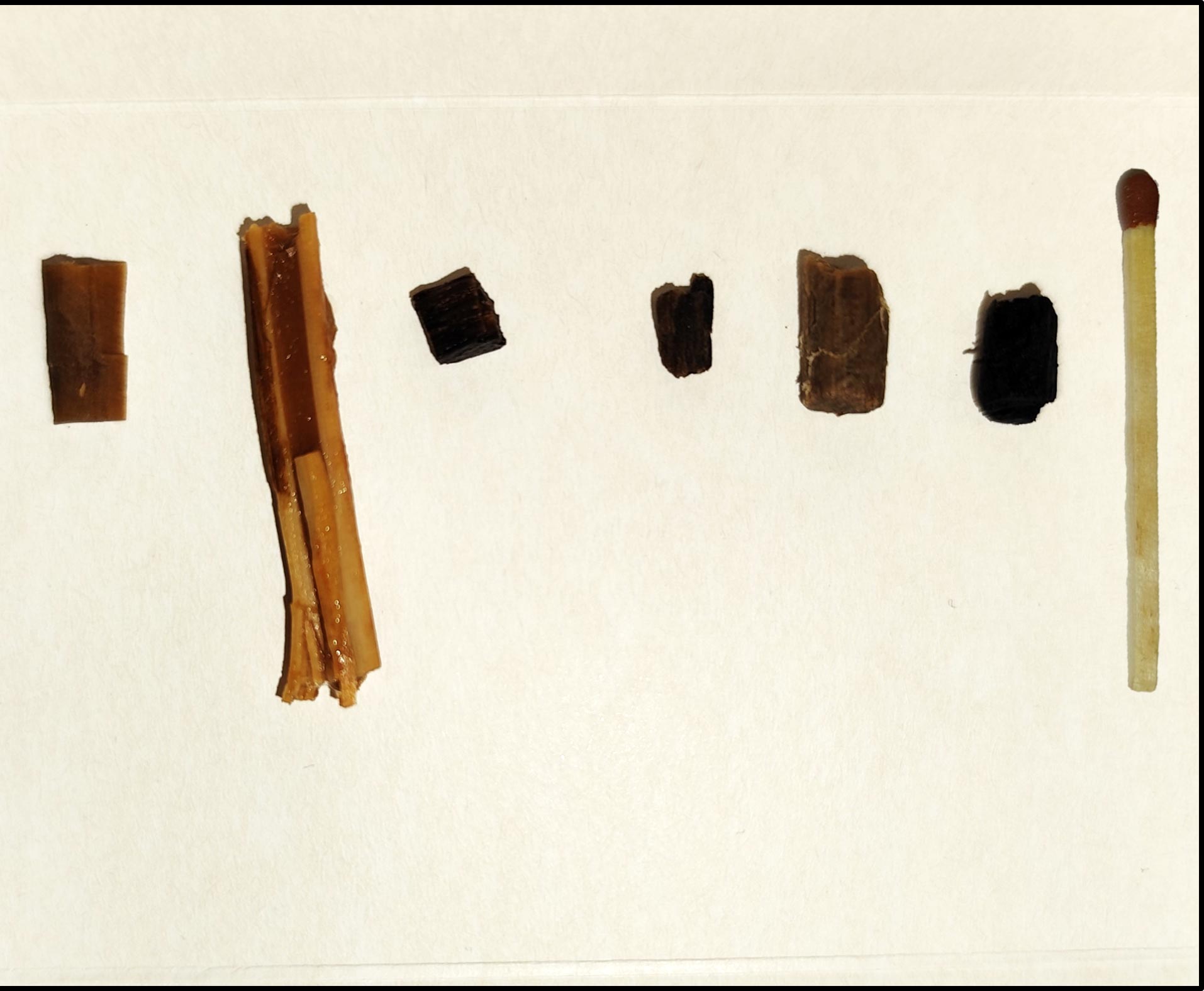
Groundbreaking research involving nuclear magnetic resonance has revealed the secrets of ancient Roman wooden structures.
This non-invasive technique helped scientists analyze submerged wood from a Roman pier, contributing to our knowledge of historical construction techniques and opening new avenues for archaeological preservation.
Ancient Wood Analysis
In a recent study, researchers analyzed rare wooden structures from the Roman Empire, estimated to be approximately 1,700 years old, using advanced NMR (nuclear magnetic resonance) methods. While NMR is best known for its use in hospital MRI scans to create detailed images of the human body, it has also proven to be a powerful tool for uncovering the secrets of ancient archaeological artifacts. Its applications are rapidly expanding into numerous scientific fields.
The wooden samples came from the poles of an ancient Roman harbor pier, discovered during excavations for a new metro line in Naples, Italy, which began in 2004. The discovery was so significant that it led to changes in the metro line’s route, which now runs beneath these archaeological treasures. The metro line is scheduled to open in the summer of 2024, but the findings at the site provide a fascinating glimpse into the maritime infrastructure of the Roman Empire.

Preservation Techniques and NMR Spectroscopy
“It is rare that ancient organic wooden structures are found at all, as they usually degrade over time unless they are in a humid environment. The exceptional discovery was made possible by the aquifer that has preserved the pier structures for centuries,” says Otto Mankinen, a researcher at the University of Oulu.
NMR spectroscopy, or nuclear magnetic resonance spectroscopy, is based on radio-frequency radiation, so it does not damage the target at all. Medical MRI in hospitals is one of the well-known applications of NMR spectroscopy. The technique exploits the magnetic properties of atomic nuclei to obtain very precise information about the structure and properties of matter.
The non-invasive nature of NMR measurements is also particularly important when examining archaeologically valuable samples or, for example, paintings for restoration. Many other methods can damage the sample, such as X-ray or light microscopy, which often also requires slicing of the sample, a destructive and challenging process when dealing with fragile and spongy underwater wood remains. If they are lifted into the air, activated decomposers can destroy the samples or they can decay. In the new study, wood samples were preserved under similar conditions where they spent centuries.
Exploring Wood Decay and Structural Analysis
The recent study aimed to find out how wood behaves and survives in water and to reconstruct the changes caused by decay, and to make a comprehensive analysis of the structure and changes in archaeological wood remains. The study is one of the first to combine four different NMR techniques: relaxometry, micro-imaging, diffusometry, and cryoporometry. Archaeological samples of spruce, chestnut, and maple were compared with fresh wood material from the same species.
“Knowledge of structural preservation is essential and important. It helps to find new ways to ensure that archaeologically valuable heritage is preserved for future generations,” says Mankinen. “In the future, the method needs to be developed with a larger number of samples of coniferous and deciduous trees. These can be very different depending on the age of the tree, the specimen, and the location of the sample in the trunk. The differences between current and old wood samples require careful interpretation.”
“The valuable samples were analyzed at the University of Oulu, as one of our long-standing research topics has been the analysis of wood materials. The best way forward would be to take NMR equipment on-site to historic finds, which are often too fragile to move,” says Mankinen. The new findings will also contribute to the development of mobile NMR instruments.
Expanding Applications and Potential of NMR
When he came to his studies, Mankinen was surprised by the diversity of physics and NMR studies. “The methods are used for really interesting studies, and I didn’t know before that I would be involved in archaeological research.” The next studies are already underway, now on even older wooden artifacts from Neolithic inhabitants up to 7,500 years old in Italy’s Lake Bracciano.
In recent years, NMR techniques have become faster and more sensitive, and the trend is also towards smaller and smaller instruments. Mobile NMR instruments are also less expensive.
Broad Applications and Future Research
There are high expectations and promising results for practical applications of NMR spectroscopy in several fields, such as environmental and atmospheric monitoring, battery materials, eco concrete, mine water and catalysts, and biochemistry, as shown in a doctoral thesis at the University of Oulu on December 2024.
The study was carried out in collaboration with researchers from Sapienza University of Rome and published in October 2024 in Physical Chemistry Chemical Physics.
Reference: “Comprehensive characterization of waterlogged archaeological wood by NMR relaxometry, diffusometry, micro-imaging and cryoporometry” by Valeria Stagno, Otto Mankinen, Sarah Mailhiot, Ville-Veikko Telkki and Silvia Capuani, 22 October 2024, Physical Chemistry Chemical Physics.
DOI: 10.1039/D4CP02697G
Never miss a breakthrough: Join the SciTechDaily newsletter.
Follow us on Google and Google News.