
Close Menu
    Facebook X (Twitter) Instagram
    SciTechDaily
    • Biology
    • Chemistry
    • Earth
    • Health
    • Physics
    • Science
    • Space
    • Technology
    Facebook X (Twitter) Pinterest YouTube RSS
    SciTechDaily
    Home»Science»Mystifying Puzzle of Early Neolithic House Orientations Finally Solved
    Science

    Mystifying Puzzle of Early Neolithic House Orientations Finally Solved

    By Kiel UniversityJanuary 10, 20202 Comments4 Mins Read
    Facebook Twitter Pinterest Telegram LinkedIn WhatsApp Email Reddit
    Share
    Facebook Twitter LinkedIn Pinterest Telegram Email Reddit
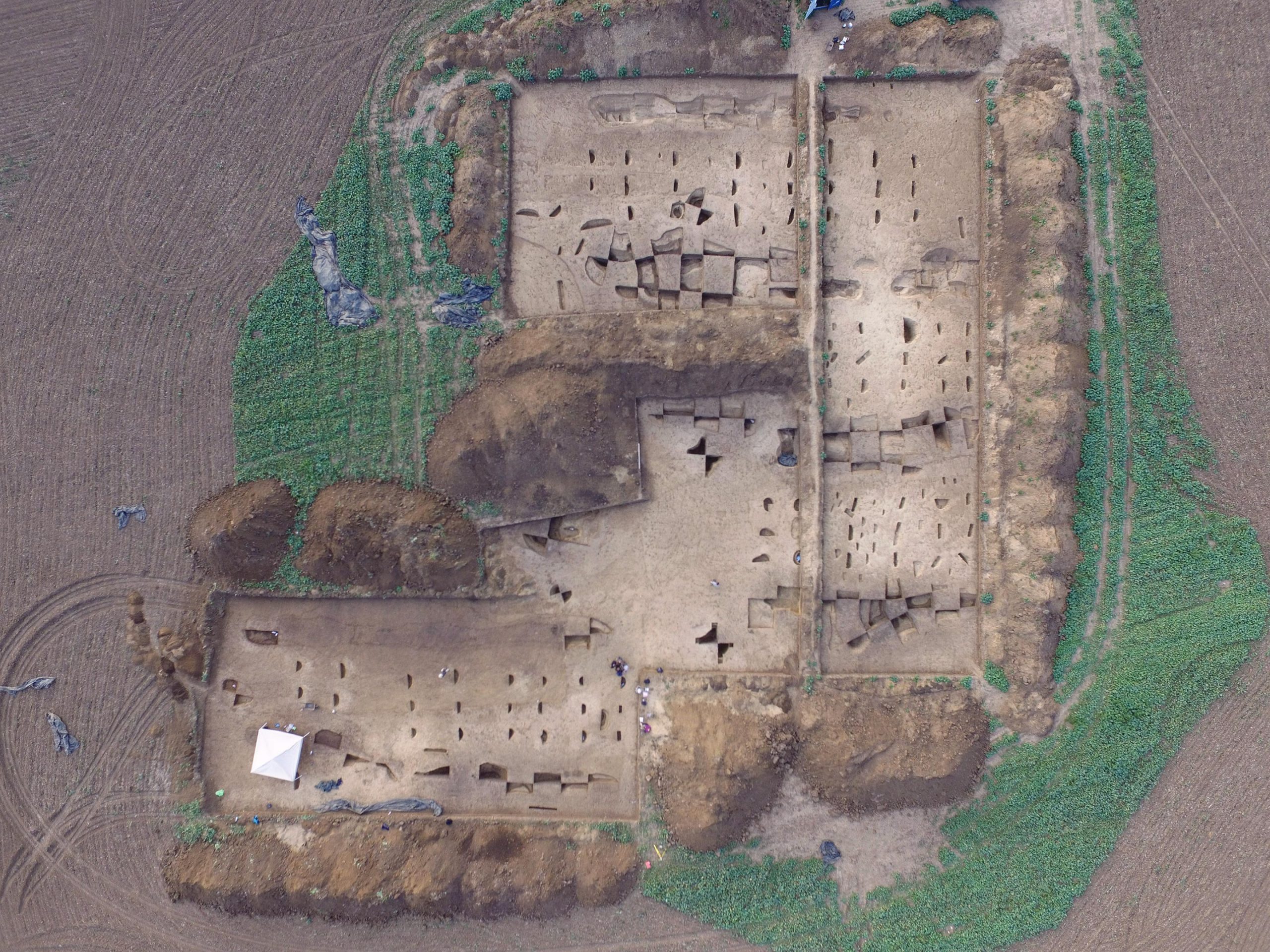
    Early Neolithic Settlement Excavation Area
    Aerial photo of the excavation area of an Early Neolithic settlement near Vráble in Slovakia. Credit: © Nils Müller-Scheeßel

    Human behavior is influenced by many things, most of which remain unconscious to us. One of these is a phenomenon known among perception psychologists as “pseudo-neglect.” This refers to the observation that healthy people prefer their left visual field to their right and therefore divide a line regularly left of center.

    A study published on Friday, January 10, 2020, in the online magazine PLOS ONE now shows for the first time what effect this inconspicuous deviation had in the prehistoric past. A Slovak-German research team has investigated the alignment of early Neolithic houses in Central and Eastern Europe. Scientists of the Collaborative Research Centre (CRC) “Scales of Transformation” of Kiel University (CAU) and the Slovakian Academy of Sciences were able to prove that the orientation of newly built houses deviated by a small amount from that of existing buildings and that this deviation was regularly counterclockwise.
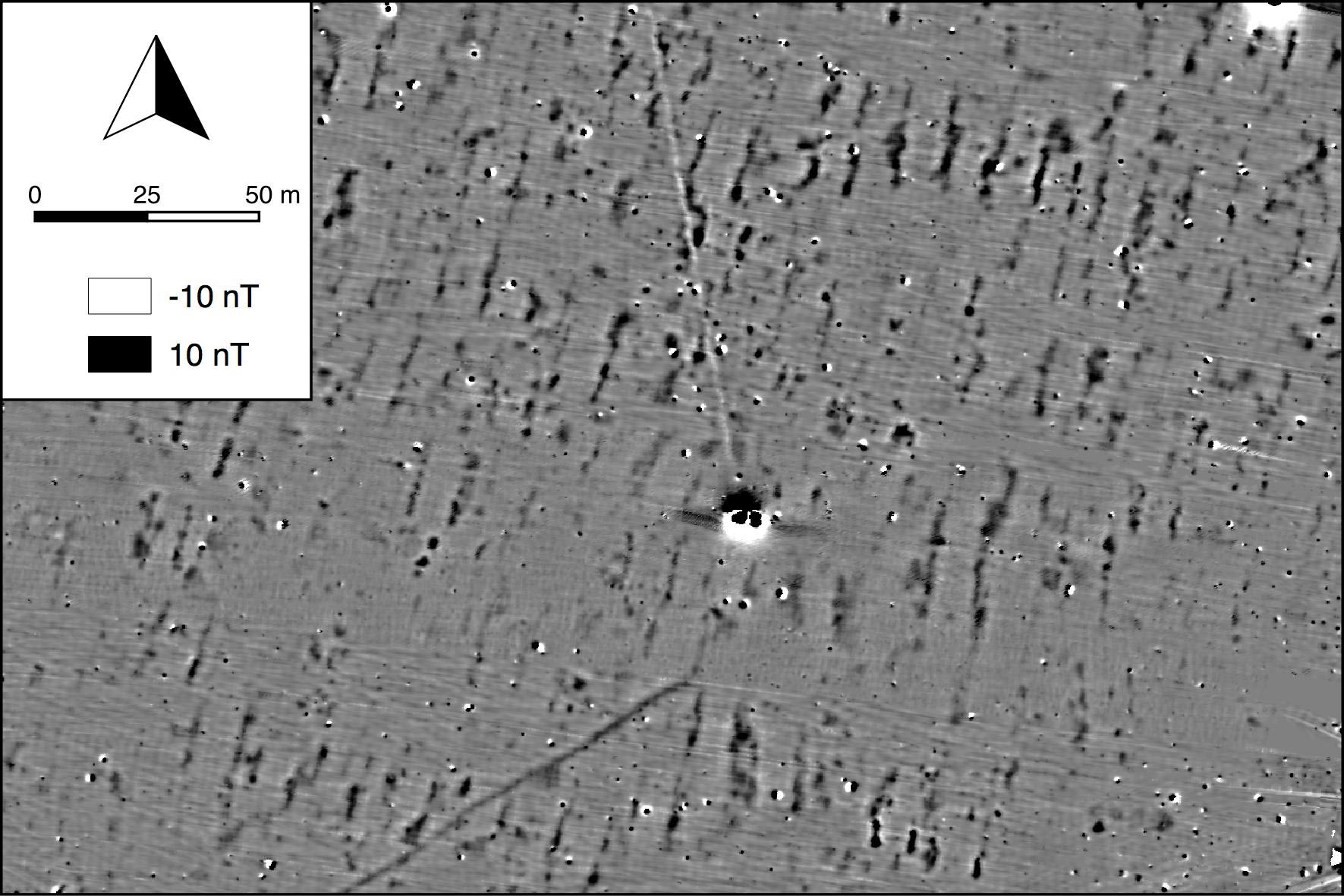
    Magnetic Plan Early Neolithic Settlement
    Magnetic plan of an early Neolithic settlement. Each two of the dark lines with a length of 20 to 30 meters represent the part of a house. Credit: © Nils Müller-Scheeßel

    Archaeologist Dr. Nils Müller-Scheeßel, who coordinated the study within the CRC, says: “Researchers have long assumed that early Neolithic houses stood for about a generation, i.e. 30 to 40 years, and that new houses had to be built next to existing ones at regular intervals. By means of age determination using the radiocarbon method, we can now show that the new construction was associated with a barely perceptible rotation of the house axis counterclockwise. We see “Pseudoneglect” as the most likely cause of this.”

    This insight was made possible by the interpretation of one of the fastest growing archaeological data sets at present, namely the results of geophysical magnetics measurements. Differences in the earth’s magnetic field are used to visualize archaeological features lying underground. Early Neolithic house ground plans belong to the best identifiable types of features.

    Geophysical Survey Near Vrable
    Preparation for the geophysical survey of an area near Vráble. The measuring device, which is pulled over the ground, records magnetic anomalies below the surface. This makes archaeological features such as house floor plans visible. Credit: © Martin Furholt

    “In recent years, we have discovered hundreds of Early Neolithic houses in our field of work in southwestern Slovakia using geophysical prospection methods. Excavating all these houses is neither possible nor desirable for reasons of monument conservation. The possibility of using “Pseudoneglect” to bring the houses into a relative sequence without excavation and thus to break down the settlement activity of an entire small region raises our research to a completely new level,” says Mister Müller-Scheeßel enthusiastically. “Absolute dating using scientific methods must of course confirm the basic trend in every case.”

    The study also refers to comparable archaeological observations at other places and times, which show that similar changes in orientation also seem to apply to more recent prehistoric periods. The significance of “Pseudoneglect” thus extends far beyond the dating of early Neolithic houses.

    Reference: “A new approach to the temporal significance of house orientations in European Early Neolithic settlements” by Nils Müller-Scheeßel, Johannes Müller, Ivan Cheben, Wiebke Mainusch, Knut Rassmann, Wolfgang Rabbel, Erica Corradini and Martin Furholt, 10 January 2020, PLOS ONE.
    DOI: 10.1371/journal.pone.0226082

    Pseudoneglect: The natural tendency of shifting spatial attention to the left. The concept was introduced evidenced by experimental findings regarding the line bisection task. In this task, participants shall mark the middle of a horizontal line. On average, their deviations from the actual center of the line tend to be more to the left than to the right. In other visuospatial tasks, a similar bias to the left hemifield is apparent. Pseudoneglect shows similarities to impairments in patients suffering from a medical condition called hemispatial neglect. However, the effects of pseudoneglect are marginally small and mainly restricted to experimental settings in scientific labs.

    Never miss a breakthrough: Join the SciTechDaily newsletter.
    Follow us on Google and Google News.

    Archaeology History Kiel University Popular
    Share. Facebook Twitter Pinterest LinkedIn Email Reddit

    Related Articles

    New Dating of Nebra Sky Disk Makes All Previous Astronomical Interpretations Obsolete

    Vast Stone Monuments Discovered in Saudi Arabia Were Constructed in 7,000 Years Ago

    Extinct Genetic Strains of Smallpox – World’s Deadliest Virus – Discovered in the Teeth of Viking Skeletons

    Revolutionary Archaeology: Entire Roman City Revealed Without Any Digging

    Year 777: Radiocarbon Dating Pinpoints Date for Construction of Mysterious Por-Bajin Complex

    Dead in Unmarked Graves Identified by Combining Genetics With Genealogy

    Mystery Surrounding Dinosaur Footprints on a Cave Ceiling Finally Solved

    How Ancient Poop Debunked Myth of Native American Lost Civilization

    Previously Dismissed As Myths, New Study Boosts Credibility of Columbus’ Cannibal Claims

    2 Comments

    1. Dave on January 15, 2020 7:40 am

      I tend to believe that pseudoneglect and even the results of seismic measurements depend a lot on earth’s rotation and orbit.

      Reply
    2. M. Eiford on October 31, 2025 11:21 pm

      I pseudoneglect this article.

      Reply
    Leave A Reply Cancel Reply

    • Facebook
    • Twitter
    • Pinterest
    • YouTube

    Don't Miss a Discovery

    Subscribe for the Latest in Science & Tech!

    Trending News

    First-of-Its-Kind Discovery: Homer’s Iliad Found Embedded in a 1,600-Year-Old Egyptian Mummy

    Beyond Inflammation: Scientists Uncover New Cause of Persistent Rheumatoid Arthritis

    A Simple Molecule Could Unlock Safer, Easier Weight Loss

    Scientists Just Built a Quantum Battery That Charges Almost Instantly

    Researchers Unveil Groundbreaking Sustainable Solution to Vitamin B12 Deficiency

    Millions of People Have Osteopenia Without Realizing It – Here’s What You Need To Know

    Researchers Discover Boosting a Single Protein Helps the Brain Fight Alzheimer’s

    World-First Study Reveals Human Hearts Can Regenerate After a Heart Attack

    Follow SciTechDaily
    • Facebook
    • Twitter
    • YouTube
    • Pinterest
    • Newsletter
    • RSS
    SciTech News
    • Biology News
    • Chemistry News
    • Earth News
    • Health News
    • Physics News
    • Science News
    • Space News
    • Technology News
    Recent Posts
    • This Simple Exercise Trick Builds Muscle With Less Effort, Study Finds
    • Middle Age Is Becoming a Breaking Point in America, Study Reveals
    • Scientists Discover How Coffee Impacts Memory, Mood, and Gut Health
    • How Cells Copy DNA Might Matter More Than We Ever Realized
    • Scientists Just Solved the Mystery of the Twelve Apostles
    Copyright © 1998 - 2026 SciTechDaily. All Rights Reserved.
    • Science News
    • About
    • Contact
    • Editorial Board
    • Privacy Policy
    • Terms of Use

    Type above and press Enter to search. Press Esc to cancel.