

The excavation of Manot Cave in Israel has uncovered ritual sites from 35,000 years ago and evidence of Neanderthal-human hybridization, highlighting its importance in studying ancient human societies.
Excavations at Manot Cave in Galilee, Israel, have uncovered evidence of ritual gatherings dating back 35,000 years, making it the earliest known site for such activities in Asia.
These findings, recently published in the journal Proceedings of the National Academy of Sciences, provide valuable insights into ancient human societies. This discovery was made possible by researchers from the Case Western Reserve University (CWRU) School of Dental Medicine, who spent over ten years assisting with excavations.
Ancient Human and Neanderthal Activities in Manot Cave
Manot Cave was used for thousands of years as a living space for both Neanderthals and humans at different times. In 2015, researchers from Case Western Reserve helped identify a 55,000-year-old skull that provided physical evidence of interbreeding between Neanderthal and homo sapiens, with characteristics of each clearly visible in the skull fragment.
The living area of the cave was located near the entrance. However, in the deepest part of the cave, eight stories below, the paper describes a large cavern with evidence it was used as a gathering space, possibly for rituals that enhanced social cohesion.
Symbolic Artifacts and Social Gatherings
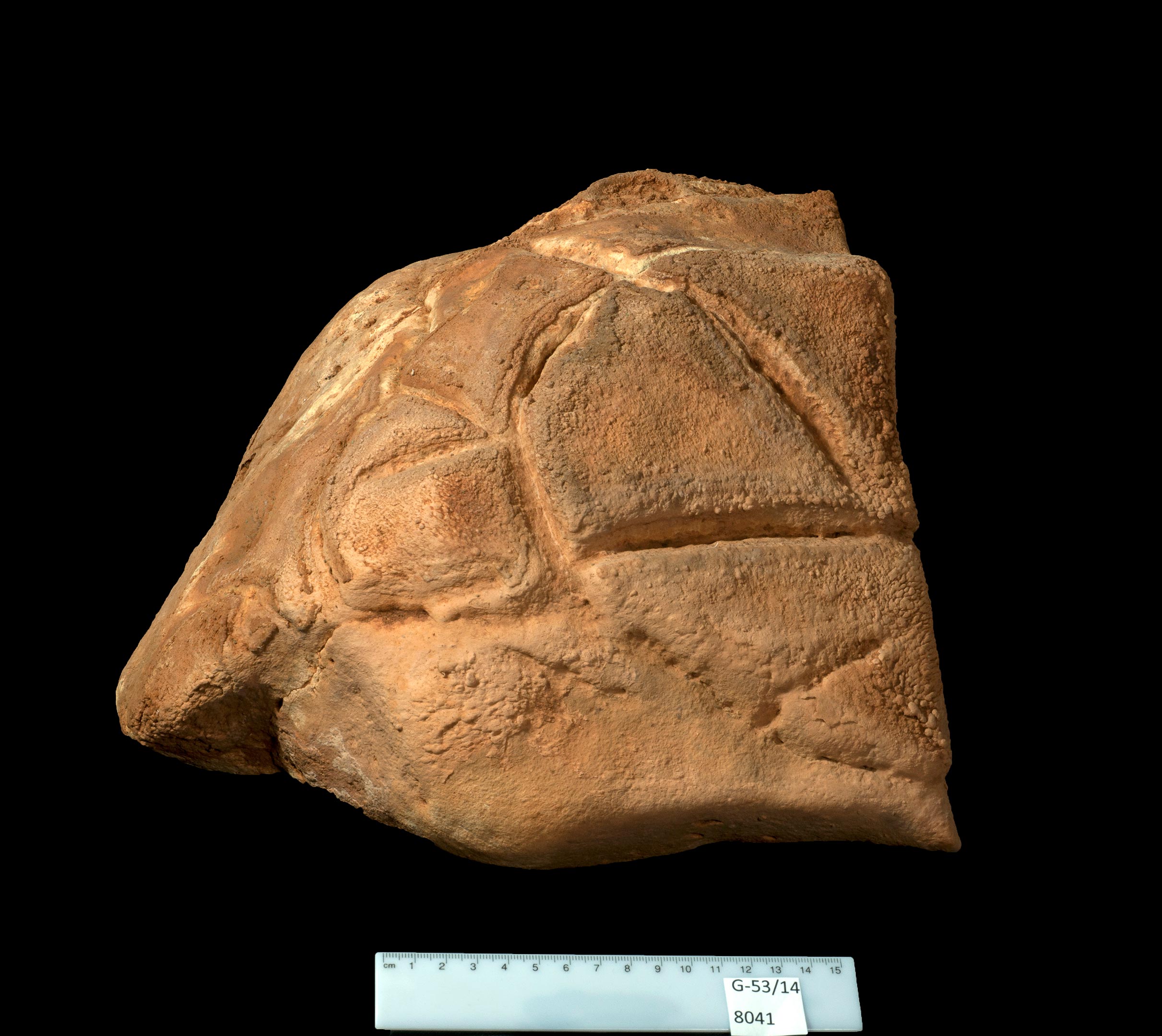
The cavern’s touchstone is an engraved rock deliberately placed in a niche in the cavern, with a turtle-shell design carved into its surface. The three-dimensional turtle is contemporaneous with some of the oldest cave paintings in France.
“It may have represented a totem or spiritual figure,” said Omry Barzilai, Head of Material Culture PaleoLab at the University of Haifa and the Israel Antiquities Authority, who led the team. “Its special location, far from the daily activities near the cave entrance, suggests that it was an object of worship.”
The cavern has natural acoustics favorable for large gatherings, and evidence of wood ash on nearby stalagmites suggests prehistoric humans carried torches to light the chamber.
Collaborative Archaeological Efforts
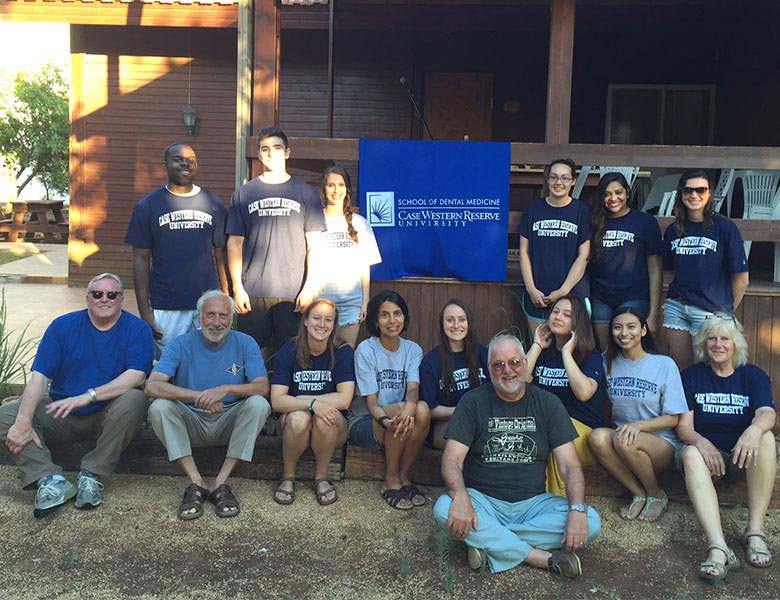
Manot Cave was discovered in 2008 by workers building condominiums in a mountain resort close to Israel’s border with Lebanon. Case Western Reserve’s School of Dental Medicine got involved in the excavation in 2012. The dean at the time, Jerold Goldberg, committed $20,000 annually for 10 years to CWRU’s Institute for the Science of Origins; the money was used to fund dental students’ summer research in Israel.
“I’m an oral and maxillofacial surgeon by training,” Goldberg said. “I provided the commitment and the money because I wanted people to understand the breadth and intellectual interest that dental schools have.”
Although not trained in archaeology, dental students can quickly identify bone fragments from rock, which makes them invaluable at excavations like Manot Cave.
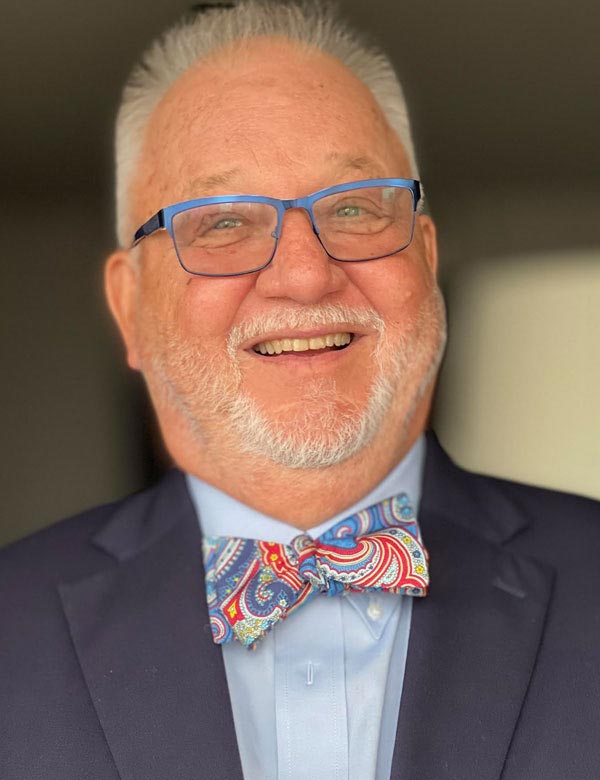
“Most people would not suspect that a dental school would be involved in an archaeological excavation,” said Mark Hans, professor and chair of orthodontics at the dental school. “But one of the things that are preserved very well in ancient skeletons are teeth, because they are harder than bone. There is a whole field of dental anthropology. As an orthodontist, I am interested in human facial growth and development, which, it turns out, is exactly what is needed to identify anthropological specimens.”
For 10 years, Case Western Reserve sent 10 to 20 dental students every summer to help with the Manot Cave excavation. The summer research became so popular that students from other dental and medical schools began applying to visit Israel with the CWRU team, according to Yvonne McDermott, the project coordinator.
Case Western Reserve also collaborated closely with Linda Spurlock, a physical anthropologist at Kent State University, whose expertise is putting a face on a skull using clay to build out the tissues that would have covered the bone when the person was alive.
“One of the things I liked most about working on this excavation was how much we learned from the other researchers,” Hans said. “Everyone has a narrow focus, like mammals, uranium-dating, hearths; and we all came together and shared our knowledge. We learned a lot over 10 years.”
Reference: “Early human collective practices and symbolism in the Early Upper Paleolithic of Southwest Asia” by Omry Barzilai, Ofer Marder, José-Miguel Tejero, Avner Ayalon, Miryam Bar-Matthews, Talia Abulafia, Ron Lavi, Mae Goder-Goldberger, Maayan Shemer, Lotan Edeltin, Alexander Wiegmann, Amos Frumkin, Avshalom Karasik, Gal Yasur, Reuven Yeshurun, Irit Zohar, Francesco Berna, Mark Hans, Jerold S. Goldberg, Yvonne McDermott, Linda Spurlock, Ariel Pokhojaev, Waseem Habashi, Hila May, Rachel Sarig and Israel Hershkovitz, 9 December 2024, Proceedings of the National Academy of Sciences.
DOI: 10.1073/pnas.2404632121
The Manot Cave project is supported by the Dan David Foundation, the Israel Science Foundation, the United States-Israel Binational Science Foundation, the Irene Levi Sala CARE Archaeological Foundation, and the Leakey Foundation. The research also involved experts from the Israel Antiquities Authority, Cleveland State University, the Geological Survey of Israel, the Hebrew University of Jerusalem, the University of Haifa, Tel Aviv University, Ben-Gurion University, the University of Vienna, the University of Barcelona, the University of Siena and Simon Fraser University.
Never miss a breakthrough: Join the SciTechDaily newsletter.
Follow us on Google and Google News.
7 Comments
Your dating techniques are so unscientific, not based on hard provable evidence but whimsical personal bias!
If you read the paper you would realize that isotopes of both oxygen and carbon were used for dating of the boulder inscriptions. Why is this unscientific in your opinion? Please back up your criticism.
Edward, when that level of uninformed comment is made it’s usually pretty obvious what you’re dealing with, not much!
Im the stone king, stoneyruverrelics youtube tiktok,subscribe, come learn about the beginning,it starts with the snake goddess whispering in the ear of the mother matriarch of the sabertooth lion clan. Carved pictogliphs, done with a geodesic crystal
Excellent article. Thank you for sharing.
Good comment Edward. A common practice with dating which never made sense. However please to read we are not related to Neanderthal.
I have the truth carved in stone, come learn, stoney river relics you tube