
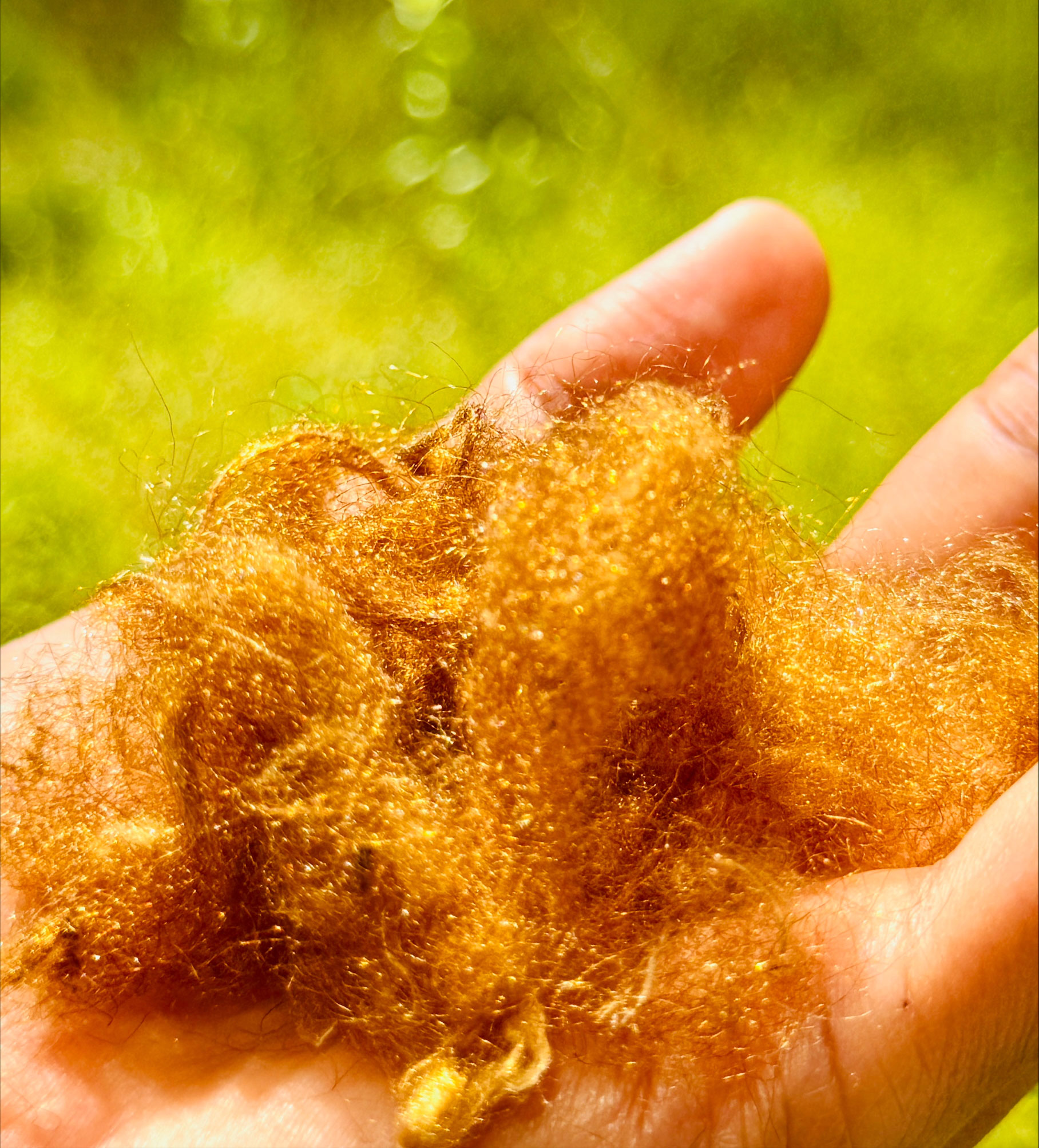
Once a fabric reserved for emperors, the fabled “sea silk” has been resurrected by Korean scientists who discovered a way to recreate its legendary golden luster using the byssus threads of the pen shell.
A luxurious fabric once worn only by ancient emperors has been recreated through the innovative work of Korean scientists. Led by Professor Dong Soo Hwang (Division of Environmental Science and Engineering / Division of Interdisciplinary Bioscience & Bioengineering, POSTECH) and Professor Jimin Choi (Environmental Research Institute), the research team succeeded in producing a golden fiber reminiscent of the material made more than 2,000 years ago.
Using the pen shell (Atrina pectinata) cultivated along Korea’s coasts, the researchers have not only revived the legendary sea silk but also uncovered the scientific explanation behind its enduring golden hue. Their findings were recently published in the renowned journal Advanced Materials.
Often called the “golden fiber of the sea,” sea silk was among the most treasured textiles of the ancient Roman world, worn exclusively by figures of great power such as emperors and popes. The rare material originates from the byssus threads secreted by Pinna nobilis, a large clam native to the Mediterranean that uses these threads to secure itself to rocks. Celebrated for its shimmering golden glow, lightness, and remarkable durability, sea silk became known as the “legendary silk.” One famous example is the Holy Face of Manoppello, a centuries-old relic kept in Italy that is believed to have been woven from sea silk.
An Endangered Legacy
However, due to recent marine pollution and ecological decline, Pinna nobilis is now an endangered species. The European Union has banned its harvesting entirely, making sea silk an artifact of the past—produced only in minuscule quantities by a handful of artisans.
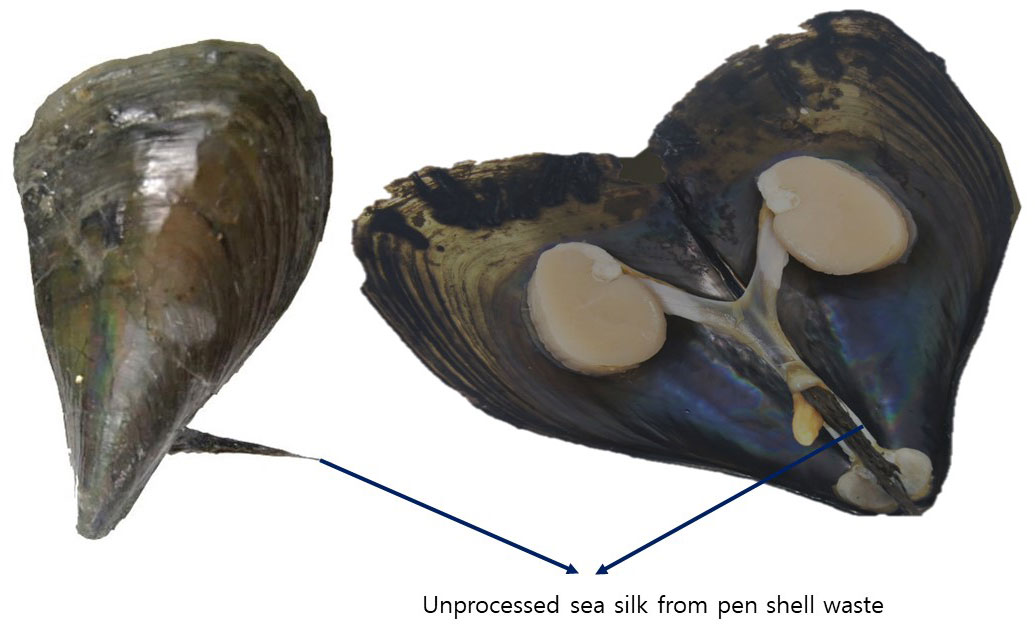
The POSTECH research team turned their attention to the pen shell Atrina pectinata, a species cultivated in Korean coastal waters for food. Like Pinna nobilis, this clam secretes byssus threads to anchor itself, and the researchers found that these threads are physically and chemically similar to those of Pinna nobilis. Building on this insight, they succeeded in processing pen shell byssus to recreate sea silk.
However, their achievement goes beyond mere replication of its appearance. The team also revealed the scientific secret behind sea silk’s distinctive golden hue and its resistance to fading over time.
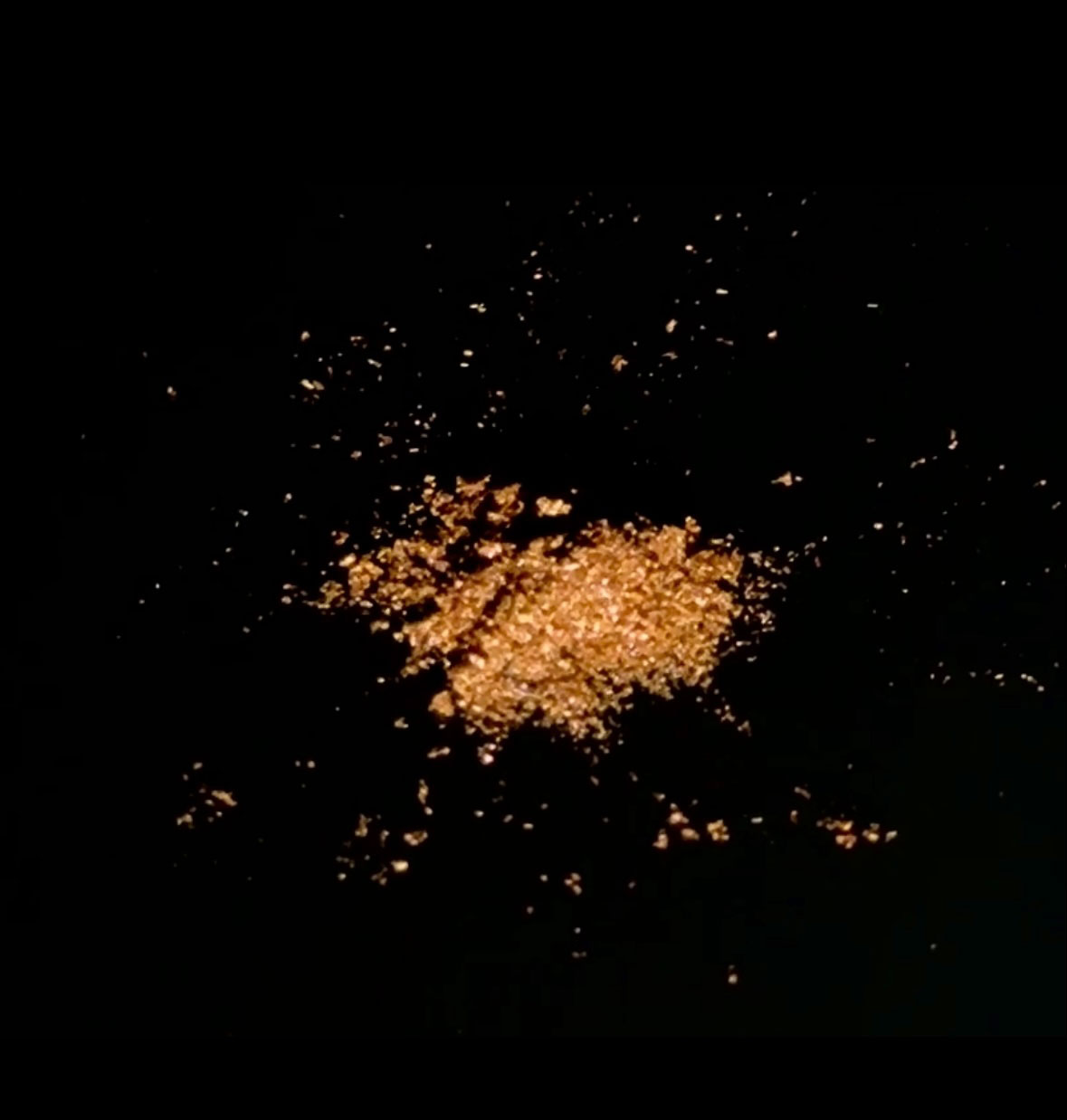
The golden color of sea silk is not derived from dyes, but from structural coloration—a phenomenon caused by the way light reflects off nanostructures. Specifically, the researchers identified that the iridescence arises from a spherical protein structure called “photonin,” which forms layered arrangements that interact with light to produce the characteristic shine. Similar to the color seen in soap bubbles or butterfly wings, this structure-based coloration is highly stable and does not fade easily over time.
The Role of Protein Structure
Moreover, the study revealed that the more orderly the protein arrangement, the more vivid the structural color becomes. Unlike traditional dyeing, this color is not applied but instead generated by the alignment of proteins within the fiber, contributing to the material’s remarkable lightfastness over millennia.
Another significant aspect of this research is the upcycling of pen shell byssus, previously discarded as waste, into a high-value sustainable textile. This not only helps reduce marine waste but also demonstrates the potential of eco-friendly materials that carry cultural and historical significance.
Professor Dong Soo Hwang noted, “Structurally colored textiles are inherently resistant to fading. Our technology enables long-lasting color without the use of dyes or metals, opening new possibilities for sustainable fashion and advanced materials.”
Reference: “Structurally Colored Sustainable Sea Silk from Atrina pectinata” by Jimin Choi, Jun-Hyung Im, Young-Ki Kim, Tae Joo Shin, Patrick Flammang, Gi-Ra Yi, David J. Pine and Dong Soo Hwang, 29 April 2025, Advanced Materials.
DOI: 10.1002/adma.202502820
Never miss a breakthrough: Join the SciTechDaily newsletter.
Follow us on Google and Google News.