
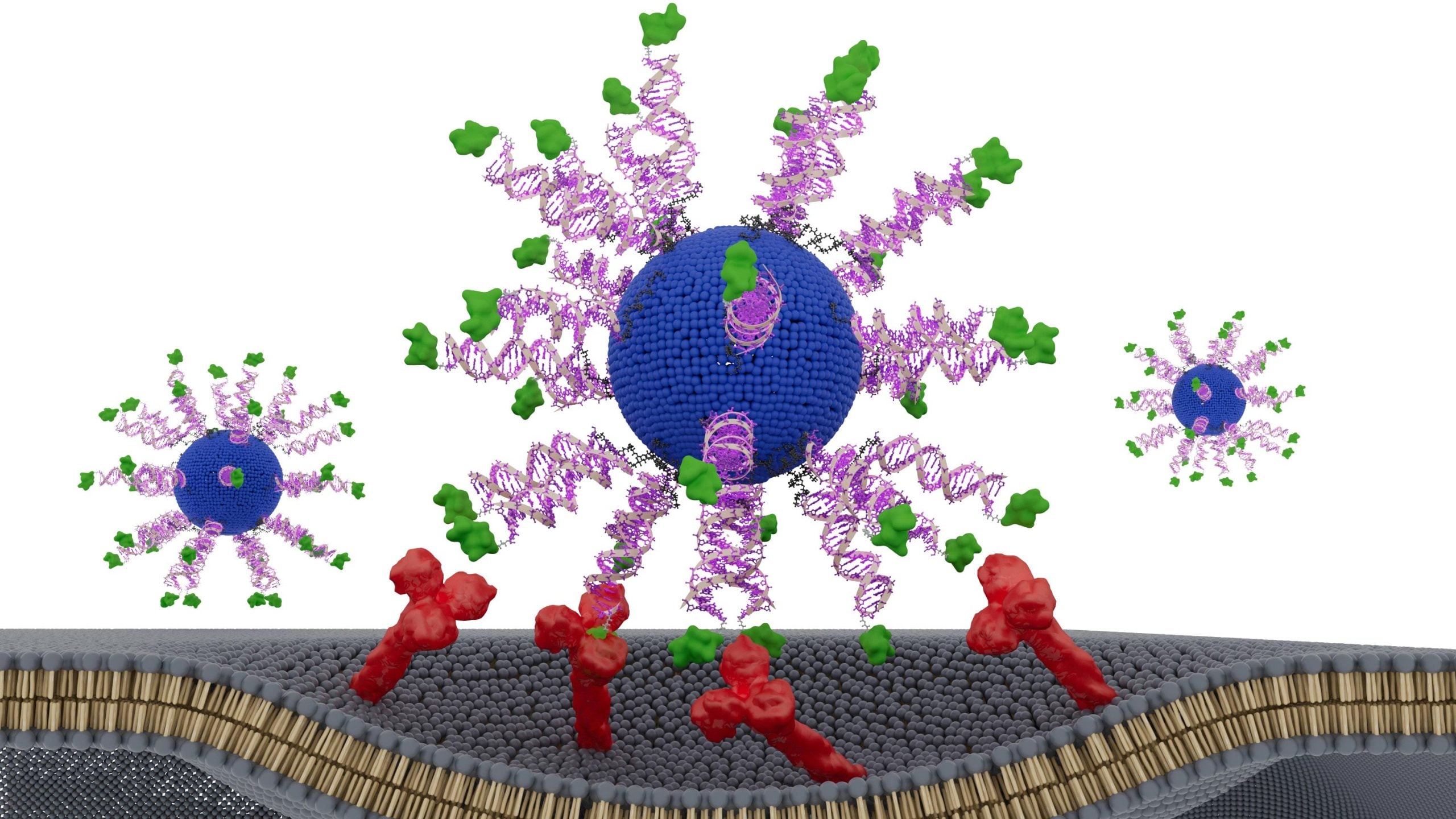
A tiny structural tweak turned a modest cancer vaccine into a tumor-fighting powerhouse.
Over the past 10 years, researchers at Northwestern University have uncovered an important lesson about vaccine design. What a vaccine is made of matters, but how those ingredients are arranged can be just as critical.
After confirming this principle in multiple studies, the team turned its attention to one of the toughest challenges in cancer treatment: tumors driven by HPV. In their latest work, the scientists found that carefully adjusting the position and orientation of a single cancer targeting peptide dramatically improved how well the immune system attacked tumors.
The findings will be published today (February 11) in Science Advances.
Engineering a Smarter HPV Cancer Vaccine
The researchers built their vaccine using a spherical nucleic acid (SNA), a globular DNA structure that naturally enters immune cells and activates them. They then rearranged the components of the SNA in several precise ways. Each version was tested in humanized animal models of HPV-positive cancer and in tumor samples taken from patients with HPV-related head and neck cancer.
One design clearly stood out. It reduced tumor growth, extended survival in animals, and generated higher numbers of highly active cancer-killing T cells. The results showed that even a subtle shift in how the components were organized could determine whether a nanovaccine produced a modest immune reaction or a powerful tumor destroying response.
This concept forms the foundation of a growing field called “structural nanomedicine,” a term coined by Northwestern nanotechnology pioneer Chad A. Mirkin. The field centers on SNAs, which Mirkin invented.
“There are thousands of variables in the large, complex medicines that define vaccines,” said Mirkin, who led the study. “The promise of structural nanomedicine is being able to identify from the myriad possibilities the configurations that lead to the greatest efficacy and least toxicity. In other words, we can build better medicines from the bottom up.”
Mirkin is the George B. Rathmann Professor of Chemistry, Chemical and Biological Engineering, Biomedical Engineering, Materials Science and Engineering, and Medicine at Northwestern. He holds appointments in the Weinberg College of Arts and Sciences, McCormick School of Engineering, and Northwestern University Feinberg School of Medicine. He also directs the International Institute of Nanotechnology and is a member of the Robert H. Lurie Comprehensive Cancer Center of Northwestern University. He co-led the study with Dr. Jochen Lorch, a professor of medicine at Feinberg and medical oncology director of the Head and Neck Cancer Program at Northwestern Medicine.
Moving Beyond the “Blender Approach” in Vaccine Design
Traditional vaccine development often relies on mixing ingredients together without precise organization. Cancer immunotherapies typically combine tumor molecules, known as antigens, with immune stimulating molecules called adjuvants. These are blended together and injected into patients.
Mirkin refers to this as the “blender approach,” where the components lack defined structure.
“If you look at how drugs have evolved over the last few decades, we have gone from well-defined small molecules to more complex but less structured medicines,” Mirkin said. “The COVID-19 vaccines are a beautiful example — no two particles are the same. While very impressive and extremely useful, we can do better, and, to create the most effective cancer vaccines, we will have to.”
In his laboratory, Mirkin demonstrated that organizing antigens and adjuvants into specific nanoscale arrangements can significantly improve results. When properly structured, the same ingredients can become more effective and less toxic than when they are simply mixed together.
The team has already applied this structural nanomedicine strategy to SNA vaccines targeting melanoma, triple negative breast cancer, colon cancer, prostate cancer, and Merkel cell carcinoma. These candidates have shown promise in preclinical studies, and seven SNA-based drugs have entered human clinical trials for various diseases. SNAs are also used in more than 1,000 commercial products.
Boosting CD8 T Cells Against HPV Tumors
For this study, the researchers focused on cancers caused by human papillomavirus, or HPV. HPV is responsible for most cervical cancers and an increasing share of head and neck cancers. Preventive HPV vaccines can stop infection, but they do not treat cancers that have already formed.
To fill that gap, the team designed therapeutic vaccines aimed at activating CD8 “killer” T cells, the immune system’s primary cancer-fighting cells. Each nanoparticle included a lipid core, immune activating DNA and a short fragment of an HPV protein found in tumor cells.
All versions contained identical ingredients. The only change involved where and how the HPV peptide fragment, or antigen, was positioned. The researchers created three designs. One concealed the antigen inside the nanoparticle. Two displayed it on the surface, attached at different ends known as the N terminus and C terminus. That small difference in orientation can affect how immune cells recognize and process the antigen.
The vaccine that presented the antigen on the surface attached via its N-terminus delivered the strongest response. It stimulated up to eight times more interferon-gamma, a crucial anti tumor signal produced by killer T cells. These T cells were much more effective at destroying HPV-positive cancer cells. In humanized mouse models, tumor growth slowed significantly. In patient derived tumor samples, cancer cell killing increased twofold to threefold.
“This effect did not come from adding new ingredients or increasing the dose,” Lorch said. “It came from presenting the same components in a smarter way. The immune system is sensitive to the geometry of molecules. By optimizing how we attach the antigen to the SNA, the immune cells processed it more efficiently.”
Redesigning Cancer Vaccines With Precision and AI
Mirkin now plans to revisit earlier vaccine candidates that showed promise but failed to trigger strong enough immune responses. By proving that nanoscale structure directly influences immune strength, this research offers a roadmap for improving therapeutic cancer vaccines built from known ingredients. That approach could speed development and reduce costs.
He also believes artificial intelligence will become central to vaccine design. Machine learning systems could rapidly analyze countless structural combinations to identify the most effective configurations.
“This approach is poised to change the way we formulate vaccines,” Mirkin said. “We may have passed up perfectly acceptable vaccine components because simply because they were in the wrong configurations. We can go back to those and restructure and transform them into potent medicines. The whole concept of structural nanomedicines is a major train roaring down the tracks. We have shown that structure matters — consistently and without exception.”
Reference: “E711-19 placement and orientation dictate CD8+ T cell response in structurally defined spherical nucleic acid vaccines” by Jeongmin Hwang, Tonatiuh A. Ocampo, Vinzenz Mayer, Janice Kang, Krishna S. Paranandi, Young Jun Kim, Zhenyu Han, John P. Cavaliere, Sergej Kudruk, Jochen H. Lorch and Chad A. Mirkin, 11 February 2026, Science Advances.
DOI: 10.1126/sciadv.aec3876
The study was supported by the National Cancer Institute (award numbers R01CA257926 and R01CA275430), the Lefkofsky Family Foundation and the Robert H. Lurie Comprehensive Cancer Center of Northwestern University.
Never miss a breakthrough: Join the SciTechDaily newsletter.
Follow us on Google and Google News.
1 Comment
thanks for this