
Scientists found that apratoxin S4, an anticancer drug candidate, can disrupt the replication of SARS-CoV-2 and other viruses by targeting the human protein Sec61, making it a promising broad-spectrum antiviral therapy.
More than two years after the COVID-19 pandemic began, people are realizing that the “new normal” will probably involve learning to co-exist with SARS-CoV-2 (the virus that causes COVID-19 disease). Some treatments are available, but with new variants emerging, researchers are looking toward new strategies. In research published today (June 29, 2022) in the journal ACS Infectious Diseases, scientists report that apratoxin S4, an anticancer drug candidate that targets a human protein, can interfere with the replication of many viruses, including SARS-CoV-2 and influenza A, offering a possible pan-viral therapy.
Although a number of COVID-19 vaccines exist, some people who received the shots have still become sick with the disease, and only a fraction of the world’s population is vaccinated. That means effective treatments are still needed, and a few are now available that target the virus’s RNA polymerase — the enzyme it uses to make more of its own RNA inside human cells. But some of these drugs, such as remdesivir, don’t work unless given at very early stages of infection and can require injections.
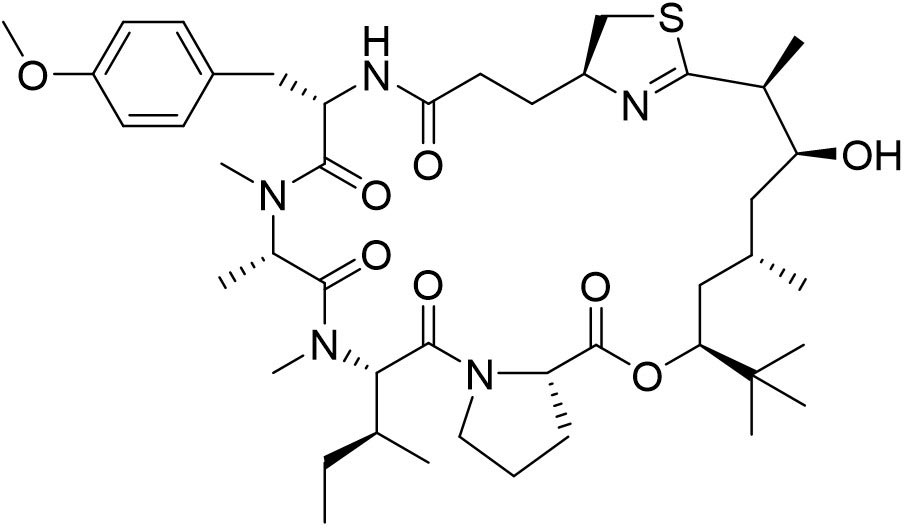
In the search for new ways to treat COVID-19, various research teams have revisited drugs that are already known to fight other diseases, a strategy called “repurposing.” One such preclinical-stage compound is apratoxin S4 (Apra S4), which is a molecule based on a natural product that has anti-cancer activity. Previous studies have shown that apratoxins can target a human protein called Sec61, which ensures that certain proteins are properly glycosylated and folded correctly. Since viruses don’t have their own machinery to do this, they hijack the process and force human cells to make functional viral proteins. Sec61 is essential for the influenza A, HIV, and dengue viruses to cause infection, so Hendrik Luesch and colleagues wondered if apratoxins could be a broadly effective, pan-viral medication that could also combat SARS-CoV-2.
Effectiveness of Apratoxin S4 Against Multiple Viruses
In tests with monkey and human cells exposed to SARS-CoV-2, the researchers discovered that treatment with Apra S4 reduced the number of infected cells compared with remdesivir treatment. The molecule was also effective against influenza A, Zika virus, dengue, and West Nile virus infections. Further testing revealed that Apra S4 didn’t prevent SARS-CoV-2 from entering cells, but it reduced the amount of viral protein that was produced and transported in cells, especially the spike protein, and it decreased viral RNA replication. With electron microscopy, the team observed that Apra S4 also largely blocked the formation of new viruses, with many vesicles in SARS-CoV-2-exposed monkey cells having no or very few brand-new viral particles in them. The researchers say more studies are needed, but these results suggest that Apra S4 and other inhibitors of the human Sec61 protein are broadly acting antivirals that could help in the fight against future pandemics.
Reference: “Sec61 Inhibitor Apratoxin S4 Potently Inhibits SARS-CoV‑2 and Exhibits Broad-Spectrum Antiviral Activity” by Marie O. Pohl, Laura Martin-Sancho, Ranjala Ratnayake, Kris M. White, Laura Riva, Qi-Yin Chen, Gauthier Lieber, Idoia Busnadiego, Xin Yin, Samuel Lin, Yuan Pu, Lars Pache, Romel Rosales, Marion Déjosez, Yiren Qin, Paul D. De Jesus, Anne Beall, Sunnie Yoh, Benjamin G. Hale, Thomas P. Zwaka, Naoko Matsunaga, Adolfo García-Sastre, Silke Stertz, Sumit K. Chanda and Hendrik Luesch, 29 June 2022, ACS Infectious Diseases.
DOI: 10.1021/acsinfecdis.2c00008
The authors acknowledge funding from the National Institutes of Health, the Debbie and Sylvia DeSantis Chair professorship, the Department of Defense, the Dengue Human Immunology Project Consortium, philanthropic donations, JPB Foundation, the Open Philanthropy Project and the Swiss National Science Foundation.
Never miss a breakthrough: Join the SciTechDaily newsletter.
Follow us on Google and Google News.