
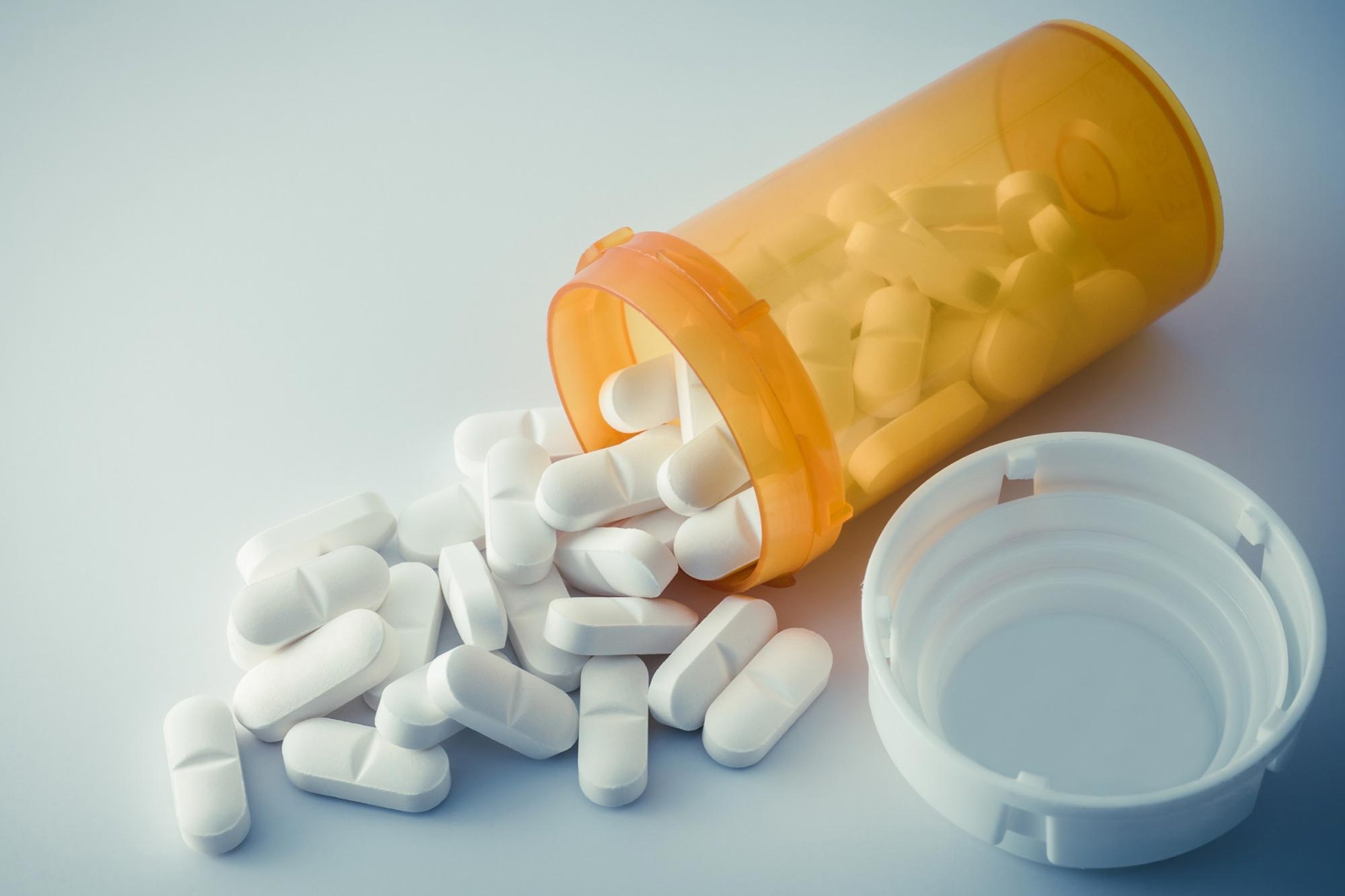
Researchers say the drug likely increases the risk of serious side effects, including heart disease, and that its potential harms probably outweigh any benefits.
A large review of existing studies suggests that tramadol, a strong opioid frequently prescribed for chronic pain, offers only limited relief for the conditions it is commonly used to treat. The findings come from a pooled analysis of available research published online in BMJ Evidence-Based Medicine.
The analysis also points to a higher likelihood of serious adverse effects, including heart disease. Based on these results, the researchers conclude that the risks associated with tramadol are likely greater than its benefits and recommend that its use be reduced.
Tramadol is a dual-action opioid used to manage moderate to severe pain, both acute and chronic. Because of this, it appears in several clinical guidelines as an option for pain management, the researchers explain.
Prescribing of tramadol has risen sharply in recent years, making it one of the most commonly used opioids in the United States. This increase may reflect the widespread perception that tramadol carries fewer side effects and is less addictive than other short-acting opioids.
While tramadol has been examined in earlier systematic reviews, the researchers note that no previous analysis has fully evaluated both its effectiveness and safety across a broad range of chronic pain conditions.
Reviewing the Evidence
In a bid to plug this knowledge gap, the researchers scoured research databases for randomized clinical trials published up to February 2025 that compared tramadol with placebo (dummy treatment) for patients with chronic pain, including cancer pain.
Nineteen clinical trials involving 6506 participants with chronic pain were eligible for inclusion in the analysis. Five looked at the impact of tramadol on neuropathic pain; nine focused on osteoarthritis; four looked at chronic low back pain; and one focused on fibromyalgia.
The average age of the trial participants was 58, but ranged from 47 to 69. Tablets were the primary formulation used; only one trial included topical cream. Length of treatment ranged from 2 to 16 weeks, while length of follow-up ranged from 3 to 15 weeks.
Pooled data analysis of the trial results showed that while tramadol eased pain, the effect was small and below what would be considered clinically effective.
Increased Risk of Harm
Eight of the trials reported on the proportion of serious side effects arising after treatment during follow-up periods of between 7 and 16 weeks.
Statistical analysis of these trials results indicated a doubling in the risk of harms associated with tramadol compared with placebo, mainly driven by a higher proportion of ‘cardiac events,’ such as chest pain, coronary artery disease, and congestive heart failure.
Use of tramadol was also associated with a heightened risk of some cancers, although the follow-up period was short, making this finding “questionable,” say the researchers.
Pooled data analysis of all the trial results indicated that tramadol treatment was associated with a heightened risk of several milder side effects, including nausea, dizziness, constipation, and sleepiness.
The researchers acknowledge that the outcome results were at high risk of bias, but this increases the likelihood that the findings overestimate the beneficial effects and underestimate the harmful effects of tramadol, they suggest.
Broader Context and Implications
They point out: “Approximately 60 million individuals worldwide experience the addictive effects of opioids. In 2019, drug use was responsible for approximately 600,000 deaths, with nearly 80% of these fatalities associated with opioids and approximately 25% resulting from opioid overdose.
“In the United States, the number of opioid-related overdose deaths increased from 49,860 in 2019 to 81,806 in 2022. Given these trends and the present findings, the use of tramadol and other opioids should be minimized to the greatest extent possible.”
They conclude: “Tramadol may have a slight effect on reducing chronic pain (low certainty of evidence) while likely increasing the risk of both serious (moderate certainty of evidence) and non- serious adverse events (very low certainty of evidence). The potential harms associated with tramadol use for pain management likely outweigh its limited benefits.”
Reference: “Tramadol versus placebo for chronic pain: a systematic review with meta-analysis and trial sequential analysis” by Jehad Ahmad Barakji, Mathias Maagaard, Johanne Juul Petersen, Yousef Ahmad Barakji, Emil Ørskov Ipsen, Christian Gluud, Ole Mathiesen and Janus Christian Jakobsen, 7 October 2025, BMJ Evidence-Based Medicine.
DOI: 10.1136/bmjebm-2025-114101
Never miss a breakthrough: Join the SciTechDaily newsletter.
Follow us on Google and Google News.
44 Comments
This article is false. I have osteoarthritis and have been taking tramadol since 1995. In my experience it has been very beneficial to reduce pain, including pain caused by hip replacement surgery and gall bladder removal surgery etc. I was unable to obtain my prescription for more than a month while transitioning to a new medical practice and did NOT experience any withdrawal symptoms. I refused Oxycodone during hip replacement and after gall bladder surgery taking 100 mg instead of my normal 50mg. My husband also had meniscus knee surgery and used 100 mg of tramadol rather than oxy with great success.
I’ve suffered chronic pain since a car accident 30 years ago. I get more relief from aspirin. Tramadol is worthless for anything other than a placebo effect.
Yet another liberal article trying to end any chance of pain relief for millions.
Sorry your loved one failed at life and became an addict. But that doesn’t give you the right to stop responsible opiod use.
Liberal? How old are you?
Like your buddy Rush? He’s failed, too, in every way as a human being.
I’ve had chronic pain all my life. I literally can’t remember not having pain. I found out at 30 years old that I have fibromyalgia, which now explains a lot; and I have been taking Tramadol for chronic pain since I was 18 years old. I have used Tylenol and advil/ibuprofen to manage my chronic pain and they don’t touch it. I can wake up feeling good and not experience excessive pain, and then I can wake up feeling all of the pain. On those days, tramadol, Tylenol, and ibuprofen, in combination, is the only thing that can provide in the moment relief. I have to work. I have a family. I don’t want to be laid up half of my life — I enjoy life!
Before tramadol, I tried everything under the sun to manage my pain! I tried chiropractic treatment, massages, cold/heat therapy, Cognitive Behavioral Therapy, inflammation diets, and more. None of those treatments worked for my fibromyalgia because, as I came to find out when I was 30 yo, fibromyalgia is neurological misfiring of pain nerves. Nothing that I have tried, and looked into trying, helps with that — except tramadol. When taking any opioid, your body is still in pain, but the opioid puts a filter over that pain and masks it.
Moreover, I have regular check ups with my doctor and have annual blood tests. I see my doctor for anything I feel is out of the ordinary. I will be a seeing a cardiologist because my doctor mentioned seeing one if I wanted to keep tabs on my heart.
While I don’t think this research or the paper is a lie (who am I to tell people with the medical background they’re lying?), I don’t think the researchers considered all of the ways people feel pain and all of the ways people have tried to manage their pain before resorting to tramadol in their final conclusion of saying tramadol provides more harm than good.
If you read it, it does says that different people handle medications differently. It states that it does more harm than good in some patients. You defend it like it’s a child that got into trouble. Relax.
Josh, I didn’t read her as a “child who got in trouble.” That’s unfair and judgmental.
I appreciate her open appraisal.
How do you know? What makes you a I iw it all?
Really ever medicine out there has side effects and most of them are a whole lot worse than tramadol you see these commercials on TV and all the things that can happen to you including death so what drug is good for you even the food we eat is not good for you sometimes you have to bite the bullet and give people something for pain that will work tramadol is a very weak opiate about the bottom of the scale they’re just trying to ruin your life again first they said gamma Fenton was the best thing then they found out it shrinks your brain so they took everybody off of it so what are they going to put them on now aspirin I don’t think so this is such bull crap ever medicine out there has south side effects
Not false. It says that it’s based on a study……meaning patients’ opinions. Different results for different people. Probably should have read the entire article instead on the headline
Being based on a study doesn’t mean people’s opinions. That’s not what a scientific study is, lol. An opinion poll collects opinions; a clinical study uses impartial, empirical methods. Sorry your education failed you.
It would be best to use holistic medication/ natural means than pharmaceutical drugs . There are fillers in their preparation in making of any pill , capsule or liquid .
Any of these products are not pure .
Many medications can danafe the heart. , liver, kidneys , GI , bones and nerves. So many black boxed drugs and doctors still prescribe them.
There are alternatives and they should be looked at seriously.
I agree. Tramadol as a high powered opioid is a joke. People in African nations pop these like candy. I’m stuck on this crap because pain doctors don’t want to risk the rath of the DEA. So I was taken of methadone and my life came to an end.
Another poorly researched article by a government funded mouthpiece. Opioids are cheap and effective in controlling pain. Look up ” big money in pain management”
Tramadol does absolutely nothing in reducing severe chronic pain.
I wnt ever take Tramadol again or recommend anyone to take.
I was on tramadol for 6+ year for migraines for pain management.
I now have permanent nerve damage from it in my legs. I experience charlie horse cramps multiple times a day.
I’ve been told there is nothing that can be done to prevent them.
They are a side effect from tramadol use.
I will never take Tramadol again nor will anyone in my family
WOW
I suffer from a lot of Charlie Horse type cramps too with no idea why. This article is very intriguing because I also took Tramadol for 18 years
I also want to mention that every single person — yes, every single person — will experience tramadol — and ANY medication — differently from every other person. Some people react well to tramadol but not to other opiates and vise versa. Nobody is lying here. It’s just that you (the general person) have not experienced the same things as described in research papers. So, I wish people would stop saying these researchers are lying or this paper is false because it’s not. What they describe just doesn’t align with your experience — and that is okay.
Thank you! Someone with some sense!!!!! Lol
Tramadol greatly helped with pain from my knee replacements. Never had a problem with addiction from these meds in fact I used only half of them. I find this article biased
These articles are little more than scare mongering at this point. I was born with spinal stenosis and fibromyalgia. I was lucky enough to only start to experience life altering pain in my late thirties. As a chronic pain patient I never once thought about abusing my medicine. Because I use it just so I can function day to day. The government came in and shut down the pain doctor I was seeing. Luckily I was still able to get half of the medicine I need. Not once did I ever think to go buy anything from the street. This whole concept that we have to stop using opioid medicine because it is so dangerous and addictive is garbage. Addicts will find anything to abuse. That is why they are addicted. At this point you are literally just torturing chronic pain patients for nothing.
AMEN!!
Did almost die without any type of pain medication.. my chronic pain was so intense that my heart was racing and my blood pressure skyrocketed. I fear that the suicide statistics will drastically increase if someone thinks that you can meditate and biofeedback past severe chronic pain with no avenue to correct what cases the pain. The people that think no one should take opioids has never been in prolonged severe pain.
Correct, Robyn.
Very realistic. A friend was prescribed this and found it very disorienting, ineffective and addictive. Had to back away slowly.
Yes!
It worked great until it didn’t. Completely stopped working for me overnight. Coming off tramadol was like coming off heroin or meth cold-turkey!
Overdoses are increasing and thus we should start cutting off medication for patients is such a stupid argument that anyone who makes it should be fired.
The level of stupidity in the world is a constant embarrassment. We have a lot of manual labor and farm jobs desperately looking for workers and at the same time have people who have no science, math or logic skills making proclamations like this.
Let’s get people into jobs that they can handle. If your brain tells you to cut off people’s medication because drug addicts exist you need to be working on a farm or in a factory. Your brain is like a prion and just exposing others to its output is toxic.
What on earth are you reading into my sharing of a personal experience? Your response is disturbing.
I 100% second all you said Eric.
I don’t believe this article either. I’ve used it for pain and it worked well. More BS to saying opioids are bad, nothing stops pain better!
Wife had hip replacement surgery. Only one pill and she felt dizzy, fainted and vomited while passed out. If it was not for me to turn her over and get her breathing again, she may have died by choking on vomit. You’ve been warned.
Wife had hip replacement surgery. Only one pill of Tramadol and she felt dizzy, fainted and vomited while passed out. If it was not for me to turn her over and get her breathing again, she may have died by choking on vomit. You’ve been warned.
I was prescribed Tramadol after shoulder surgery. It worked well
but had to stop taking it as it
stopped my kidneys from functioning and my legs swelled and I became breathless.
After stopping Tramadol my kidney function returned and I had a normal urinary output.
Tramadol was a lifesaver for me when I over worked my back lifting furniture for a friend. My back went into spasms and I literally had to get a shot of morphine because the pain was so bad & I collapsed. Tramadol worked so well I could function and go to work the next day. I wouldn’t want to take it regularly but its a miracle drug for occasional backaches.
The increase in opiate deaths is due to the increased availability of illegal fentanyl. It is not due to prescribed opiates.
And increase of illegal fentanyl is due to decrease in availability of necessary pain relief medications due to doctors being afraid to write a prescription. Sorry not sorry. Adults should be able to decide what treatments or modifications are put into their bodies then it should be the role of the doctor to second that decision. Not be the first and only. If someone wants to OD on pain pills they will. But that’s not what opioid deaths are number wise anyways. They are of illegal fentanyl because the user had zero chance at knowing what amount to use. Period.
False article… 1) Tramadol is not an opioid. It is actually synthetic…
Which makes it an opioid. Not an opiate I think you meant.
I WAS GIVEN TRAMADOL FOR A TORN HIP LIGAMENT.
DIDNT EVEN TOUCH IT OR ALLEVIATE THE PAIN AT ALL.
I hurt my back.. Same result. NO relief of any kind! Just a waste of time at the emergency room, and waste of money at the pharmacy.
If you are wanting pain relief don’t bother with Tramadol. It is the most worthless drug ever put on the open market. A placebo works better. You don’t have to worry about any side effects, because it does NOTHING. Biggest scam of all time.
As a pharmacist I agree that Opioids are second to none for severe pain. I will admit to being strict on what I approve for what conditions and or based upon my assessment of the patients historical data that now provides us a better and more complete picture of a person’s likely hood of developing an addiction. I am compassionate but I just don’t think we should be taking opioids for longer than 3-7 days for moderate pain. There are things we can provide to help give a synergetic effect to lessen discomfort, but tramadol is about as effective as darvon (darvecet). They were taken off the market for a reason. It caused similar rates of addiction without true relief that Norco 10 may provide. I think Suboxone with or without naloxone has great pain relief based on clinical studies, but because the drug provides mild euphoria only, there is more of a benefit. Fentanyl I will only ever fill for cancer patients, same with duladid, which is thankfully no longer on the market. More insurance companies should allow for lidocaine patches and or studies or lidocaine based medications. Also for those of you taking Xanax and tramadol, that is deadly even if weak. Suboxone warns against it too, however studies show that Klonopin or lorazepam in doses considered reasonable are safe unless or pre-existing conditions. Nsaids and Ib Profin remains deadly drugs from long term effects. Celebrex, which is what that basically is, has a black box lable due to complications that have risen.
Pharmacist or doctor. Your first rule of ethics is do no harm. Keeping much needed relief from a pain patient. Addict or not. Is doing harm. Shame on you. You really need to spend a year with chronic pain and a switch in career let’s say to physical labor intensive then be told no because someone else feels you are at risk of being an addict. We. Are all human so we all have opioid receptors. We call them that because it’s what we call the pain treatment. It’s a lock with a key that we found. If someone would actually look behind the curtain at everything I am 100 percent sure that all opioid deaths are from someone whom has been denied medication and was forced to find relief elsewhere. And that doesn’t make them an addict or abuser it makes them human for not wanting to be in pain. Period. And suboxone, methadone don’t help with chronic pain and are off label use if prescribed for that reason. Hydrocodone does but stops at 10mg and has a lower overdose risk and doesn’t transfer through breast milk or placenta however they stopped looking at those to make higher dosages nor to really prescribe anymore. Gee I wonder why (sarcasm intended)