
Solar power, wind energy, and electric vehicles are reshaping global emissions trends, but a new scientific assessment reveals that the world’s remaining carbon budget is shrinking at an alarming rate.
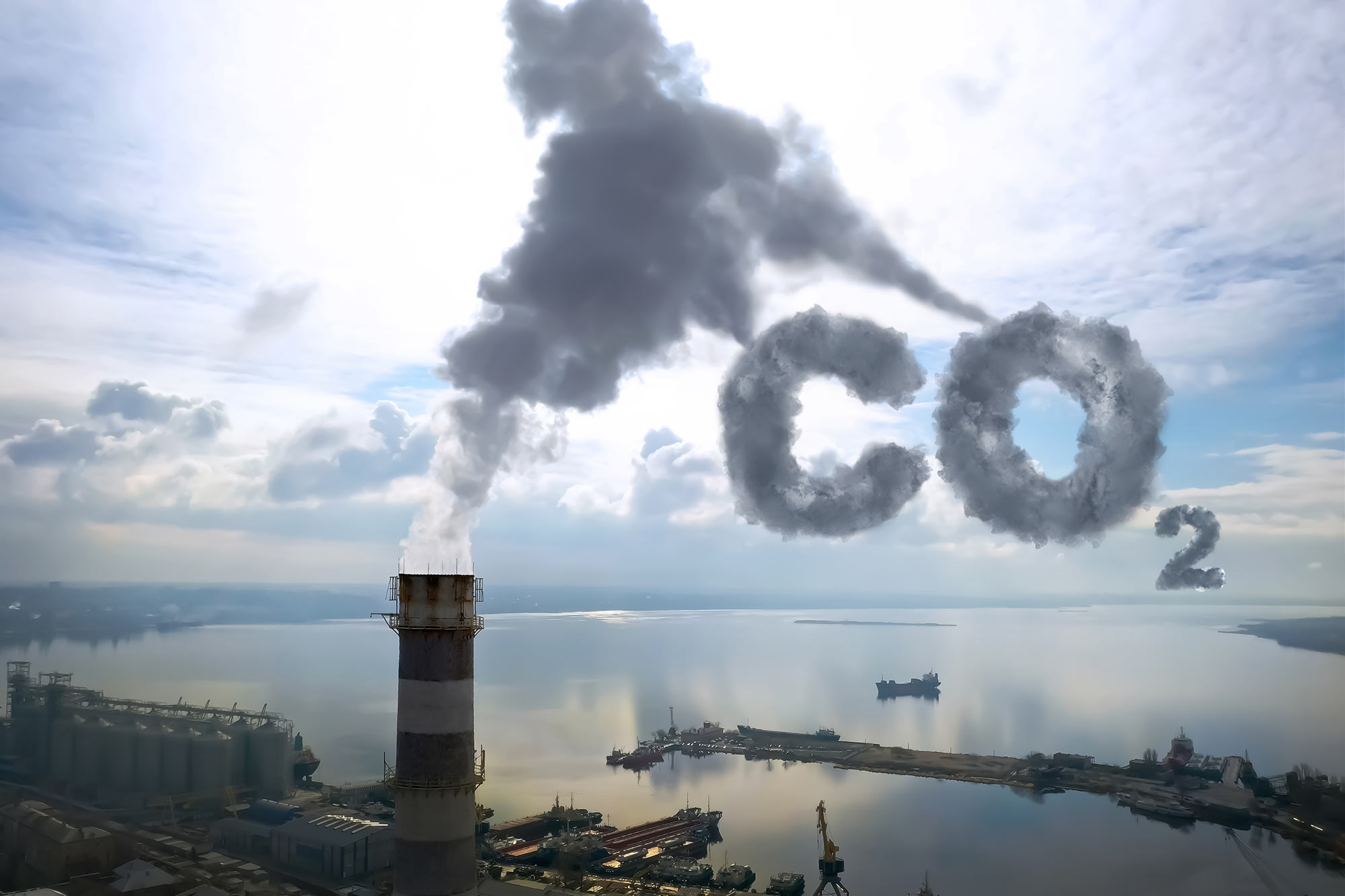
Global fossil fuel emissions are expected to fall slightly in 2026, but the world’s total carbon dioxide output is still projected to rise. A new assessment by the Global Carbon Project estimates that fossil CO2 emissions will decline by 0.4% to 38.2 billion metric tons (42.1 billion U.S. tons), partly because of expanding clean energy and disruptions linked to the Iran conflict.
However, increasing emissions from deforestation and other changes in land use are expected to push total global CO2 emissions to 43.3 billion metric tons (47.7 billion U.S. tons), up from 42.8 billion metric tons in 2025. The findings show that renewable energy is beginning to reshape global emissions trends, but its growth has not yet produced a sustained worldwide decline.
Why Fossil Fuel Emissions Are Falling
Oil is expected to account for much of the projected reduction in fossil fuel emissions. Global CO2 emissions from oil are forecast to drop by 1.9%, largely reflecting the energy shock associated with the Iran conflict, which has increased prices and constrained supplies. Natural gas emissions are expected to decrease by 0.3%, while coal emissions could rise by 0.6%. Emissions from international aviation and shipping are each projected to fall by 1%, with reduced activity in the Middle East contributing to the aviation decline.
“A decline in fossil CO2 emissions is encouraging, but a reduction driven partly by geopolitical shocks is not a sustainable climate solution,” said Professor Pierre Friedlingstein, director of the Global Carbon Budget Office at the University of Exeter, who led the study. “The long-term answer remains the rapid deployment of clean energy technologies. While renewables and electric vehicles are increasingly offsetting growth in energy demand, further acceleration is needed if global emissions are to peak and enter a sustained decline.”
Glen Peters, Research Professor at the CICERO Center for International Climate Research, emphasized that temporary reductions should not be confused with lasting progress. “A drop in emissions in one year is not a peak unless it is driven by structural change. Accelerated deployment of solar, wind, batteries, and electric vehicles are pushing emissions down in dozens of countries, and slowing emissions growth in many more, but the changes are not sufficient to lock in a peak in global emissions.”
Clean Energy Is Changing the Global Picture
Solar and wind power, together with electric vehicles, are increasingly limiting emissions despite rising energy demand. According to the assessment, these technologies are meeting or avoiding roughly two-thirds of the increase in global energy demand. Solar and wind generation alone are projected to prevent 4.6 billion metric tons (5.1 billion U.S. tons) of CO2 emissions in 2026, compared with 4.1 billion metric tons in 2025 and just 0.28 billion metric tons in 2010.
China is central to this transformation. Although it produces approximately 32% of global fossil fuel emissions, it also accounts for half of the emissions avoided worldwide through renewable energy and electric vehicles. China’s emissions are projected to decline by 0.9% in 2026, helped by lower oil consumption and continued renewable electricity expansion. Coal emissions, however, are expected to increase slightly by 0.3%. China also leads the world in carbon uptake from reforestation and afforestation (new forests).
“Clean technologies are making a real difference in reducing global emissions. Solar and wind power and electric vehicles are expanding rapidly, led by China. Countries on every continent are decreasing their emissions while growing their economies. A further acceleration could turn the tide on global emissions within a few years,” said Professor Corinne Le Quéré, Royal Society Research Professor at the University of East Anglia’s School of Environmental Sciences.
Different Countries, Different Emissions Trends
Emissions are projected to decline by 1.3% in the United States, primarily because coal consumption is falling after increasing in 2025 amid high natural gas prices and cold weather. The European Union is expected to record a 1.5% reduction, while Japan’s emissions could decrease by 1%. India is moving in the opposite direction, with emissions projected to rise by 4.4%, exceeding its average annual growth rate of 3.5% over the past decade. Emissions across the rest of the world are expected to decrease by 0.7%, largely because of reduced oil consumption.
An accompanying analysis, currently in press in a separate peer-reviewed journal, identifies a broader shift in the relationship between economic growth and carbon emissions. In 59 countries, emissions were lower in 2025 than in 2019, before the COVID-19 pandemic, even as their economies expanded. Emissions growth has also slowed in regions where total emissions continue to rise, including China, India, and other emerging economies.
Forest Loss Is Pushing Total Emissions Higher
The decline in fossil fuel emissions is being offset by increasing carbon releases from land-use change (such as deforestation). These emissions are projected to reach 5.1 billion metric tons (5.6 billion U.S. tons) in 2026. The increase is linked partly to peat fires and forest degradation in Southeast Asia, where drier conditions associated with El Niño have heightened fire risks. Nearly all peat fires are ignited by human activities.
Natural ecosystems also influence how much CO2 remains in the atmosphere. Forests, soils, and oceans absorb substantial amounts of carbon, acting as natural carbon sinks. The Global Carbon Budget reports that land-based carbon absorption has recovered after weakening sharply during the 2023 and 2024 El Niño event. However, the powerful El Niño developing in 2026 is expected to affect this natural carbon uptake over the coming year.
The World’s Remaining Carbon Budget Is Shrinking
The latest assessment estimates that only 150 billion metric tons (165 billion U.S. tons) of CO2 can be emitted before cumulative emissions reach the level associated with 1.5°C (2.7°F) of global warming above preindustrial levels. At current emission rates, that remaining carbon budget amounts to less than four years. Meanwhile, atmospheric CO2 concentrations are projected to reach 427.7 parts per million in 2026, approximately 54% above preindustrial levels.
Removing carbon dioxide from the atmosphere is another part of the challenge. Permanent deforestation released an average of approximately 3.8 billion metric tons (4.2 billion U.S. tons) of CO2 annually between 2016 and 2025. Reforestation and afforestation offset roughly half of those emissions. China, the European Union, and the United States account for the largest combined removals through forest restoration and expansion, while deforestation outweighs these gains in countries including Brazil, Russia, and Indonesia. Technologies designed to remove atmospheric CO2 remain limited, currently capturing less than the amount released by fossil fuels in just 30 minutes.
“Alongside reducing emissions, we need to scale up CO2 removal to reach greenhouse gas neutrality. Afforestation and reforestation already remove substantial amounts of CO2, but these gains are still more than offset by emissions from deforestation, and novel carbon removal remains very limited. We need to act on all these fronts now,” said Professor Julia Pongratz of Ludwig-Maximilian-University Munich.
Could Global Emissions Reach a Lasting Peak?
Despite continued increases in total emissions, their long-term growth rate has slowed substantially. Global CO2 emissions rose by an average of 0.3% annually over the past decade, compared with 1.7% annually during the preceding decade. The accompanying analysis projects that between now and the end of 2028, additional solar and wind generation and electric vehicles could prevent emissions equivalent to 64% to 79% of those associated with rising energy demand. Electric vehicles are becoming increasingly influential, although only about 10% of the global passenger car fleet was electrified in 2025 (or 6% excluding hybrids).
The researchers conclude that continued deployment of clean technologies could bring the first sustained global decline in CO2 emissions within reach. However, achieving that outcome depends on maintaining and accelerating their expansion rather than relying on temporary reductions caused by economic or geopolitical disruptions. As the authors write, “If further acceleration of clean technology deployment can be supported through time, a sustained peak and decline in global CO2 emissions could be a few years away.”
Reference: “Global Carbon Budget 2026” by Pierre Friedlingstein, Michael O’Sullivan, Robbie M. Andrew, Judith Hauck, Matthew W. Jones, Peter Landschützer, Corinne Le Quéré, Hongmei Li, Ingrid T. Luijkx, Are Olsen, Glen P. Peters, Wouter Peters, Julia Pongratz, Clemens Schwingshackl, Stephen Sitch, Josep G. Canadell, Philippe Ciais, Kjetil Aas, Simone R. Alin, Vivek Arora, Nicholas R. Bates, Kimberly Bedard, David Martin Belda, Nicolas Bellouin, Alice Benoit-Cattin, Carla F. Berghoff, Sarah Berthet, Laurent Bopp, Ida Bagus Mandhara Brasika, Eleanor Burke, Leon Casse, Matthew A. Chamberlain, Frédéric Chevallier, Louise P. Chini, Margot Cronin, Susan E. Curless, Tim DeVries, Tobias Ehmen, Matthew P. Enright, Kazutaka Enyo, Michael Erb, Wiley Evans, Amanda R. Fay, Ben Felzer, Daniel J. Ford, Adrianna Foster, Filippa Fransner, Agneta Fransson, Andrew Friedman, Thomas Gasser, Marion Gehlen, Thanos Gkritzalis, Giacomo Grassi, Luke Gregor, Nicolas Gruber, Özgür Gürses, Wensu Hao, Kirsty Harrington, Jens Heinke, George C. Hurtt, Tatiana Ilyina, Akihiko Ito, Andrew R. Jacobson, Atul K. Jain, Rajesh Janardanan, Tereza Jarníková, Annika Jersild, Fei Jiang, Zhe Jin, Linus Kamb, Etsushi Kato, Ralph F. Keeling, Kees Klein Goldewijk, Jürgen Knauer, Jan Ivar Korsbakken, Taro Kunimitsu, Xin Lan, Vladimir Lapin, Siv K. Lauvset, Simone Le Chevère, Woo-Sung Lee, Enhui Liao, Junjie Liu, Zhu Liu, Sebastiaan Luyssaert, Lei Ma, Suman Maity, Gregg Marland, Patrick C. McGuire, Nicolas Metzl, Juliette Mignot, Natalie M. Monacci, Eric J. Morgan, Jens D. Müller, David R. Munro, Miaki Muramatsu, Shin-Ichiro Nakaoka, Craig Neill, Tobias Nützel, Léa Olivier, Timothy Osborn, Xosé A. Padín, Paul I. Palmer, Sudhanshu Pandey, Denis Pierrot, Ben Poulter, Zhangcai Qin, Yumou Qiu, Gregor Rehder, Laure Resplandy, Christian Rödenbeck, Alizée Roobaert, Thais M. Rosan, Simone Rossi, Jörg Schwinger, Gereon Seeberg, Roland Séférian, Elisabeth H. Shadwick, Ingunn Skjelvan, Karolina Slominska-Durdasiak, T. Luke Smallman, Mohanan G Sreeush, Qing Sun, Adrienne J. Sutton, Colm Sweeney, Shintaro Takao, Hiroaki Tatebe, Jens Terhaar, Hanqin Tian, Bronte Tilbrook, Takahiro Toyoda, Joaquin A. Triñanes, Francesco Tubiello, Guido R. van der Werf, Auke van der Woude, Sebastiaan J. van de Velde, Anthony P. Walker, Rik Wanninkhof, Xiaojuan Yang, Wenping Yuan, Xu Yue, Jiye Zeng, Ning Zheng and Bo Zheng, 10 November 2026, Earth System Science Data Discussions.
DOI: 10.5194/essd-2026-895
Never miss a breakthrough: Join the SciTechDaily newsletter.
Follow us on Google and Google News.
1 Comment
I wish liberals had not pushed unsustainable population growth mainly through immigration the last few decades. The planet was already far over capacity. That really put us in a bad situation that won’t peak now for decades.