
Close Menu
    Facebook X (Twitter) Instagram
    SciTechDaily
    • Biology
    • Chemistry
    • Earth
    • Health
    • Physics
    • Science
    • Space
    • Technology
    Facebook X (Twitter) Pinterest YouTube RSS
    SciTechDaily
    Home»Biology»Secrets of Magnificent Soaring Birds Revealed – Flapping Their Wings for Just 1% of Flight Time
    Biology

    Secrets of Magnificent Soaring Birds Revealed – Flapping Their Wings for Just 1% of Flight Time

    By Swansea UniversityJuly 19, 2020No Comments4 Mins Read
    Facebook Twitter Pinterest Telegram LinkedIn WhatsApp Email Reddit
    Share
    Facebook Twitter LinkedIn Pinterest Telegram Email Reddit
    Andean Condor
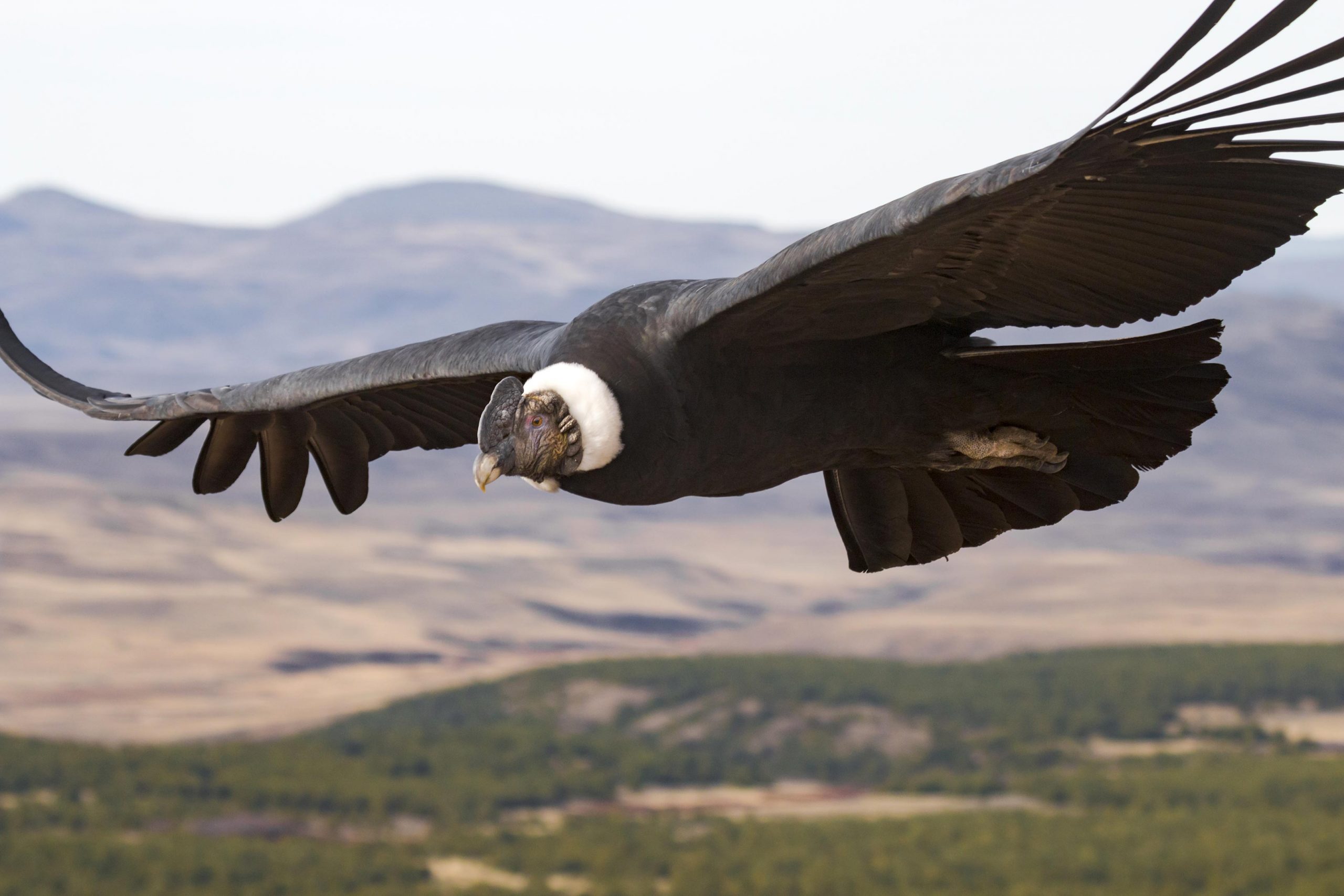
    The Andean condor in flight – recording devices revealed it actually flaps its wings for just one percent of its flight time. Credit: Facundo Vital

    New research has revealed when it comes to flying the largest of birds rely on air currents, not flapping to move around.

    New research has revealed when it comes to flying the largest of birds don’t rely on flapping to move around. Instead, they make use of air currents to keep them airborne for hours at a time.

    The Andean condor – the world’s heaviest soaring bird which can weigh in at up to 15kg (33lb) – actually flaps its wings for one percent of its flight time.

    The study is part of a collaboration between Swansea University’s Professor Emily Shepard and Dr. Sergio Lambertucci in Argentina, which uses high-tech flight-recorders on Andean condors. These log each and every wingbeat and twist and turn in flight as condors search for food.

    The team wanted to find out more about how birds’ flight efforts vary depending on environmental conditions. Their findings will help to improve the understanding of large birds’ capacity for soaring and the specific circumstances that make flight costly.

    During the study, the researchers discovered that more than 75 percent of the condors’ flapping was associated with take-off.

    However, once in the sky condors can sustain soaring for long periods in a wide range of wind and thermal conditions — one bird managed to clock up five hours without flapping, covering around 172 km or more than 100 miles.

    The findings are revealed in a new paper “Physical limits of flight performance in the heaviest soaring bird,” which has just been published by Proceedings of the National Academy of Sciences.

    Dr. Hannah Williams, now at the Max Planck Institute for Animal Behaviour, said: “Watching birds from kites to eagles fly, you might wonder if they ever flap.

    “This question is important because by the time birds are as big as condors, theory tells us they are dependent on soaring to get around.

    “Our results revealed the amount the birds flapped didn’t change substantially with the weather.

    “This suggests that decisions about when and where to land are crucial, as not only do condors need to be able to take off again, but unnecessary landings will add significantly to their overall flight costs.”

    Professor Shepard, who is part of Swansea Lab for Animal Movement, said as all the birds they studied were immature, it demonstrated that low investment in flight is possible even in the early years of a condor’s life.

    Closer examination showed the challenges the birds faced as they moved between weak thermals. The condors were seen to flap more as they reached the end of the glides between thermals when they were likely to be closer to the ground.

    Dr. Lambertucci explained: “This is a critical time as birds need to find rising air to avoid an unplanned landing. These risks are higher when moving between thermal updrafts.

    “Thermals can behave like lava lamps, with bubbles of air rising intermittently from the ground when the air is warm enough. Birds may therefore arrive in the right place for a thermal, but at the wrong time.”

    “This is a nice example of where the behavior of the birds can provide insight into the behavior of the air.”

    Reference: “Physical limits of flight performance in the heaviest soaring bird” by H. J. Williams, E. L. C. Shepard, Mark D. Holton, P. A. E. Alarcón, R. P. Wilson, and S. A. Lambertucci, 13 July 2020, Proceedings of the National Academy of Sciences.
    DOI: 10.1073/pnas.1907360117

    Never miss a breakthrough: Join the SciTechDaily newsletter.
    Follow us on Google and Google News.

    Birds Evolution Swansea University
    Share. Facebook Twitter Pinterest LinkedIn Email Reddit

    Related Articles

    Pancake-Shaped Structures in Hummingbird Feathers Produce Their Iridescent Rainbow Colors

    Scientists Identified a New Bird Species: It Looks Identical to Another With Very Different Genes

    Puffins Large Beak Helps Them Stay Cool

    How Flight Feathers Evolved: Study of Chickens, Ostriches, Penguins, Ducks and Eagles

    New Study of Species That Mate for Life Shows How Investing in Love and Affection Pays Off

    Researchers Discover First-Known Hybrid Bird Species from the Amazon

    Princeton Study Finds That New Species Can Develop in as Little as 2 Generations

    How Birds Got Their Beaks

    Barb Geometry of Asymmetrical Feathers Sheds Light on Evolution of Flight

    Leave A Reply Cancel Reply

    • Facebook
    • Twitter
    • Pinterest
    • YouTube

    Don't Miss a Discovery

    Subscribe for the Latest in Science & Tech!

    Trending News

    Monster Storms on Jupiter Unleash Lightning Beyond Anything on Earth

    Scientists Create “Liquid Gears” That Spin Without Touching

    The Simple Habit That Could Help Prevent Cancer

    Millions Take These IBS Drugs, But a New Study Finds Serious Risks

    Scientists Unlock Hidden Secrets of 2,300-Year-Old Mummies Using Cutting-Edge CT Scanner

    Bread Might Be Making You Gain Weight Even Without Eating More Calories

    Scientists Discover Massive Magma Reservoir Beneath Tuscany

    Europe’s Most Active Volcano Just Got Stranger – Here’s Why Scientists Are Rethinking It

    Follow SciTechDaily
    • Facebook
    • Twitter
    • YouTube
    • Pinterest
    • Newsletter
    • RSS
    SciTech News
    • Biology News
    • Chemistry News
    • Earth News
    • Health News
    • Physics News
    • Science News
    • Space News
    • Technology News
    Recent Posts
    • 25-Year Study Uncovers Hidden Paths and Early Warning Signs of Blood Cancer
    • Not Just Snoring – New Research Reveals Sleep Apnea May Be Damaging Your Muscles
    • Scientists Discover a Surprising Reason Intermittent Fasting Extends Life
    • Scientists Discover a New Meteor Shower From a Mysterious Crumbling Asteroid
    • This Simple Fruit Wash Could Make Produce Safer and Last Days Longer
    Copyright © 1998 - 2026 SciTechDaily. All Rights Reserved.
    • Science News
    • About
    • Contact
    • Editorial Board
    • Privacy Policy
    • Terms of Use

    Type above and press Enter to search. Press Esc to cancel.