
Close Menu
    Facebook X (Twitter) Instagram
    SciTechDaily
    • Biology
    • Chemistry
    • Earth
    • Health
    • Physics
    • Science
    • Space
    • Technology
    Facebook X (Twitter) Pinterest YouTube RSS
    SciTechDaily
    Home»Technology»‘Flapping Wings’ Powered by the Sun – Could Be Used for Solar Energy Harvesting
    Technology

    ‘Flapping Wings’ Powered by the Sun – Could Be Used for Solar Energy Harvesting

    By American Chemical SocietyFebruary 24, 2020No Comments3 Mins Read
    Facebook Twitter Pinterest Telegram LinkedIn WhatsApp Email Reddit
    Share
    Facebook Twitter LinkedIn Pinterest Telegram Email Reddit
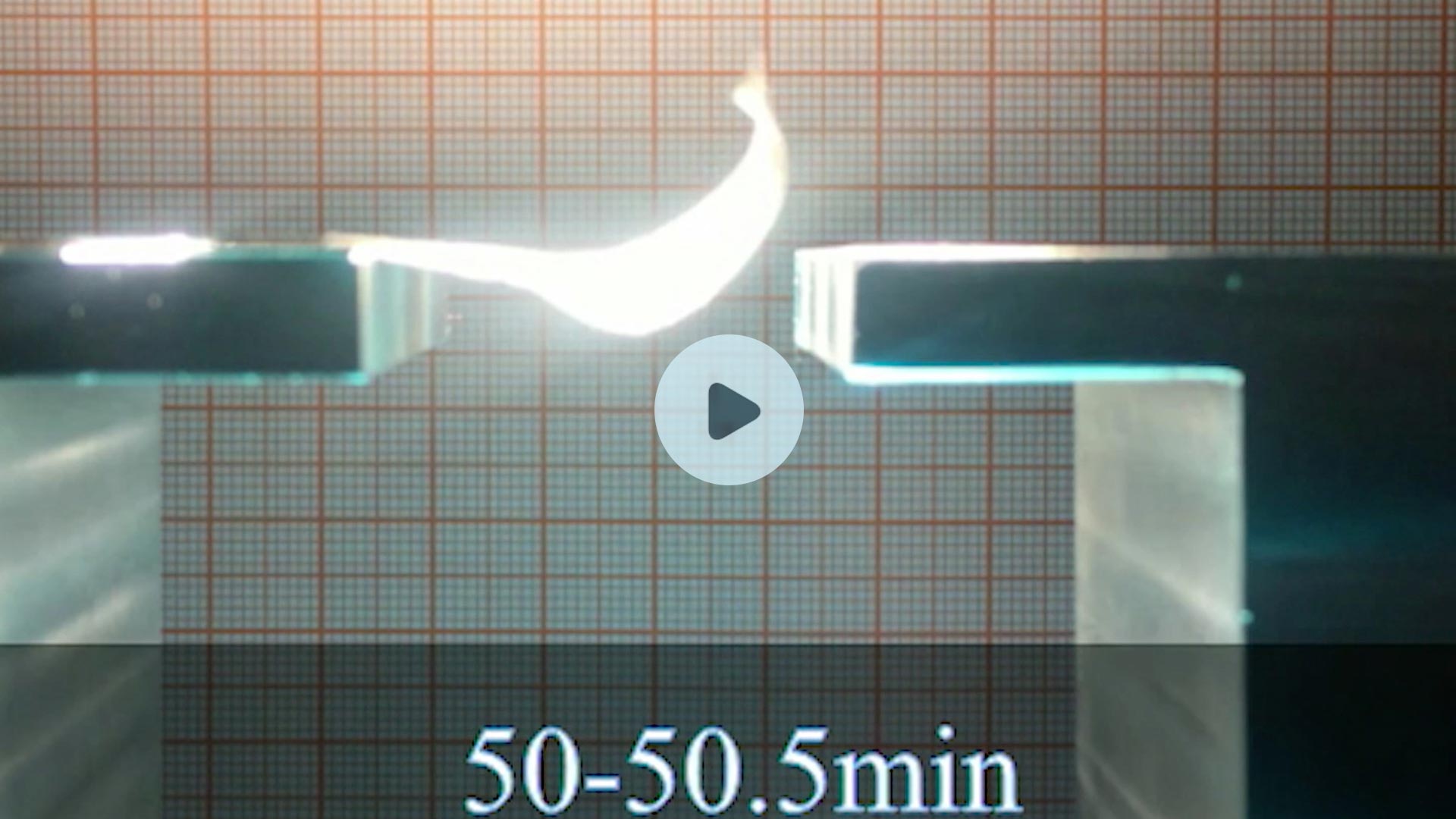
    Flapping Wings Powered by the Sun
    This tiny wing could someday be used in robots or devices to harvest solar energy. Credit: American Chemical Society

    In ancient Greek mythology, Icarus’ wax wings melted when he dared to fly too close to the sun. Now, researchers reporting in ACS Applied Materials & Interfaces have made artificial wings that are actually powered by the sun. The tiny wings, which can flap even faster than those of butterflies, could someday be used in robots or devices for solar energy harvesting, the researchers say. Watch a video of the flapping wings in action here:


    Artificial wings that flap in natural sunlight could someday be used in robots or in devices that harvest solar energy, according to a recent study in ACS Applied Materials & Interfaces. ACS’ Headline Science shows the tiny wings in action.

    Light-driven actuators — devices that convert light directly into mechanical work — have attracted attention because they are wireless and easy to control. However, to keep going, they usually require a high-intensity light source that can be turned on and off, or additional hardware. Ningyi Yuan, Jianning Ding, and colleagues wanted to develop a flexible film that could convert natural sunlight into a flapping motion, without the need for additional hardware.

    To make their device, which they called a flexible bio-butterfly-wing (FBBW), the researchers coated a thin polymer sheet with a nanocrystalline metallic film. When the team fixed one end of the FBBW strip to a support and shone simulated sunlight onto it, the temperature of the strip increased, and the free end curled up because of the large difference in thermal expansion between the metal and polymer layers. Then, the curved part of the FBBW shaded the metallic layer below, causing the temperature to drop and the strip to unfold. Continuous cycles of bending and unfolding produced a flapping motion that could exceed the frequency of actual butterfly wings. The team demonstrated the FBBW in a light-driven whirligig and sailboat, and in a device that converted sunlight into an electric current. It could someday be used in flying animal robots, among other applications, the researchers say.

    Reference: “Sunlight-Driven Continuous Flapping-Wing Motion” by Xu Dong, Jiawei Xu, Xiuzhu Xu, Shengping Dai, Xiaoshuang Zhou, Changhao Ma, Guanggui Cheng, Ningyi Yuan and Jianning Ding, 16 January 2020, ACS Applied Materials & Interfaces.
    DOI: 10.1021/acsami.9b20250

    The authors acknowledge funding from the National Key Research and Development Program of China, the National Natural Science Foundation of China and the Jiangsu Provincial “333” High-level Talent Training Project.

    Never miss a breakthrough: Join the SciTechDaily newsletter.
    Follow us on Google and Google News.

    American Chemical Society Energy Green Energy Robotics
    Share. Facebook Twitter Pinterest LinkedIn Email Reddit

    Related Articles

    Shocking Simplicity: Scientists Turn Falling Rain Into Renewable Energy

    Swarms of Microrobots Quickly Clean Up Radioactive Waste [Video]

    Scientists Discover a More Efficient Way to Turn Heat Into Electrical Energy

    New High-Performance Photovoltaic Solar Cells That Work Indoors

    Transformative Device Generates Energy From the Cold Night Sky, When Solar Doesn’t Work

    Low-Cost Device Generates Electricity Naturally in the Dark

    Hybrid-Solid Electrolysis Cell System – A New Strategy for Efficient Hydrogen Production

    New Aluminum Batteries Increase the Range of UUVs Tenfold

    Floating Nuclear Power Plant that is Safer and Cheaper

    Leave A Reply Cancel Reply

    • Facebook
    • Twitter
    • Pinterest
    • YouTube

    Don't Miss a Discovery

    Subscribe for the Latest in Science & Tech!

    Trending News

    Why Popular Diabetes Drugs Like Ozempic Don’t Work for Everyone: The “Genetic Glitch”

    Scientists Stunned After Finding Plant Thought Extinct for 60 Years

    Scientists Discover Tiny New Spider That Hunts Prey 6x Its Size

    Natural Component From Licorice Shows Promise for Treating Inflammatory Bowel Disease

    Scientists Warn: Popular Sweetener Linked to Dangerous Metabolic Effects

    Monster Storms on Jupiter Unleash Lightning Beyond Anything on Earth

    Scientists Create “Liquid Gears” That Spin Without Touching

    The Simple Habit That Could Help Prevent Cancer

    Follow SciTechDaily
    • Facebook
    • Twitter
    • YouTube
    • Pinterest
    • Newsletter
    • RSS
    SciTech News
    • Biology News
    • Chemistry News
    • Earth News
    • Health News
    • Physics News
    • Science News
    • Space News
    • Technology News
    Recent Posts
    • Ancient Bacteria Turned a DNA System Into a Cell Skeleton
    • Researchers Finally Solve 50-Year-Old Blood Group Mystery
    • Scientists Discover “Molecular Switch” That Fuels Alzheimer’s Brain Inflammation
    • Hidden Ocean Currents Revealed in Stunning Detail by AI
    • Trees Emit Tiny Lightning Flashes During Storms and Scientists Finally Prove It
    Copyright © 1998 - 2026 SciTechDaily. All Rights Reserved.
    • Science News
    • About
    • Contact
    • Editorial Board
    • Privacy Policy
    • Terms of Use

    Type above and press Enter to search. Press Esc to cancel.