
Close Menu
    Facebook X (Twitter) Instagram
    SciTechDaily
    • Biology
    • Chemistry
    • Earth
    • Health
    • Physics
    • Science
    • Space
    • Technology
    Facebook X (Twitter) Pinterest YouTube RSS
    SciTechDaily
    Home»Biology»Secrets of Marine Biology: How Four Genes Turned Whales Into Giants of the Sea
    Biology

    Secrets of Marine Biology: How Four Genes Turned Whales Into Giants of the Sea

    By Scientific ReportsJanuary 19, 2023No Comments3 Mins Read
    Facebook Twitter Pinterest Telegram LinkedIn WhatsApp Email Reddit
    Share
    Facebook Twitter LinkedIn Pinterest Telegram Email Reddit
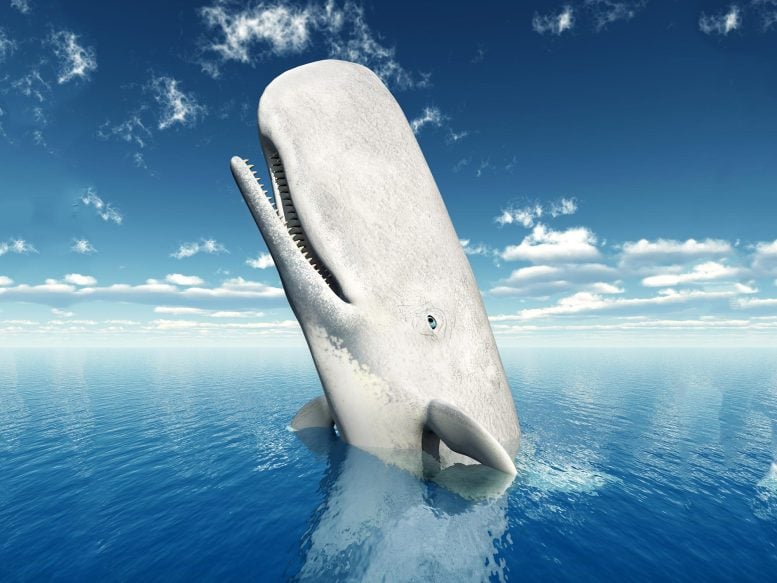
    Sperm Whale Illustration
    A study published in Scientific Reports has uncovered the genes that likely enabled whales to grow to enormous sizes compared to their ancestors. The research has identified four genes that appear to enhance large body size while also reducing the associated negative consequences such as increased cancer risk.

    Four genes—GHSR, IGFBP7, NCAPG, and PLAG1—have been linked to the gigantism of whales, enabling their large sizes while offsetting cancer risks.

    New research reveals the genes that likely allowed whales to grow to giant sizes compared to their ancestors, reports a study published today (January 19) in the journal Scientific Reports. The findings highlight the role of four genes (called GHSR, IGFBP7, NCAPG, and PLAG1), and suggest that they promote large body sizes while mitigating potentially negative effects, such as increased cancer risk.

    Whales, dolphins, and porpoises (known as cetaceans) evolved from small, land-based ancestors around 50 million years ago, but some species are now among the largest animals to have lived. However, gigantism can bring biological disadvantages, such as lower reproductive output and increased chances of diseases such as cancer, and it has not been clear what role different genes have played in driving gigantism in whales.  

    Mariana Nery and colleagues performed molecular evolutionary analysis on nine candidate genes: five genes (GHSR, IGF2, IGFBP2, IGFBP7, and EGF) from the growth hormone / insulin-like growth factor axis, and four genes (NCAPG, LCORL, PLAG1, and ZFAT) that are associated with increased body size in hoofed animals such as cows and sheep, which are distantly related to whales. They assessed these genes in 19 species of whale, including 7 species that have a body length of over 10 meters (33 feet) and are considered giants – the sperm whale, bowhead whale, gray whale, humpback whale, North Pacific right whale, fin whale, and blue whale.

    The authors found positive evolutionary selection for the GHSR and IGFBP7 genes in the growth hormone / insulin-like growth factor axis, and for NCAPG and PLAG1 genes. This indicates that these four genes were likely involved in increasing body size among giant whales, according to the authors. Additionally, GHSR controls aspects of the cell cycle and IGFBP7 acts as a suppressor in several types of cancers, which together may counteract some of the biological disadvantages that come with large body sizes.

    Reference: “The molecular evolution of genes previously associated with large sizes reveals possible pathways to cetacean gigantism” by Felipe André Silva, Érica M. S. Souza, Elisa Ramos, Lucas Freitas and Mariana F. Nery, 19 January 2023, Scientific Reports.
    DOI: 10.1038/s41598-022-24529-3

    Never miss a breakthrough: Join the SciTechDaily newsletter.
    Follow us on Google and Google News.

    Evolution Genetics Marine Biology Scientific Reports Whales
    Share. Facebook Twitter Pinterest LinkedIn Email Reddit

    Related Articles

    Innovative Genetic Analysis Unlocks Clues to the Evolution and Survival of the Great Barrier Reef

    Surprise! We’re More Like Primitive Fishes Than Once Believed

    “Evolutionary Rosetta Stone” – New Insight Into the Biology of a Deadly Fungus

    Pituitary Puzzle Gets a New Piece: Insights Into Century-Old Controversy Revise Evolutionary History

    Discovery of Weird Microbes in the Deep Waters of the Black Sea Offers New Insights on Early Evolution of Life

    Sexual Parasitism: Deep-Sea Anglerfish Evolved a New Type of Immune System to Physically Fuse With Their Mates

    Sea Snakes Have Been Modifying Genetically to See Underwater for 15 Million Years

    Sturgeon “Methuselah Fish” Genome Sequenced – Important Piece of Evolutionary Puzzle

    Fascinating Shark and Ray Vision Evolution Research Reveals Sharks Can’t See Colors

    Leave A Reply Cancel Reply

    • Facebook
    • Twitter
    • Pinterest
    • YouTube

    Don't Miss a Discovery

    Subscribe for the Latest in Science & Tech!

    Trending News

    Artificial Sweeteners May Harm Future Generations, Study Suggests

    Splashdown! NASA Artemis II Returns From Record-Breaking Moon Mission

    What If Consciousness Exists Beyond Your Brain

    Scientists Finally Crack the 100-Million-Year Evolutionary Mystery of Squid and Cuttlefish

    Beyond “Safe Levels”: Study Challenges What We Know About Pesticides and Cancer

    Researchers Have Found a Dietary Compound That Increases Longevity

    Scientists Baffled by Bizarre “Living Fossil” From 275 Million Years Ago

    Your IQ at 23 Could Predict Your Wealth at 27, Study Finds

    Follow SciTechDaily
    • Facebook
    • Twitter
    • YouTube
    • Pinterest
    • Newsletter
    • RSS
    SciTech News
    • Biology News
    • Chemistry News
    • Earth News
    • Health News
    • Physics News
    • Science News
    • Space News
    • Technology News
    Recent Posts
    • Geologists Reveal the Americas Collided Earlier Than We Thought
    • 20x Difference: Study Reveals True Source of Airborne Microplastics
    • Scientists Uncover Hidden Force Powering Yellowstone’s Supervolcano
    • This Metal Melts in Your Hand – and Scientists Just Discovered Something Strange
    • Why Losing Too Much Fat Can Be Just As Dangerous as Obesity
    Copyright © 1998 - 2026 SciTechDaily. All Rights Reserved.
    • Science News
    • About
    • Contact
    • Editorial Board
    • Privacy Policy
    • Terms of Use

    Type above and press Enter to search. Press Esc to cancel.