
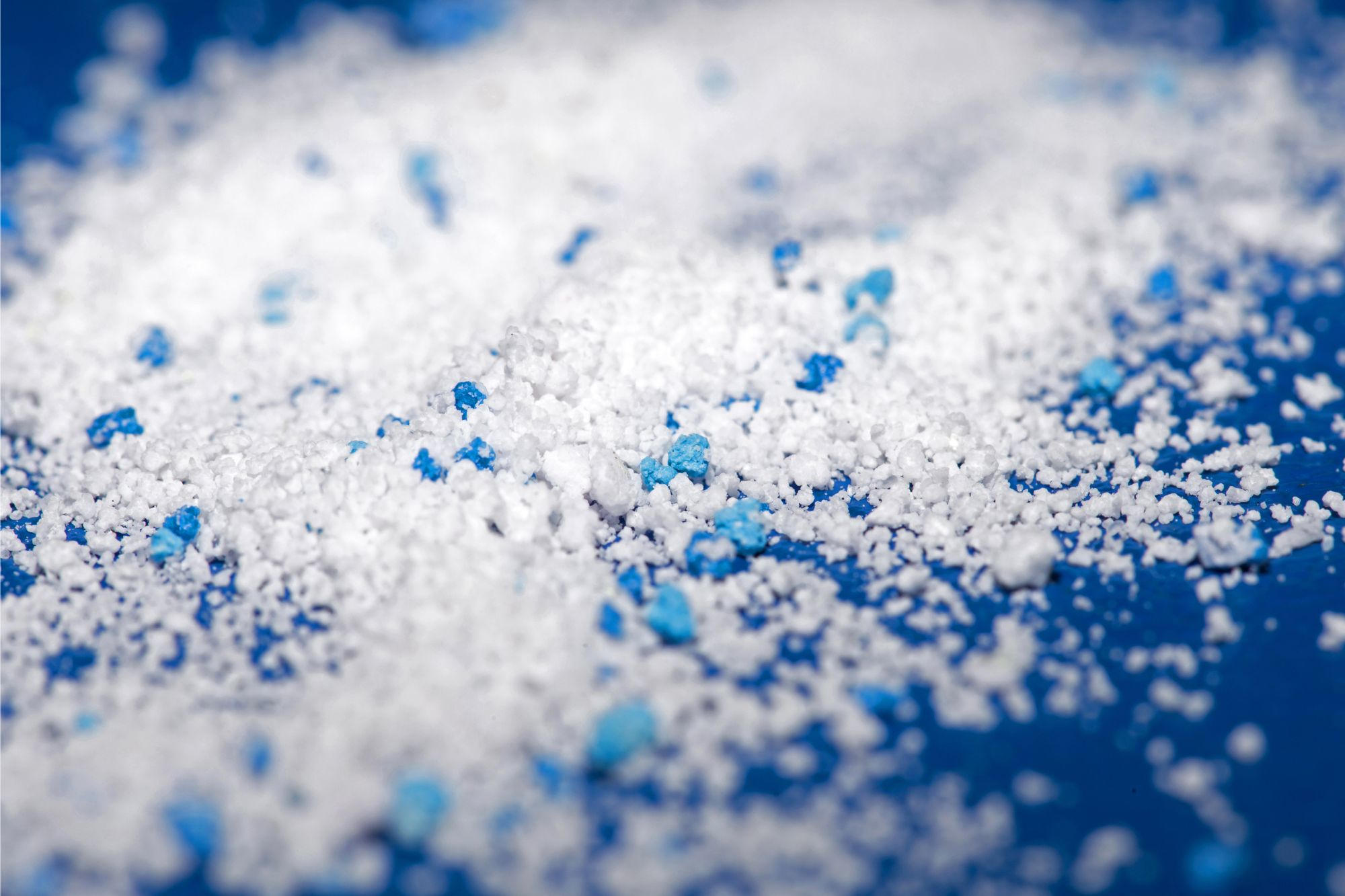
Microplastics circulate globally through the atmosphere, but their sources may not be what scientists once thought.
The air around us is quietly carrying an unexpected form of pollution. Tiny plastic fragments, known as microplastics, are now circulating through the atmosphere and reaching places once thought untouched by human activity. From mountain peaks to remote oceans, these particles travel vast distances, enter the air we breathe, and eventually settle into ecosystems across the planet.
Scientists are increasingly concerned because airborne microplastics are not just an environmental issue. Their small size makes them easy to inhale, and early research suggests they may irritate lung tissue or carry harmful chemicals. Once deposited, they also contribute to long-term contamination of soils and waterways, adding to an already growing global plastic burden.
Researchers from the Department of Meteorology and Geophysics at the University of Vienna have taken a closer look at how microplastics enter the air. Using worldwide measurements alongside model simulations, they found that land-based sources release more than 20 times as many microplastic particles into the atmosphere as the ocean. Their findings were recently published in Nature.
Sources and Uncertainties in Microplastic Emissions
Scientists have already established that microplastics are present throughout the atmosphere, even in remote environments. These particles come from direct sources such as tire wear and textile fibers, as well as from previously polluted land and ocean surfaces that release particles back into the air.
Even so, the total scale of these emissions and the contribution from each source have remained unclear. Earlier research often pointed to the ocean as the dominant source, but this had not been firmly confirmed.
Modeling Microplastic Transport and Emissions
In this study, Ioanna Evangelou, Silvia Bucci, and Andreas Stohl compiled 2,782 atmospheric measurements of microplastics from around the world. They compared these observations with simulations from a transport model based on three previously published emission estimates.
The comparison revealed a major mismatch. The model predicted far higher concentrations of microplastics in the atmosphere and much greater deposition on Earth’s surface than what measurements showed, with differences reaching several orders of magnitude over both land and ocean.
By examining this gap, the researchers adjusted the emission estimates separately for land and ocean sources. This recalibration led to more realistic results.
Land vs. Ocean Emissions
The revised analysis showed that emissions from land had been significantly overestimated and needed to be reduced to match observations. Ocean emissions were also too high in earlier estimates, though the adjustment was less dramatic.
When asked where more microplastics enter the atmosphere, the study’s lead author, Andreas Stohl, says: “The now scaled emission estimates show that over 20 times more microplastic particles are emitted on land than from the ocean.”
“However, the emitted mass is actually higher over the ocean than over land, which is due to the larger average size of oceanic particles,” adds first author Ioanna Evangelou.
Ongoing Challenges and Future Research
This work marks an important step toward better understanding how microplastics pollute the atmosphere and move around the globe. Still, large gaps in knowledge remain.
“However, the data situation is still not satisfactory, and there are still major uncertainties. More measurements are needed so that we know how much microplastic comes from traffic and how much from other sources. The size distribution of the particles is also highly uncertain, and thus the total amount of plastic transported in the atmosphere,” summarizes Andreas Stohl, lead author of the study.
Reference: “Atmospheric microplastic emissions from land and ocean” by Ioanna Evangelou, Silvia Bucci and Andreas Stohl, 21 January 2026, Nature.
DOI: 10.1038/s41586-025-09998-6
Never miss a breakthrough: Join the SciTechDaily newsletter.
Follow us on Google and Google News.
6 Comments
Some have suggested that tires and asphalt pavement are major contributors to micro-organics. Also, organic binders in some brake pads. I should note the many are suggesting that tires will wear out more rapidly on EVs because of their greater weight.
I noticed they mentioned nothing about the jets that fly above us spraying chemtrails of course there’s nothing to see so we’ll move along yes
So why is a slim female body featuring polluting us with microplastics by opening a plastic drink bottle?
Because it draws eyeballs. SIMPLE
Apart from the issue of all the unnecessary plastic packaging & what the hell to do with it, I worry less about opening plastic bottles than socks & clothes that release far more particles in daily use, via wear & tear.
We have to walk, most people wear socks, most socks are made with plastic fibres in whole or part. Walking wears them out. The particles get into the air & water. We never think about it. Clothers are the same. I try to buy natural material items but its not always possible or as straightforward as you might think. Some “natural fibre” clothes are woven in a mesh of plastics. Cotton jeans with elastane for instance. I mean, Why?
We live on an insane planet and we are insane ,why do you all still buy water in plastic bottles why do you put food in plastic in your microwaves why do you clean with sponges releasing billions of particles ,why do you put clothes in washing machines with no filters releasing millions of tonnes of this garbage into our water.
The list goes on and on its impossible to not use plastic at all but very few even bother to try.
This planet is going to hell and you are all helping it on its way.
You poison yourselves and your children because you cannot be bothered not to