
Close Menu
    Facebook X (Twitter) Instagram
    SciTechDaily
    • Biology
    • Chemistry
    • Earth
    • Health
    • Physics
    • Science
    • Space
    • Technology
    Facebook X (Twitter) Pinterest YouTube RSS
    SciTechDaily
    Home»Earth»Geologists Reveal the Americas Collided Earlier Than We Thought
    Earth

    Geologists Reveal the Americas Collided Earlier Than We Thought

    By Beijing Zhongke Journal Publising Co. Ltd.April 14, 20261 Comment3 Mins Read
    Facebook Twitter Pinterest Telegram LinkedIn WhatsApp Email Reddit
    Share
    Facebook Twitter LinkedIn Pinterest Telegram Email Reddit
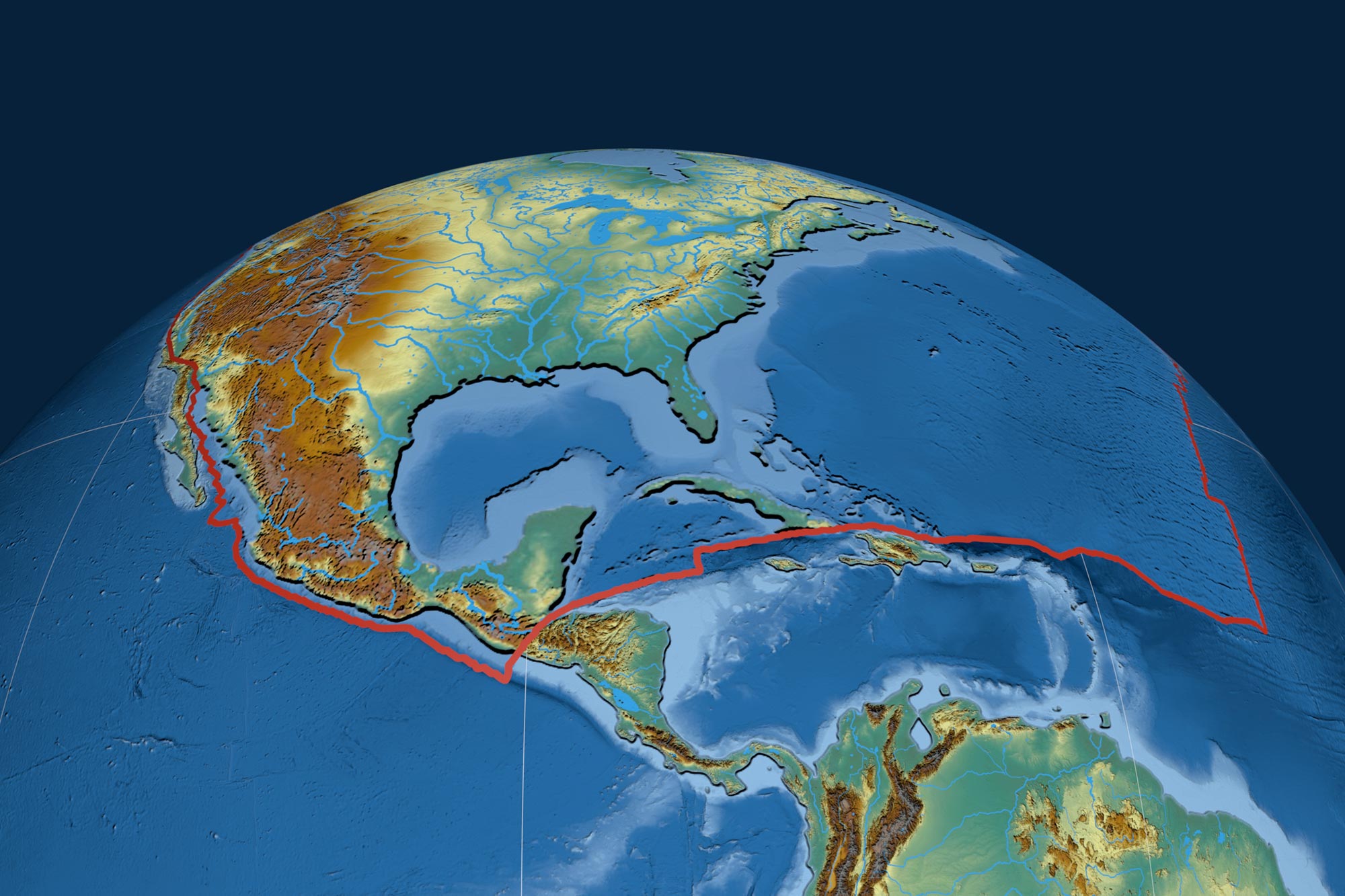
    North America Tectonic Plate Topographic Relief Map
    Magnetic evidence hints that key tectonic processes in the Andes had already waned, revealing new potential in geophysical methods to decode Earth’s past. Credit: Shutterstock

    A new geological study reshapes the timeline of a major tectonic collision that helped form the Andes, suggesting key events occurred earlier than long assumed.

    A study in Earth and Planetary Physics is reshaping scientists’ understanding of how the Americas came together. By examining subtle magnetic signals locked inside ancient volcanic rocks in Colombia’s Northern Andes, researchers found that a major phase of the collision between Central and South America likely wrapped up earlier than long assumed, before about 10 million years ago. This shift in timing could change how scientists interpret the rise of the Andes and the evolution of landscapes across the region.

    The work, led by Victor Piedrahita (first author) and J. Li (corresponding author), focuses on rocks from the Combia Volcanic Province in central Colombia.

    These late Miocene formations (approximately 12–6 million years old) formed during a period when tectonic forces were still active, making them valuable records of what was happening deep within Earth’s crust. Because volcanic rocks cool and solidify relatively quickly, they can preserve a snapshot of conditions at the time they formed, almost like a geological timestamp.

    Magnetic Clues From Volcanic Rocks

    To better understand this tectonic history, the researchers used magnetic fabric analysis, which examines how magnetic minerals within rocks are oriented. This approach helps scientists separate original volcanic flow patterns from deformation that occurred later due to tectonic forces.

    “Volcanic rocks can preserve a remarkably detailed record of geological processes,” says Dr. Victor A. Piedrahita. “Their magnetic fabrics help us determine whether deformation occurred before, during, or after the rocks were emplaced.”
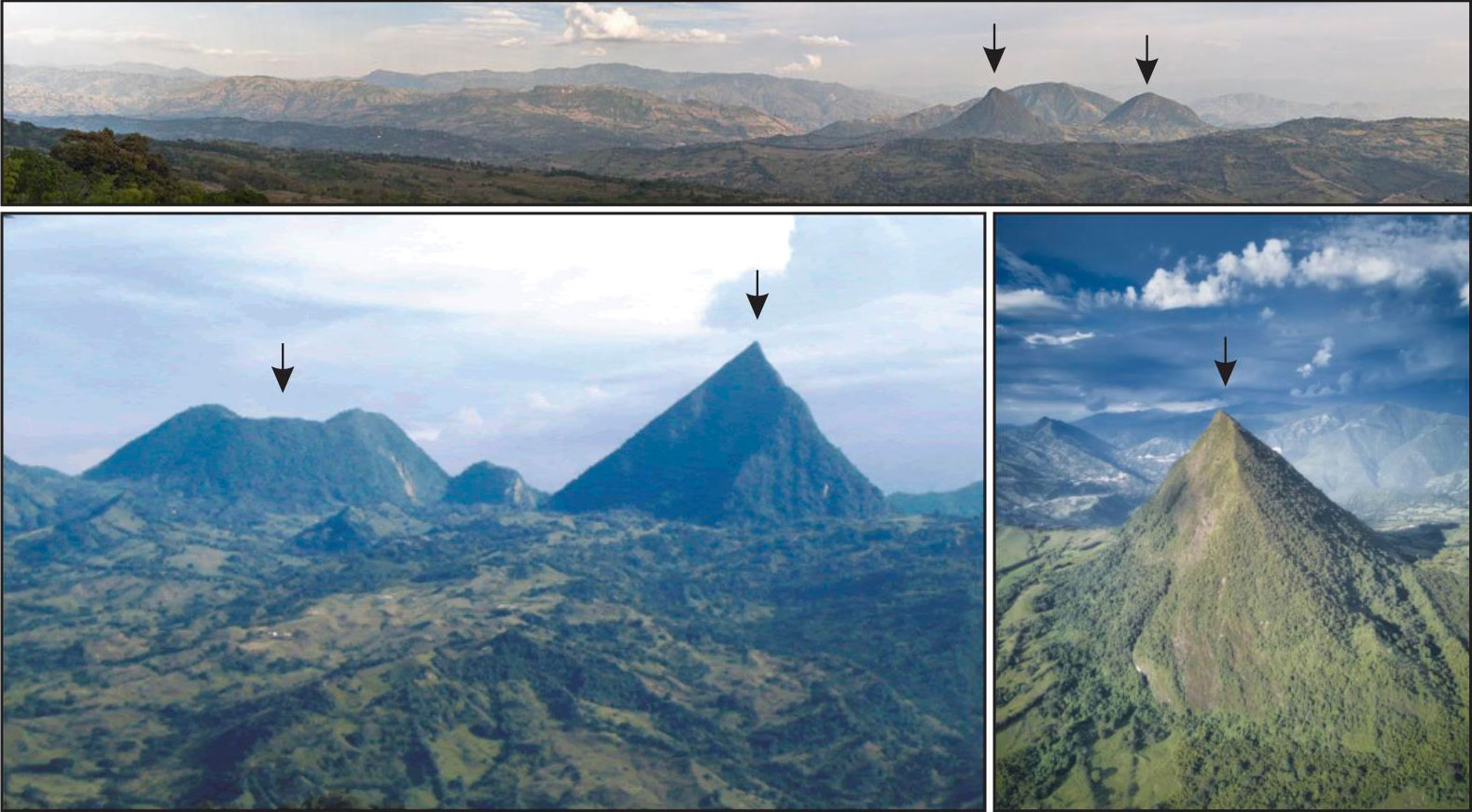
    Volcanic Cone Like Landforms of the Combia Volcanic Province in Colombia
    The landforms indicated with arrows correspond to old magmatic intrusive rocks that may have been ancient volcanoes in the northern Andes ~10-20 million years ago. Credit: Beijing Zhongke Journal Publising Co. Ltd.

    Evidence for Earlier Collision

    The analysis revealed that many of the rocks still retain their original magnetic fabric, linked to magma movement or volcanic debris flows. This suggests that they experienced little to no tectonic alteration during the late Miocene. Some locations do show signs of deformation, but these are limited in scale and intensity.

    Overall, the findings indicate that major crustal shortening and deformation tied to the continental collision had mostly ended before the late Miocene.

    “Our data indicate that the most significant collisional events between Central and South America occurred earlier than we previously thought, mainly during the Oligocene-middle Miocene,” explain Piedrahita and Li. “By the time these volcanic rocks formed, tectonic deformation had become weaker and more localized.”

    Implications for Andean Evolution

    These results refine current models of how the Andes formed and provide a clearer picture of how interactions between tectonic plates shaped the region. The study also highlights the usefulness of magnetic techniques for reconstructing tectonic histories in volcanic environments.

    Reference: “Magnetic fabric of the late Miocene extrusive rocks of the Combia Volcanic Province: Tectonic implications for the northern Andes ” by Victor A. Piedrahita, Martin Chadima, Jackeline Ramírez, Alejandra Tabares, Maria I. Marín-Cerón and JinHua Li, 29 September 2025, Earth and Planetary Physics.
    DOI: 10.26464/epp2026011

    This research was supported by grants from the National Natural Science Foundation of China (NSFC), awarded to J. Li and Victor Piedrahita.

    Never miss a breakthrough: Join the SciTechDaily newsletter.
    Follow us on Google and Google News.

    Earth Science Geology Geophysics Tectonic Plates
    Share. Facebook Twitter Pinterest LinkedIn Email Reddit

    Related Articles

    3.5-Billion-Year-Old Rocks Rewrite the Story of Plate Tectonics

    Earth’s Strangest Magnetic Era: Scientists Decode the Ediacaran Mystery

    An Ocean That No Longer Exists Could Explain the Origins of Central Asia’s Mountains

    Scientists Were Wrong. Turkey’s Crust Is Tearing Apart

    Scientists Rewrite the Story of Earth’s First Continents With a Fiery New Twist

    Ancient Oceanic Plate Rips Apart Beneath Iraq and Iran

    Earth’s Crust Is Dripping? An Underground Anomaly Is Causing Turkey’s Konya Basin To Sink

    Yale Researchers Find a Soft Spot in the Nazca Plate

    Unusual Indian Ocean Earthquakes May Signal Tectonic Breakup

    1 Comment

    1. Doug on April 16, 2026 12:12 am

      Every article I’ve read tonight on the Internet is about rewriting history

      They have no idea

      Reply
    Leave A Reply Cancel Reply

    • Facebook
    • Twitter
    • Pinterest
    • YouTube

    Don't Miss a Discovery

    Subscribe for the Latest in Science & Tech!

    Trending News

    Scientists May Have Found the Key to Jupiter and Saturn’s Moon Mystery

    Scientists Uncover Brain Changes That Link Pain to Depression

    Saunas May Do More Than Raise Body Temperature – They Activate Your Immune System

    Exercise in a Pill? Metformin Shows Surprising Effects in Cancer Patients

    Hidden Oceans of Magma Could Be Protecting Alien Life

    New Study Challenges Alzheimer’s Theories: It’s Not Just About Plaques

    Artificial Sweeteners May Harm Future Generations, Study Suggests

    Splashdown! NASA Artemis II Returns From Record-Breaking Moon Mission

    Follow SciTechDaily
    • Facebook
    • Twitter
    • YouTube
    • Pinterest
    • Newsletter
    • RSS
    SciTech News
    • Biology News
    • Chemistry News
    • Earth News
    • Health News
    • Physics News
    • Science News
    • Space News
    • Technology News
    Recent Posts
    • Ancient DNA Reveals Irish Goats Have a 3,000-Year-Old Lineage Still Alive Today
    • Historians Reveal Secrets of the Strange Hat Wars That Shook Early Modern England
    • “A Plague Is Upon Us”: The Mass Death That Changed an Ancient City Forever
    • This Strange Material Can Turn Superconductivity on and off Like a Switch
    • Scientists Discover Game-Changing New Way To Treat High Cholesterol
    Copyright © 1998 - 2026 SciTechDaily. All Rights Reserved.
    • Science News
    • About
    • Contact
    • Editorial Board
    • Privacy Policy
    • Terms of Use

    Type above and press Enter to search. Press Esc to cancel.