
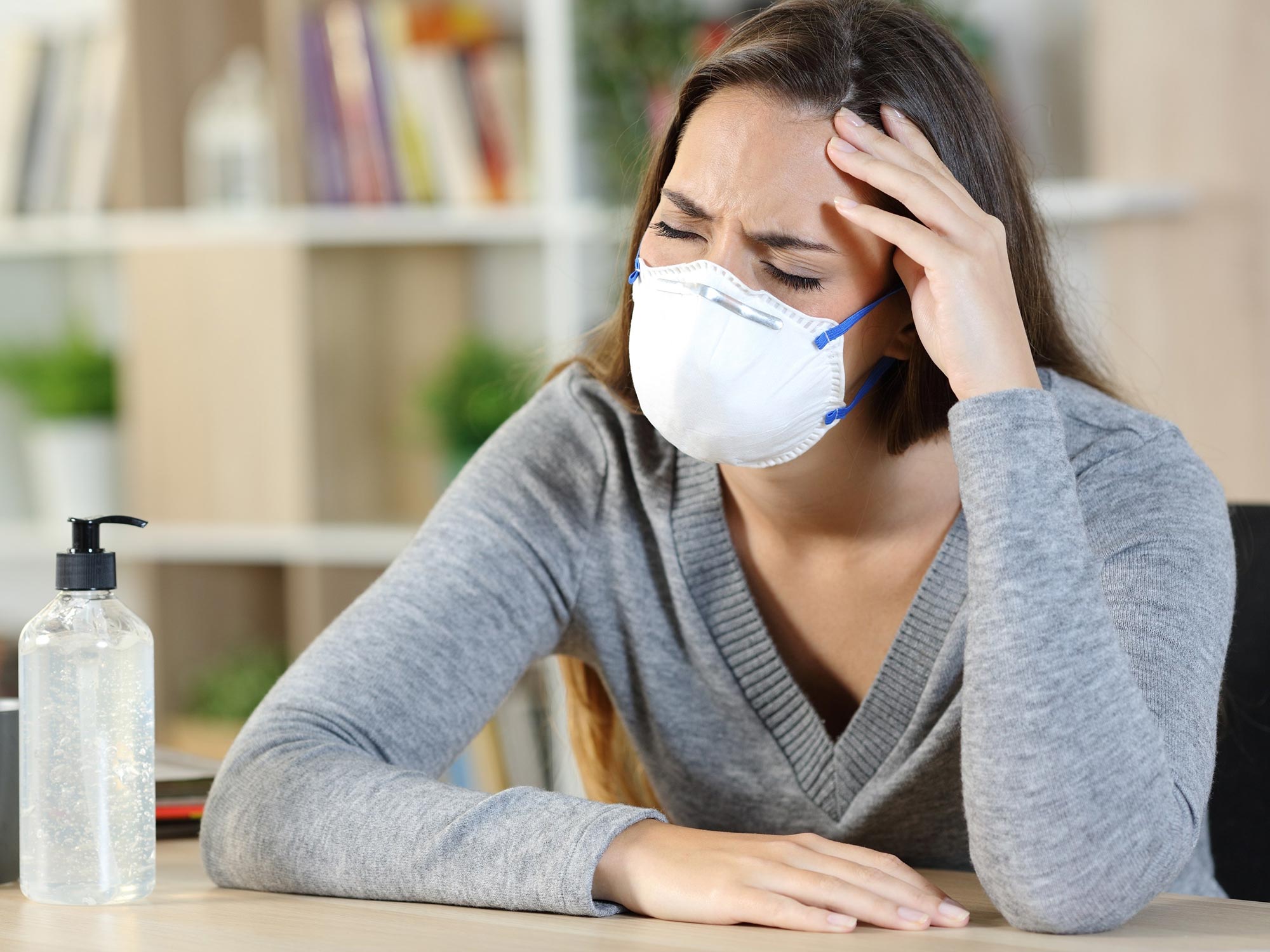
Research published in JAMA Network Open shows that both COVID-positive and COVID-negative individuals report similar negative impacts on their well-being months after initial symptoms, suggesting the pandemic’s broader role in affecting recovery from illnesses.
Long COVID patients can experience many of the same lingering negative effects on their physical, mental, and social well-being as those experienced by people who become ill with other, non-COVID illnesses, new research suggests.
The findings, published on December 1, 2022, in the peer-reviewed JAMA Network Open, are based on a comparison of people known to have been infected with COVID-19 with individuals with similar symptoms who tested negative for COVID. The researchers found that 40% of the COVID-positive and 54% of the COVID-negative group reported moderate-to-severe residual symptoms three months after enrolling in the study.
Study Highlights Pandemic’s Role in Slowing Recovery
“Many diseases, including COVID, can lead to symptoms negatively impacting one’s sense of well-being lasting months after initial infection, which is what we saw here,” said lead author Lauren Wisk, assistant professor of medicine in the division of general internal medicine and health services research at the David Geffen School of Medicine at UCLA. “Because these changes look similar for COVID-negative and COVID-positive participants, this suggests the experience of the pandemic itself, and related stress, may be playing a role in slowing people’s recovery from any illness.”
The study included people both with acute COVID and without COVID (but sick with some other illness) to examine the impact of COVID on one’s well-being, also compared with the general population, Wisk noted.
“We found that, as far as well-being is concerned, COVID-positive and COVID-negative groups look more similar than different, but both still have worse well-being scores than the general population.”
The multisite study was conducted in English and Spanish under the umbrella of INSPIRE (Innovative Support for Patients with SARS-CoV-2 Infections Registry), a Centers for Disease Control and Prevention-funded project.
Participating sites include the University of California, Los Angeles; Rush University Medical Center in Chicago; University of California, San Francisco; University of Washington in Seattle; Yale University; UTHealth Houston; the University of Texas Southwestern; and Thomas Jefferson University in Philadelphia.
The study’s 1000 participants were 18 years of age or older who:
- Tested for COVID-19 within the previous 42 days of enrolling in the study with either positive or negative test results and no prior COVID-19 diagnosis;
- Had symptoms known to be associated with COVID-19, such as cough, fever, headache or fatigue, at the time of testing;
- Had access to an internet-connected device, such as a smartphone, tablet, or computer, to complete online surveys; and
- Completed an initial survey at the time of enrollment in the study and a follow-up survey three months later that asked about their physical function, anxiety, depression, fatigue, social participation, sleep disturbance, pain interference, and cognitive function.
Of these participants, 722 (72%) were positive for COVID and 278 (28%) tested negative.
Key Findings: Physical, Mental, and Social Well-Being
Overall, those who tested positive for COVID had self-reported physical and mental health symptoms three months after infection that were similar to those who became ill with other, non-COVID illnesses during the pandemic. The COVID-positive group, however, experienced better improvements in their social well-being than did the COVID-negative group.
The study may be limited by the possibility that some of the sickest patients at highest risk for long COVID may have been unable or unwilling to participate; a lack of clarity about which conditions some symptomatic COVID-negative participants suffered from at enrollment, such as bacterial pneumonia or respiratory syncytial virus, making it difficult to determine if they would have had more or less severe self-reported outcomes; the fact that participants were recruited from December 2020 through September 2021, making the findings potentially inapplicable to subsequent COVID variants; and that COVID-19 tests are sometimes inaccurate. Finally, participants’ well-being was evaluated at 3 months after their initial illness; many illnesses take time for recovery and comparing improvements in symptoms over a longer period of time will be essential for a meaningful understanding of long COVID.
Still, the findings highlight the importance of comparing COVID-positive and COVID-negative people to assess the impact of SARS-CoV-2 on the population. “Most other studies on long COVID do not have such a control group,” said Dr. Joann Elmore, the paper’s co-senior author and a professor of medicine in the division of general internal medicine and health services research at the David Geffen School of Medicine at UCLA.
“Researchers and doctors now have a better understanding of well-being outcomes related to COVID-19 as a result of this study,” said Elmore, who is also the principal investigator at the UCLA site. “The findings highlight the potential widespread impact of the pandemic on our overall health, including the lesser-tracked emotional, social, and mental aspects, alongside the highly recognized physical effects.”
Reference: “Association of Initial SARS-CoV-2 Test Positivity With Patient-Reported Well-being 3 Months After a Symptomatic Illness” by Lauren E. Wisk, PhD; Michael A. Gottlieb, MD; Erica S. Spatz, MD, MHS; Huihui Yu, PhD; Ralph C. Wang, MD, MAS; Benjamin H. Slovis, MD, MA; Sharon Saydah, PhD; Ian D. Plumb, MBBS, MSc; Kelli N. O’Laughlin, MD, MPH; Juan Carlos C. Montoy, MD, PhD; Samuel A. McDonald, MD, MS; Zhenqiu Lin, PhD; Jin-Mann S. Lin, PhD; Katherine Koo, MS-HSM; Ahamed H. Idris, MD; Ryan M. Huebinger, MD; Mandy J. Hill, DrPH, MPH; Nicole L. Gentile, MD, PhD; Anna Marie Chang, MD, MSCE; Jill Anderson, BSN, RN; Bala Hota, MD, MPH; Arjun K. Venkatesh, MD, MBA, MHS; Robert A. Weinstein, MD; Joann G. Elmore, MD, MPH and Graham Nichol, MD, MPH for the INSPIRE Group, 1 December 2022, JAMA Network Open.
DOI: 10.1001/jamanetworkopen.2022.44486
The Centers for Disease Control and Prevention and the National Center of Immunization and Respiratory Diseases (75D30120C08008) funded this research.
Other researchers on this paper are co-senior author Dr. Graham Nichol, Dr. Kelli O’Laughlin, Dr. Nicole Gentile, and Jill Anderson of the University of Washington; Dr. Michael Gottlieb, Katherine Koo, and Dr. Robert Weinstein of Rush University; Dr. Erica Spatz, Huihui Yu, Zhenqiu Lin, and Dr. Arjun Venkatesh of Yale University; Dr. Ralph Wang and Dr. Juan Carlos Montoy of UC San Francisco; Dr. Benjamin Slovis and Dr. Anna Marie Chang of Thomas Jefferson University; Sharon Saydah, Ian Plumb, and Jin-Mann Lin, of the Centers for Disease Control and Prevention; Dr. Samuel McDonald and Dr. Ahamed Idris of the University of Texas Southwestern; Dr. Ryan Huebinger and Mandy Hill of the University of Texas Houston; and Dr. Bala Hota of Tendo Systems.
Never miss a breakthrough: Join the SciTechDaily newsletter.
Follow us on Google and Google News.