
Close Menu
    Facebook X (Twitter) Instagram
    SciTechDaily
    • Biology
    • Chemistry
    • Earth
    • Health
    • Physics
    • Science
    • Space
    • Technology
    Facebook X (Twitter) Pinterest YouTube RSS
    SciTechDaily
    Home»Technology»Soft, Flexible Artificial Skin Produces a Realistic Sense of Touch [Video]
    Technology

    Soft, Flexible Artificial Skin Produces a Realistic Sense of Touch [Video]

    By EPFLSeptember 26, 20191 Comment3 Mins Read
    Facebook Twitter Pinterest Telegram LinkedIn WhatsApp Email Reddit
    Share
    Facebook Twitter LinkedIn Pinterest Telegram Email Reddit
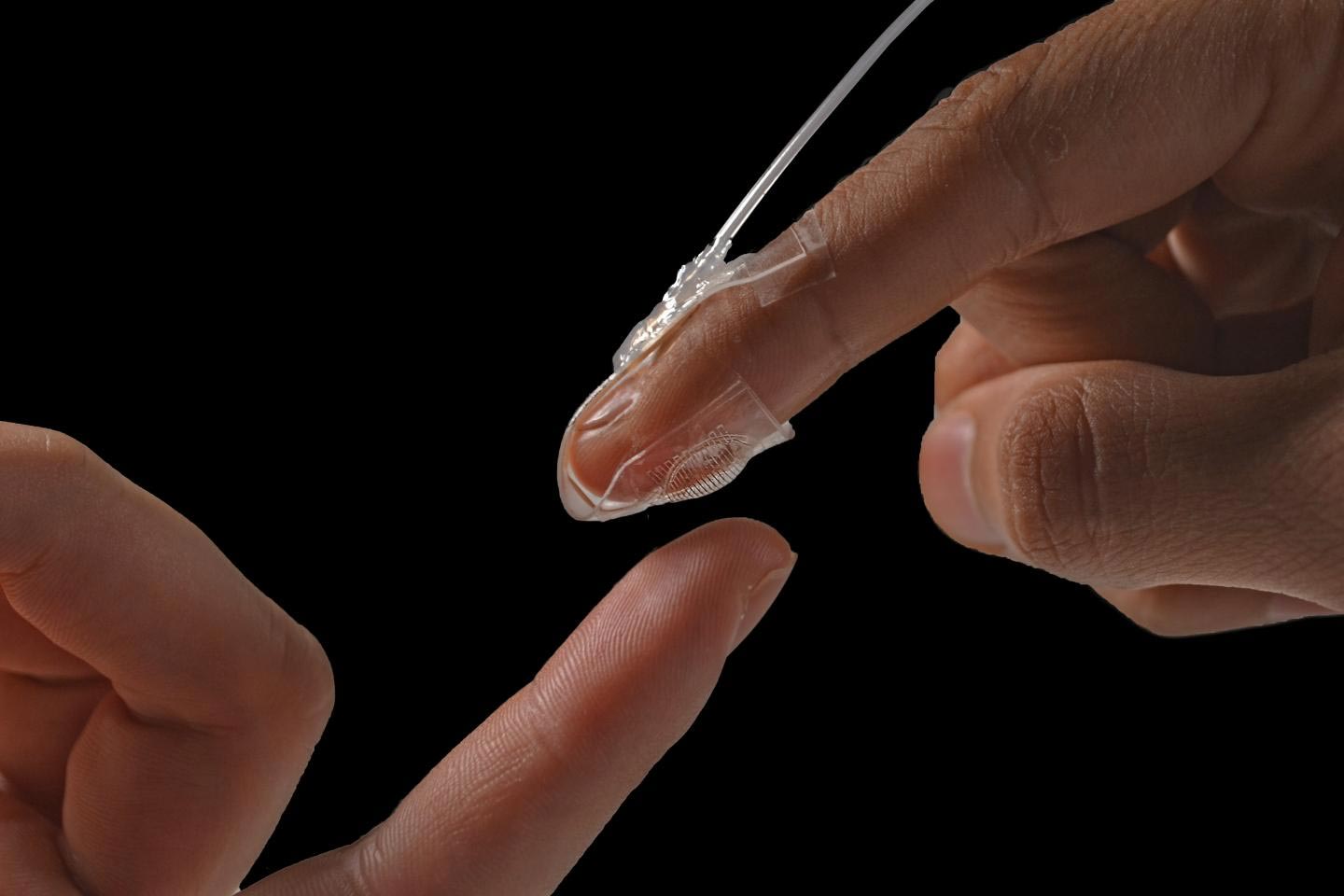
    Soft Artificial Skin on Fingers
    The skin’s system of soft sensors and actuators enable the artificial skin to conform to the exact shape of a wearer’s wrist. Credit: EPFL

    EPFL scientists have developed a soft artificial skin that provides haptic feedback and – thanks to a sophisticated self-sensing mechanism – has the potential to instantaneously adapt to a wearer’s movements. Applications for the new technology range from medical rehabilitation to virtual reality.

    Just like our senses of hearing and vision, our sense of touch plays an important role in how we perceive and interact with the world around us. And technology capable of replicating our sense of touch — also known as haptic feedback — can greatly enhance human-computer and human-robot interfaces for applications such as medical rehabilitation and virtual reality.

    Scientists at EPFL’s Reconfigurable Robotics Lab (RRL), headed by Jamie Paik, and Laboratory for Soft Bioelectronic Interfaces (LSBI), headed by Stéphanie Lacour at the School of Engineering, have teamed up to develop a soft, flexible artificial skin made of silicone and electrodes. Both labs are part of the NCCR Robotics program.

    The skin’s system of soft sensors and actuators enable the artificial skin to conform to the exact shape of a wearer’s wrist, for example, and provide haptic feedback in the form of pressure and vibration. Strain sensors continuously measure the skin’s deformation so that the haptic feedback can be adjusted in real time to produce a sense of touch that’s as realistic as possible. The scientists’ work has just been published in Soft Robotics.
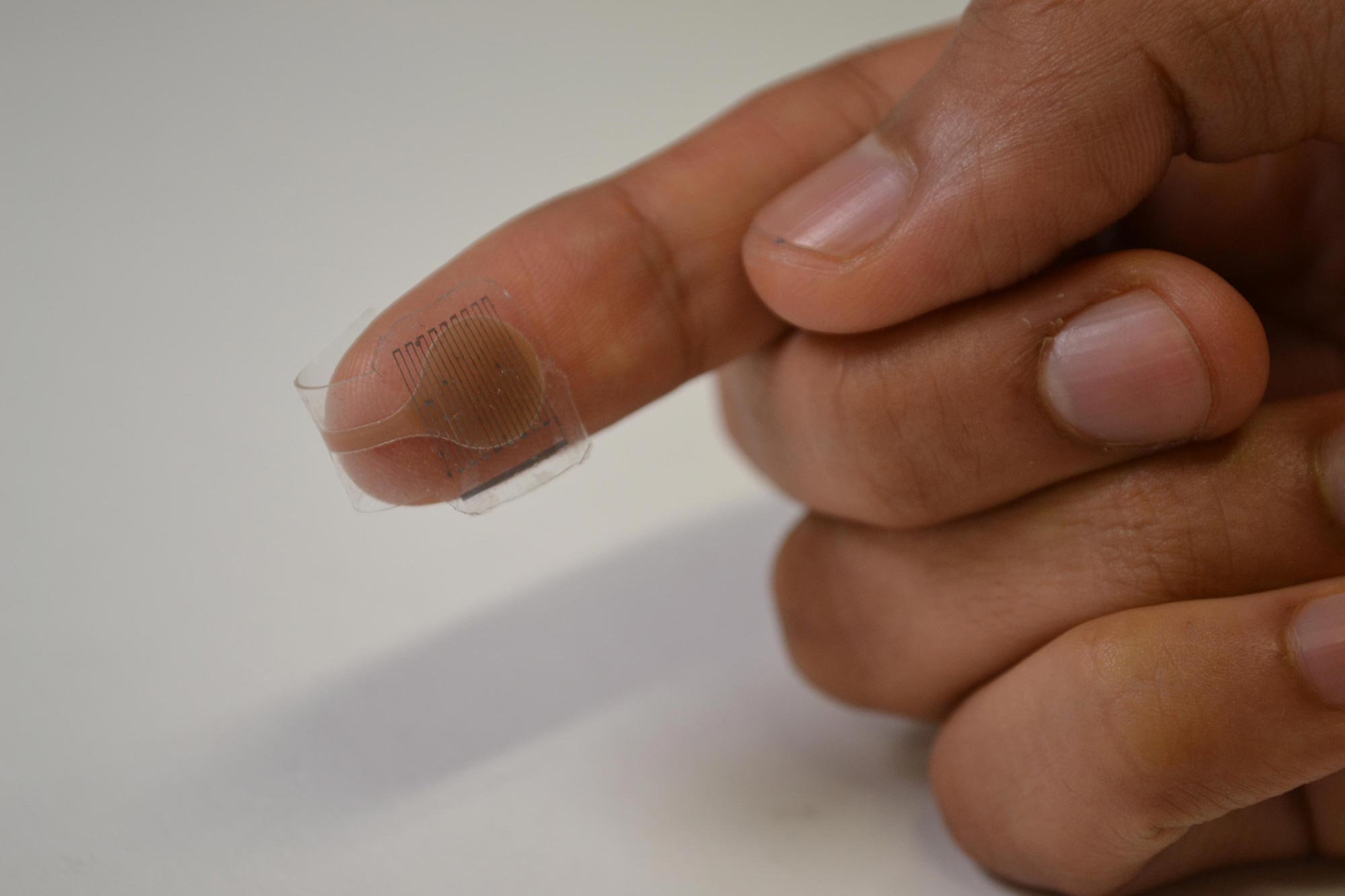
    Artificial Skin Sensors
    Credit: EPFL

    “This is the first time we have developed an entirely soft artificial skin where both sensors and actuators are integrated,” says Harshal Sonar, the study’s lead author. “This gives us closed-loop control, which means we can accurately and reliably modulate the vibratory stimulation felt by the user. This is ideal for wearable applications, such as for testing a patient’s proprioception in medical applications.”

    Haptics sandwiched between silicone layers

    The artificial skin contains soft pneumatic actuators that form a membrane layer which can be inflated by pumping air into it. The actuators can be tuned to varying pressures and frequencies (up to 100 Hz, or 100 impulses per second). The skin vibrates when the membrane layer is inflated and deflated rapidly. A sensor layer sits on top of the membrane layer and contains soft electrodes made of a liquid-solid gallium mixture. These electrodes measure the skin’s deformation continuously and send the data to a microcontroller, which uses this feedback to fine-tune the sensation transmitted to the wearer in response to the wearer’s movements and changes in external factors.
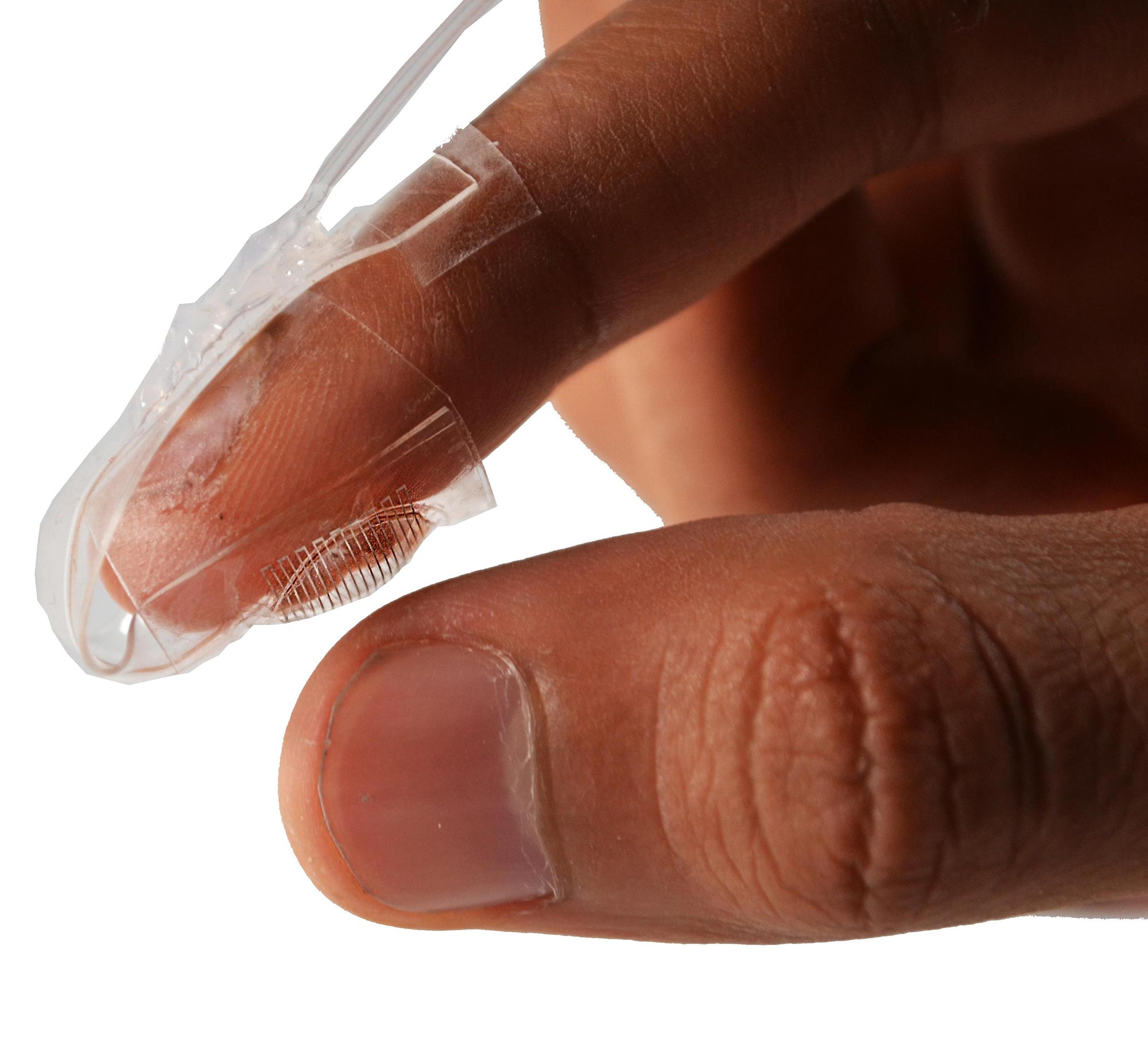
    Haptics Sandwiched Between Silicone Layers
    Credit: EPFL

    The artificial skin can be stretched up to four times its original length for up to a million cycles. That makes it particularly attractive for a number of real-world applications. For now, the scientists have tested it on users’ fingers and are still making improvements to the technology.

    “The next step will be to develop a fully wearable prototype for applications in rehabilitation and virtual and augmented reality,” says Sonar. “The prototype will also be tested in neuroscientific studies, where it can be used to stimulate the human body while researchers study dynamic brain activity in magnetic resonance experiments.”

    Reference: “Closed-Loop Haptic Feedback Control Using a Self-Sensing Soft Pneumatic Actuator Skin” by Harshal A. Sonar, Aaron P. Gerratt, Stéphanie P. Lacour and Jamie Paik, 23 September 2019, Soft Robotics.
    DOI: 10.1089/soro.2019.0013

    Never miss a breakthrough: Join the SciTechDaily newsletter.
    Follow us on Google and Google News.

    Biomedical Engineering Biotechnology EPFL Prosthetics Robotics
    Share. Facebook Twitter Pinterest LinkedIn Email Reddit

    Related Articles

    Feeling the Unseen: Amputees Rediscover Lost Sensations Through Groundbreaking Technology

    Appetite-Control Capsule: Ingestible Electroceutical Tames Hunger Hormones

    A New Dawn for Prosthetics: Engineers Light the Way To Nerve-Operated Prosthetics of the Future

    First Successful Implantation of Revolutionary Artificial Vision Brain Implant

    Low-Cost, Inflatable Bionic Hand Gives Amputees Real-Time Tactile Control

    Retinal Implants Equipped With 10,500 Electrodes to Give Artificial Vision to the Blind

    New Magnetic Spray Transforms Objects Into Insect-Scale Robots for Biomedical Applications

    Low-Cost, High-Accuracy GPS-Like System Developed for Flexible Medical Robots

    Miniature System Can Encapsulate and Analyze Biomarkers in Sweat

    1 Comment

    1. kamir bouchareb st on May 16, 2025 2:34 pm

      thank you

      Reply
    Leave A Reply Cancel Reply

    • Facebook
    • Twitter
    • Pinterest
    • YouTube

    Don't Miss a Discovery

    Subscribe for the Latest in Science & Tech!

    Trending News

    The Strange “Spacetime Crystal” That Can Suddenly Turn Into a Black Hole

    The Surprising Way Asteroids May Have Helped Life Begin on Earth

    Vast Hidden Structure Discovered Under Miles of Ice in East Antarctica

    A Surprising Discovery Suggests Autism Is Not One Condition

    New Alzheimer’s Discovery Could Change How Scientists Fight the Disease

    Yale Discovery Overturns Long-Held “Evolutionary Dead End” Theory

    UCLA Scientists Uncover a “Hidden Weakness” in Some of the World’s Deadliest Cancers

    Humpback Whale Stuns Scientists With 15,000 Kilometer Journey Across Oceans

    Follow SciTechDaily
    • Facebook
    • Twitter
    • YouTube
    • Pinterest
    • Newsletter
    • RSS
    SciTech News
    • Biology News
    • Chemistry News
    • Earth News
    • Health News
    • Physics News
    • Science News
    • Space News
    • Technology News
    Recent Posts
    • Stanford Scientists Discover Explosive New Type of Immune Cell
    • Scientists Found a Hidden Brain Signal That Predicts Social Behavior
    • Forget Signal Dead Zones: These 3D-Printed Panels Could Supercharge 6G
    • This Strange Crystal Bends Light Like Nothing Else in Nature
    • Even GPT-5 Failed This Human Attention Test
    Copyright © 1998 - 2026 SciTechDaily. All Rights Reserved.
    • Science News
    • About
    • Contact
    • Editorial Board
    • Privacy Policy
    • Terms of Use

    Type above and press Enter to search. Press Esc to cancel.