
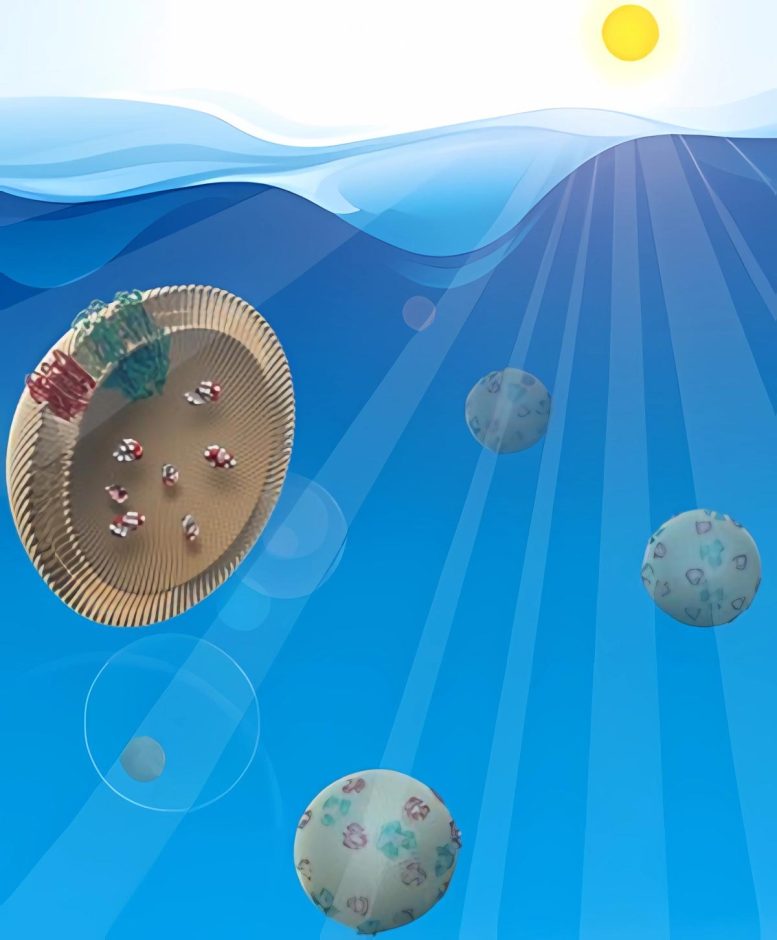
A new study from researchers at the University of Cincinnati details how solar-powered proteins can be used to filter antibiotics and other harmful compounds from rivers and lakes at a higher rate than present treatment standards.
New research, just published, details how University of Cincinnati researchers have developed and tested a solar-powered nano filter that is able to remove harmful carcinogens and antibiotics from water sources – lakes and rivers – at a significantly higher rate than the currently used filtering technology made of activated carbon.
In the journal Nano Letters, Vikram Kapoor, environmental engineering doctoral student, and David Wendell, assistant professor of environmental engineering, report on their development and testing of the new filter made of two bacterial proteins that was able to absorb 64 percent of antibiotics in surface waters vs. about 40 percent absorbed by the currently used filtering technology made of activated carbon. One of the more exciting aspects of their filter is the ability to reuse the antibiotics that are captured.
Kapoor and Wendell began development of their new nano filter in 2010 and testing in 2012, with the results reported in a paper titled “Engineering Bacterial Efflux Pumps for Solar-Powered Bioremediation of Surface Waters.”
The presence of antibiotics in surface waters is harmful in that it breeds resistant bacteria and kills helpful microorganisms, which can degrade aquatic environments and food chains. In other words, infectious agents like viruses and illness-causing bacteria become more numerous while the health of streams and lakes degrades.
So, according to Wendell, the newly developed nano filters, each much smaller in diameter than a human hair, could potentially have a big impact on both human health and on the health of the aquatic environment (since the presence of antibiotics in surface waters can also affect the endocrine systems of fish, birds and other wildlife).
Surprisingly, this filter employs one of the very elements that enable drug-resistant bacteria to be so harmful, a protein pump called AcrB. Wendell explained, “These pumps are an amazing product of evolution. They are essentially selective garbage disposals for the bacteria. Our innovation was turning the disposal system around. So, instead of pumping out, we pump the compounds into the proteovesicles.” (The new filtering technology is called a proteovesicle system.)
One other important innovation was the power source, a light-driven bacterial protein called Delta-rhodopsin which supplies AcrB with the pumping power to move the antibiotics.
The bacterial protein system has a number of advantages over present filtration technology:
- The operation of the new filtering technology is powered by direct sunlight vs. the energy-intensive needs for the operation of the standard activated carbon filter.
- The filtering technology also allows for antibiotic recycling. After these new nano filters have absorbed antibiotics from surface waters, the filters could be extracted from the water and processed to release the drugs, allowing them to be reused. On the other hand, carbon filters are regenerated by heating to several hundred degrees, which burns off the antibiotics.
- The new protein filters are highly selective. Currently used activated carbon filters serve as “catch-alls,” filtering a wide variety of contaminants. That means that they become clogged more quickly with natural organic matter found in rivers and lakes.
Said Wendell, “So far, our innovation promises to be an environmentally friendly means for extracting antibiotics from the surface waters that we all rely on. It also has potential to provide for cost-effective antibiotic recovery and reuse. Next, we want to test our system for selectively filtering out hormones and heavy metals from surface waters.”
In relation to the work published in this paper, Wendell and Kapoor tested their solar-powered nano filter against activated carbon, the present treatment technology standard outside the lab. They tested their innovation in water collected from the Little Miami River. Using only sunlight as the power source, they were able to selectively remove the antibiotics ampicillin and vancomycin, commonly used human and veterinary antibiotics, and the nucleic acid stain, ethidium bromide, which is a potent carcinogen to humans and aquatic animals.
Reference: “Engineering Bacterial Efflux Pumps for Solar-Powered Bioremediation of Surface Waters” by Vikram Kapoor and David Wendell, 13 April 2013, Nano Letters.
DOI: 10.1021/nl400691d
Never miss a breakthrough: Join the SciTechDaily newsletter.
Follow us on Google and Google News.