
Close Menu
    Facebook X (Twitter) Instagram
    SciTechDaily
    • Biology
    • Chemistry
    • Earth
    • Health
    • Physics
    • Science
    • Space
    • Technology
    Facebook X (Twitter) Pinterest YouTube RSS
    SciTechDaily
    Home»Space»Stunning Observation of a Dark Nebula
    Space

    Stunning Observation of a Dark Nebula

    By NASADecember 27, 2021No Comments2 Mins Read
    Facebook Twitter Pinterest Telegram LinkedIn WhatsApp Email Reddit
    Share
    Facebook Twitter LinkedIn Pinterest Telegram Email Reddit
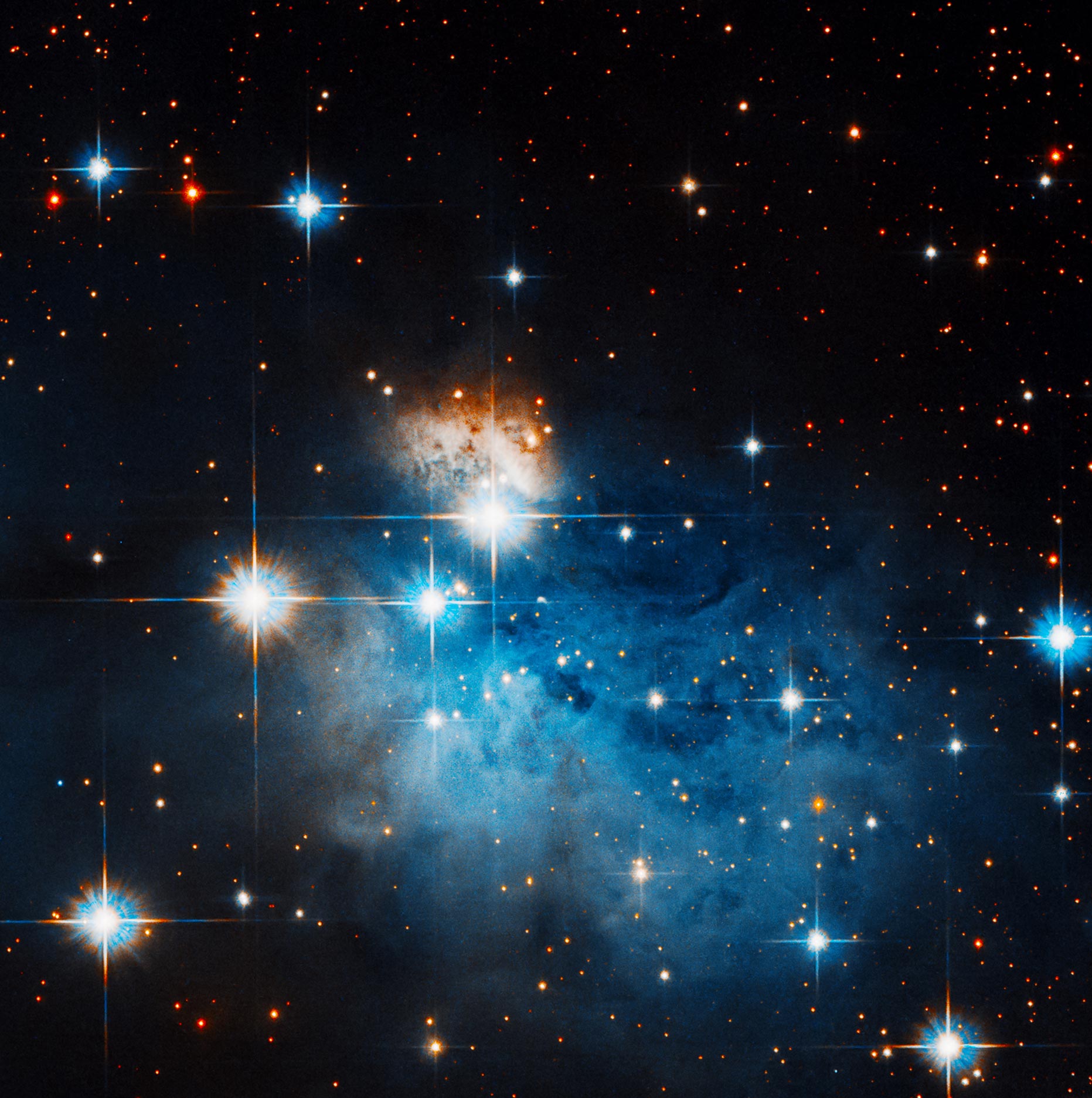
    Coalsack Nebula Caldwell 99
    This captivating image depicts a small area on the fringes of the Coalsack Nebula, also known as Caldwell 99. Caldwell 99 is a dark nebula, characterized by its dense interstellar dust that obstructs visible light from objects situated behind it. At the heart of the image lies a much smaller protoplanetary nebula. Credit: NASA, ESA, and R. Sahai (Jet Propulsion Laboratory); Processing: Gladys Kober (NASA/Catholic University of America)

    The Coalsack Nebula (Caldwell 99) is a vast dark nebula near the Southern Cross, about 600 light-years away. A newly imaged protoplanetary nebula within it highlights a star in transition, soon to become a planetary nebula.

    This stunning image captures a small region on the edge of the inky Coalsack Nebula, or Caldwell 99. Caldwell 99 is a dark nebula — a dense cloud of interstellar dust that completely blocks out visible wavelengths of light from objects behind it. The object at the center of the image is a (much smaller) protoplanetary nebula. The protoplanetary nebula phase is a late stage in the life of a star in which it has ejected a shell of hydrogen gas and is quickly heating up. This stage only lasts for a few thousand years before the protoplanetary nebula’s central star reaches roughly 30,000 Kelvin (53,500 Fahrenheit). At this point, the central star is producing enough energy to make its surrounding shell of gas glow, becoming what’s known as a planetary nebula.

    Caldwell 99 is a very prominent object in the southern night sky. On a clear night, it can be spotted easily with the naked eye as a dark patch, void of stars, next to the Southern Cross in the constellation Crux. It is easiest to spot in the Southern Hemisphere during the autumn. (Northern Hemisphere observers will want to be positioned near the equator and look for it in the springtime.)

    Caldwell 99 is located 600 light-years from Earth and is about 100 light-years across.

    Never miss a breakthrough: Join the SciTechDaily newsletter.
    Follow us on Google and Google News.

    Astronomy JPL NASA
    Share. Facebook Twitter Pinterest LinkedIn Email Reddit

    Related Articles

    NASA’s Roman Telescope Unlocks New Chapter in the Search for Alien Worlds

    Don’t Miss November’s Celestial Spectacles: Rare Occultations, Planetary Alignments, and Hidden Stars Await

    NASA’s SPHEREx: Exploring the Universe in 102 Infrared Colors

    Cosmic Horror Unveiled: NASA Reveals “Blood-Soaked Eyes” Staring From Deep Space [Video]

    Euclid’s Extraordinary 208-Gigapixel View: Uncovering the Universe’s Hidden Forces

    NASA Finds Signs of an Io-Like Volcanic Exomoon Just 635 Light-Years Away

    Skywatching Magic: October’s Spectacular Comet Lights Up the Night Sky

    Don’t Miss September’s Stunning Supermoon Eclipse

    Don’t Miss: Meteor Shower Peak, Star Forge, Mars and Jupiter Converge

    Leave A Reply Cancel Reply

    • Facebook
    • Twitter
    • Pinterest
    • YouTube

    Don't Miss a Discovery

    Subscribe for the Latest in Science & Tech!

    Trending News

    Monster Storms on Jupiter Unleash Lightning Beyond Anything on Earth

    Scientists Create “Liquid Gears” That Spin Without Touching

    The Simple Habit That Could Help Prevent Cancer

    Millions Take These IBS Drugs, But a New Study Finds Serious Risks

    Scientists Unlock Hidden Secrets of 2,300-Year-Old Mummies Using Cutting-Edge CT Scanner

    Bread Might Be Making You Gain Weight Even Without Eating More Calories

    Scientists Discover Massive Magma Reservoir Beneath Tuscany

    Europe’s Most Active Volcano Just Got Stranger – Here’s Why Scientists Are Rethinking It

    Follow SciTechDaily
    • Facebook
    • Twitter
    • YouTube
    • Pinterest
    • Newsletter
    • RSS
    SciTech News
    • Biology News
    • Chemistry News
    • Earth News
    • Health News
    • Physics News
    • Science News
    • Space News
    • Technology News
    Recent Posts
    • These Tiny Robots 50x Smaller Than a Hair Can Hunt and Move Bacteria
    • Simple Blood Test May Predict Alzheimer’s Years Before Brain Scans Show Signs
    • Scientists Say Adding This Unusual Seafood to Your Diet Could Reverse Signs of Aging
    • U.S. Waste Holds $5.7 Billion Worth of Crop Nutrients
    • Scientists Say a Hidden Structure May Exist Inside Earth’s Core
    Copyright © 1998 - 2026 SciTechDaily. All Rights Reserved.
    • Science News
    • About
    • Contact
    • Editorial Board
    • Privacy Policy
    • Terms of Use

    Type above and press Enter to search. Press Esc to cancel.