
Close Menu
    Facebook X (Twitter) Instagram
    SciTechDaily
    • Biology
    • Chemistry
    • Earth
    • Health
    • Physics
    • Science
    • Space
    • Technology
    Facebook X (Twitter) Pinterest YouTube RSS
    SciTechDaily
    Home»Health»The Fight Against Superbugs: Common Skin Bacteria Could Save Millions of Lives
    Health

    The Fight Against Superbugs: Common Skin Bacteria Could Save Millions of Lives

    By The Arctic University of NorwayNovember 25, 2023No Comments4 Mins Read
    Facebook Twitter Pinterest Telegram LinkedIn WhatsApp Email Reddit
    Share
    Facebook Twitter LinkedIn Pinterest Telegram Email Reddit
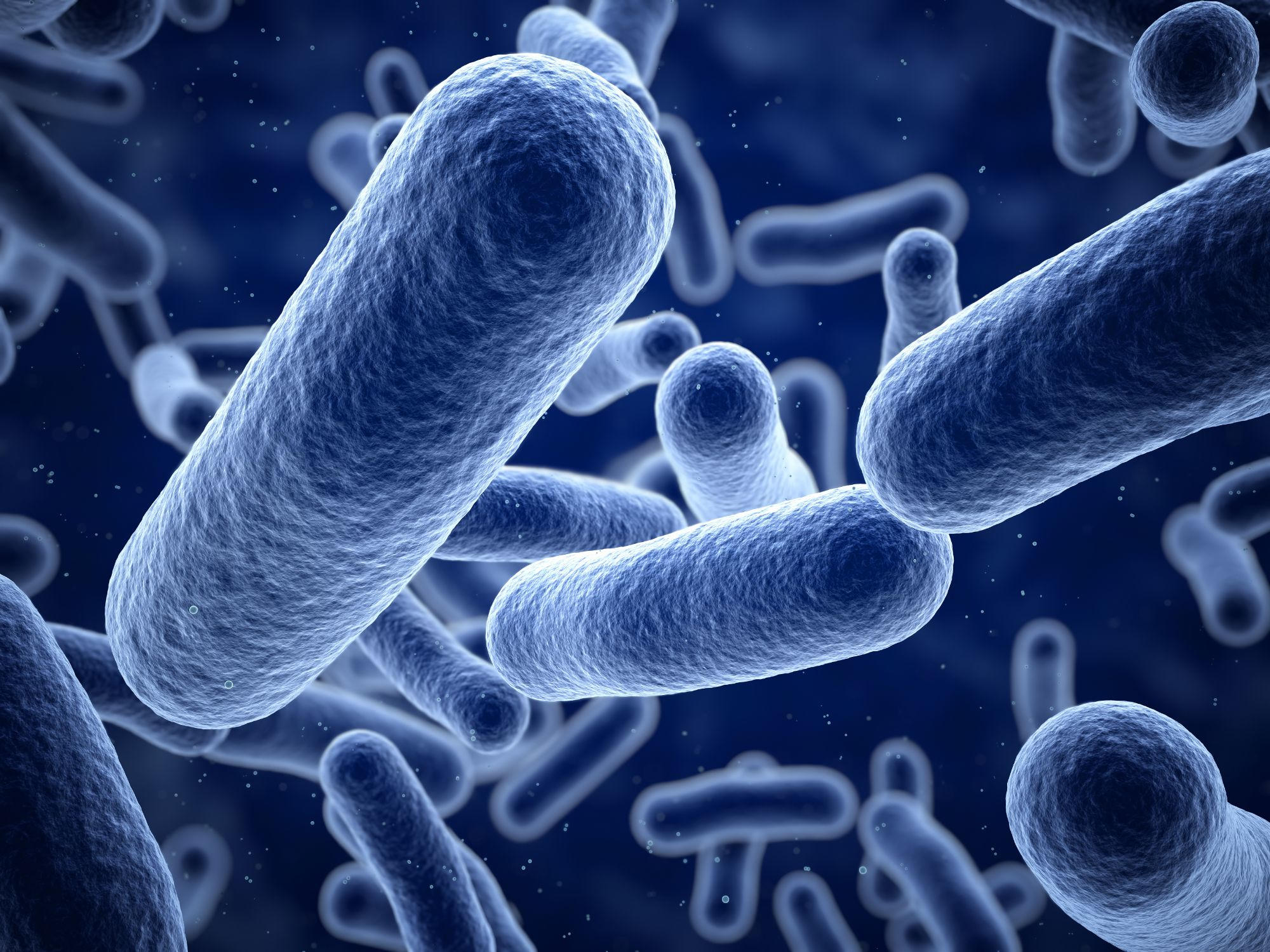
    Blue Bacteria Closeup
    Researchers in Tromsø have discovered a new bacteriocin in a common skin bacterium, named Romsacin, which shows potential in combating antibiotic-resistant bacteria. This discovery could lead to new treatments for infections currently without effective remedies. The process of developing Romsacin into a usable drug involves extensive research, testing, and compliance with bureaucratic processes, underscoring the long and uncertain journey of medical advancements.

    Infections with antibiotic-resistant bacteria are an escalating global concern. The solution may partly involve emulating the bacteria’s own weaponry. A new bacteriocin, discovered in a common skin bacterium by researchers in Tromsø, shows promise. This bacteriocin effectively inhibits the growth of antibiotic-resistant bacteria, which are frequently implicated in diseases and pose treatment challenges.

    One million deaths each year

    The fact that we have medicines against bacterial infections is something many people take for granted. But increasing resistance among bacteria means that more and more antibiotics do not work. When the bacteria become resistant to the antibiotics we have available, we are left without a treatment option for very common diseases. Over one million people die each year as a result of antibiotic resistance.

    The first step in developing new antibiotics is to look for substances that inhibit bacterial growth.

    Sami name for an exciting discovery

    The research group for child and youth health at UiT The Arctic University of Norway has studied substances that the bacteria themselves produce to inhibit the growth of competitors. These substances are called bacteriocins. Through the work, they have discovered a new bacteriocin, in a very common skin bacterium. Bacteriocin inhibits the growth of antibiotic-resistant bacteria that can be difficult to treat with common antibiotics.
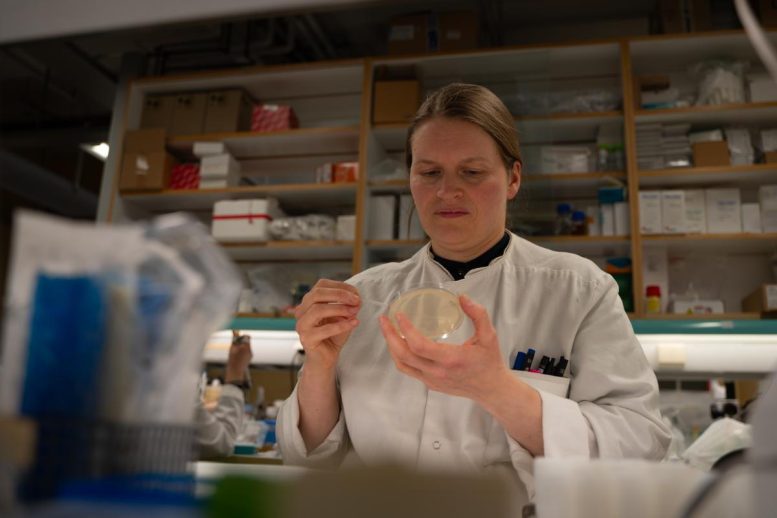
    Runa Wolden in the Lab
    Runa Wolden in the lab at UiT. Credit: Jørn Berger-Nyvoll/UiT

    The researchers have called the new bacteriocin Romsacin, after the Sami name for Tromsø, Romsa. The hope is that Romsacin can be developed into a new medicine for infections for which there is currently no effective treatment.

    Long way to go

    At the same time, researcher Runa Wolden at the Department of Clinical Medicine at UiT emphasizes that there is a long way to go before it is known whether Romsacin will be developed and taken into use as a new medicine. Because that’s how it is with basic research; you cannot say in advance when someone will make use of the results you produce.

    “This discovery is the result of something we have been researching for several years. Developing Romsacin – or other promising substances – into new antibiotics is very expensive and can take 10-20 years,” says Wolden, who is part of the research group for child and youth health.

    Effective against bacterial types

    Before new antibiotics can be used as medicines, one needs to make sure that they are safe to use. Currently, researchers do not know how the bacteriocin works in humans. A further process will involve comprehensive testing, bureaucracy, and marketing.

    “This naturally means that there is a long way to go before we can say anything for sure. What we already know, however, is that this is a new bacteriocin, and that it works against some types of bacteria that are resistant to antibiotics. It’s exciting,” says Wolden.

    The new bacteriocin is produced by a bacterium called Staphylococcus haemolyticus. The bacteriocin is not produced by all S. haemolyticus, but by one of the 174 isolates that the researchers have available in the freezer.

    “We couldn’t know that before we started the project, and that’s one of the things that makes research fun,” says Wolden.

    She says that ten years ago the researchers collected bacterial samples from healthy people when they wanted to compare S. haemolyticus in healthy people with those found in patients in hospital.

    “Subsequently, we have done many experiments with these bacteria, and this is the result from one of our projects,” says Runa Wolden.

    Reference: “The novel bacteriocin romsacin from Staphylococcus haemolyticus inhibits Gram-positive WHO priority pathogens” by Runa Wolden, Kirill V. Ovchinnikov, Hermoine J. Venter, Thomas F. Oftedal, Dzung B. Diep and Jorunn Pauline Cavanagh, 31 October 2023, Microbiology Spectrum.
    DOI: 10.1128/spectrum.00869-23

    Never miss a breakthrough: Join the SciTechDaily newsletter.
    Follow us on Google and Google News.

    Antibiotics Bacteria Microbiology Skin
    Share. Facebook Twitter Pinterest LinkedIn Email Reddit

    Related Articles

    Hidden Epidemic: Drug-Resistant Bacteria Are Spreading Through Hospital Plumbing

    Superbugs on the Rise: How Diabetes Fuels the Evolution of Antibiotic Resistance

    Scientists Just Discovered Why Antibiotics Struggle To Eliminate Certain Infections

    Nature’s Secret Weapon: BPD-9 Takes on Tuberculosis With Revolutionary Efficacy

    How Man’s Best Friend Is Unlocking the Secrets To Beat E. coli Superbugs

    Fighting Antimicrobial Resistance – Scientists Unveil Over 10,000 Drug Combinations

    New Technique Enables Quick Identification of Potential Drugs to Fight Antibiotic-Resistant Bacteria

    “Hidden” Genes in Bacteriophages Could Be Key in Development of New Antibiotics

    Metabolic Genetic Mutations Help Bacteria Resist Drug Treatment

    Leave A Reply Cancel Reply

    • Facebook
    • Twitter
    • Pinterest
    • YouTube

    Don't Miss a Discovery

    Subscribe for the Latest in Science & Tech!

    Trending News

    Your Blood Pressure Reading Could Be Wrong Because of One Simple Mistake

    Astronomers Stunned by Ancient Galaxy With No Spin

    Physicists May Be on the Verge of Discovering “New Physics” at CERN

    Scientists Solve 320-Million-Year Mystery of Reptile Skin Armor

    Scientists Say This Daily Walking Habit May Be the Secret to Keeping Weight Off After Dieting

    New Therapy Rewires the Brain To Restore Joy in Depression Patients

    Giant Squid Detected off Western Australia in Stunning Deep-Sea Discovery

    Popular Sugar-Free Sweetener Linked to Liver Disease, Study Warns

    Follow SciTechDaily
    • Facebook
    • Twitter
    • YouTube
    • Pinterest
    • Newsletter
    • RSS
    SciTech News
    • Biology News
    • Chemistry News
    • Earth News
    • Health News
    • Physics News
    • Science News
    • Space News
    • Technology News
    Recent Posts
    • Scientists Discover “Hidden” Materials That Could Transform Clean Energy and Batteries
    • Scientists Just Measured an Energy Pulse Smaller Than a Trillionth of a Billionth of a Joule
    • 540-Million-Year-Old Fossils Reveal a Huge Surprise About Early Life on Earth
    • Scientists Create “Living” Materials That Crawl, Walk, and Dig on Their Own
    • Dante’s Inferno May Secretly Be About a Planet-Destroying Asteroid Strike
    Copyright © 1998 - 2026 SciTechDaily. All Rights Reserved.
    • Science News
    • About
    • Contact
    • Editorial Board
    • Privacy Policy
    • Terms of Use

    Type above and press Enter to search. Press Esc to cancel.