
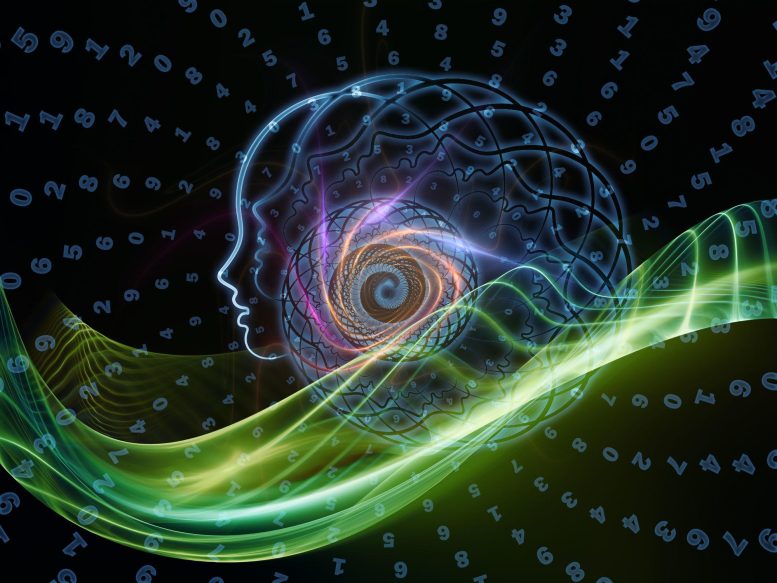
The Findings Have the Potential To Advance Both Computing and Understanding of the Brain
Scientists from the University of Sydney and Fudan University have found human brain signals traveling across the outer layer of neural tissue that naturally arrange themselves to resemble swirling spirals.
Published in the journal Nature Human Behaviour, the study suggests that these widespread spiral patterns, seen during both rest and cognitive activity, play a role in organizing brain function and cognitive processes.
Senior author Associate Professor Pulin Gong, from the School of Physics in the Faculty of Science, said the discovery could have the potential to advance powerful computing machines inspired by the intricate workings of the human brain.
The discovery opens up new avenues for understanding how the brain works and provides valuable insights into the fundamental functions of the human brain. It could help medical researchers understand the effects of brain diseases, such as dementia, by examining the role they play.
Visual re-creation of brain spirals traveling across the cortex. Credit: Gong et al.
“Our study suggests that gaining insights into how the spirals are related to cognitive processing could significantly enhance our understanding of the dynamics and functions of the brain,” said Associate Professor Gong, who is a member of the Complex Systems research group in Physics.
How Brain Spirals Organize Neural Activity
“These spiral patterns exhibit intricate and complex dynamics, moving across the brain’s surface while rotating around central points known as phase singularities
“Much like vortices act in turbulence, the spirals engage in intricate interactions, playing a crucial role in organizing the brain’s complex activities.
“The intricate interactions among multiple co-existing spirals could allow neural computations to be conducted in a distributed and parallel manner, leading to remarkable computational efficiency.”
PhD student Yiben Xu, the lead author of the research from the School of Physics, said the location of the spirals on the cortex could allow them to connect activity in different sections, or networks, of the brain – acting as a bridge of communication. Many of the spirals are large enough to cover multiple networks.
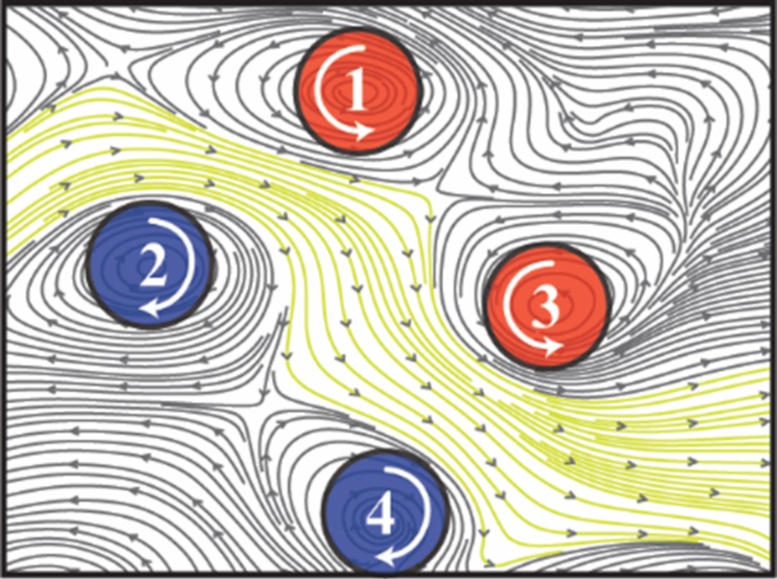
The cortex of the brain, also known as the cerebral cortex, is the outermost layer of the brain that is responsible for many complex cognitive functions, including perception, memory, attention, language, and consciousness.
Spirals as Coordinators of Brain Activity
“One key characteristic of these brain spirals is that they often emerge at the boundaries that separate different functional networks in the brain,” Mr. Xu said.
“Through their rotational motion, they effectively coordinate the flow of activity between these networks.
“In our research, we observed that these interacting brain spirals allow for flexible reconfiguration of brain activity during various tasks involving natural language processing and working memory, which they achieve by changing their rotational directions.”
The scientists gathered their findings from functional magnetic resonance imaging (fMRI) brain scans of 100 young adults, which they analyzed by adapting methods used to understand complex wave patterns in turbulence.
Neuroscience has traditionally focused on interactions between neurons to understand brain function. There is a growing area of science looking at larger processes within the brain to help us understand its mysteries.
“By unraveling the mysteries of brain activity and uncovering the mechanisms governing its coordination, we are moving closer to unlocking the full potential of understanding cognition and brain function,” Associate Professor Gong said.
Reference: “Interacting spiral wave patterns underlie complex brain dynamics and are related to cognitive processing” by Yiben Xu, Xian Long, Jianfeng Feng and Pulin Gong, 15 June 2023, Nature Human Behaviour.
DOI: 10.1038/s41562-023-01626-5
Never miss a breakthrough: Join the SciTechDaily newsletter.
Follow us on Google and Google News.
5 Comments
Important discovery
To avoid dementia stay full of b3 food diet as deficiency can cause it
My IQ is below 104, I hope this breakthrough makes me smarter. Thank you for your understanding.
Yes, through my resources different types of mutations.At the moment we need a few days for a complete reports.thank for your responds
I have been the guinea pig for this development application for many years and have been paid nothing for my services.
Who do I need to get in touch with??….