

A stem cell-derived intestine model reveals glycyrrhizin as a potential treatment for inflammatory bowel disease.
Scientists have used a lab-grown human intestine to uncover a surprising candidate for treating inflammatory bowel disease: a compound found in black licorice.
A study published in Stem Cell Reports shows how a human stem cell-derived model of the intestine can be used to identify potential treatments for inflammatory bowel disease (IBD), pointing to glycyrrhizin as a promising compound for reducing intestinal inflammation and preventing cell death.
The global impact of IBD continues to grow, with around 4 million people affected worldwide. The condition involves long-term inflammation of the intestinal lining and is associated with symptoms such as ongoing diarrhea, abdominal pain, and fatigue.
Existing treatments typically rely on anti-inflammatory medications and therapies that target the immune system, but many patients do not achieve sufficient relief.
Lab-grown intestine enables drug discovery
High-throughput screening (HTS) is widely used to search for new treatments, but it requires a dependable model that accurately reflects the human intestinal environment. To meet this need, a research team led by Yu Takahashi at the University of Tokyo, Japan created a stem cell-derived intestinal model.
They simulated an IBD-like condition by exposing the cells to a key inflammatory protein linked to the disease in patients. After confirming that this protein triggered both inflammation and cell death in the model, the team tested around 3,500 different compounds, using cell survival as the main measure of effectiveness.
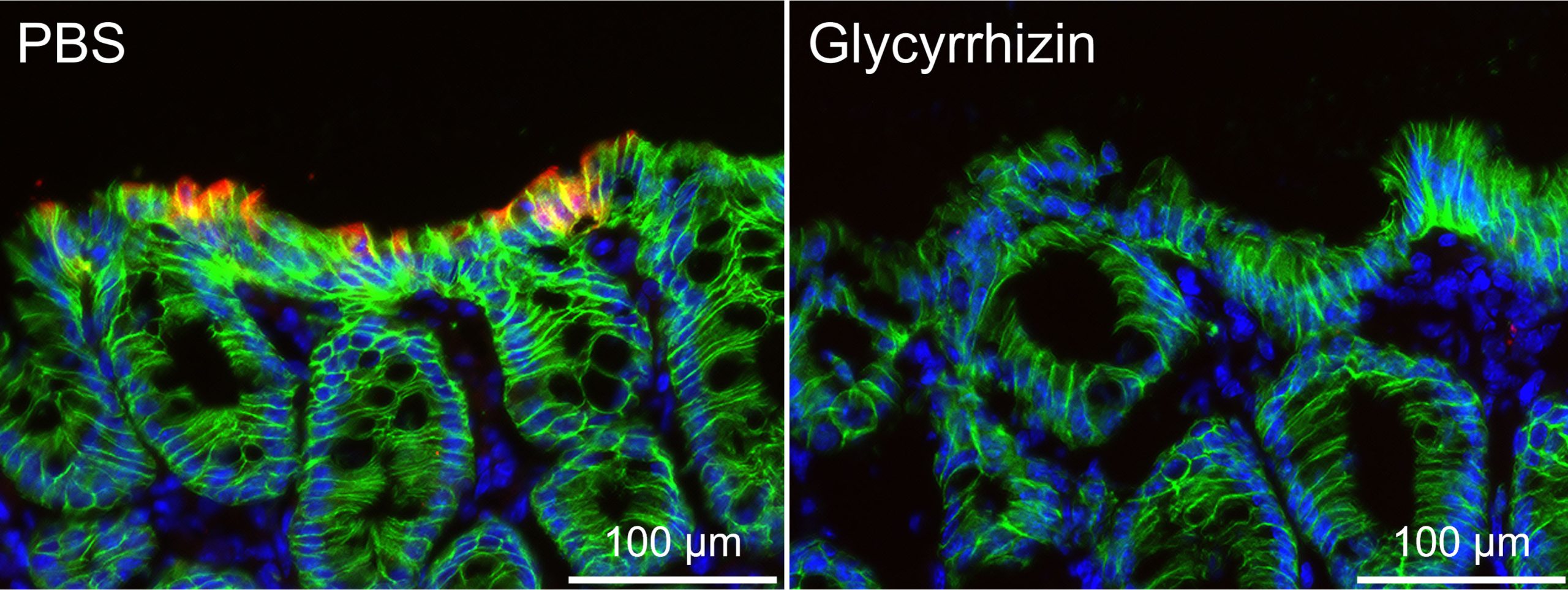
Glycyrrhizin, a naturally occurring compound found in black licorice and previously studied in cellular and animal models of IBD, was identified as one of the most effective candidates. It significantly reduced intestinal cell death in the lab model. Similar benefits were also observed in mice with IBD, where glycyrrhizin lowered levels of inflammation and protected intestinal cells.
Toward new treatment strategies
These results highlight the value of stem cell-derived intestinal models as tools for discovering new therapies.
Additional clinical research will be needed to determine whether glycyrrhizin can safely and effectively treat IBD in people, and to better understand any potential side effects.
Reference: “Organoid phenotypic screening identified glycyrrhizin that confers protection against tumor necrosis factor-induced cell death” by Yu Takahashi, Zhongwei Zhang, Izumi Tanaka, I-Ting Lee, Jincheng He, Yurina Koura, Shintaro Sato, Hirotatsu Kojima, Takayoshi Okabe, Hiroshi Kiyono, Takashi Sasaki, Yoshio Yamauchi, Yosuke Kurashima and Ryuichiro Sato, 16 April 2026, Stem Cell Reports.
DOI: 10.1016/j.stemcr.2026.102891
Never miss a breakthrough: Join the SciTechDaily newsletter.
Follow us on Google and Google News.
4 Comments
If stem cells is so good why cant it heal the thryoids
thanks for this
TCM/Eastern medicine has been treating intestinal issues with licorice for centuries. Glad to see this research validating TCM!
Man age 92.Still working. Our 1940 school shop had no sweets and sold dried liquorice and slices of swede. I still eat raw swede but where do I get Liquorice in particular fresh Liquorice.