
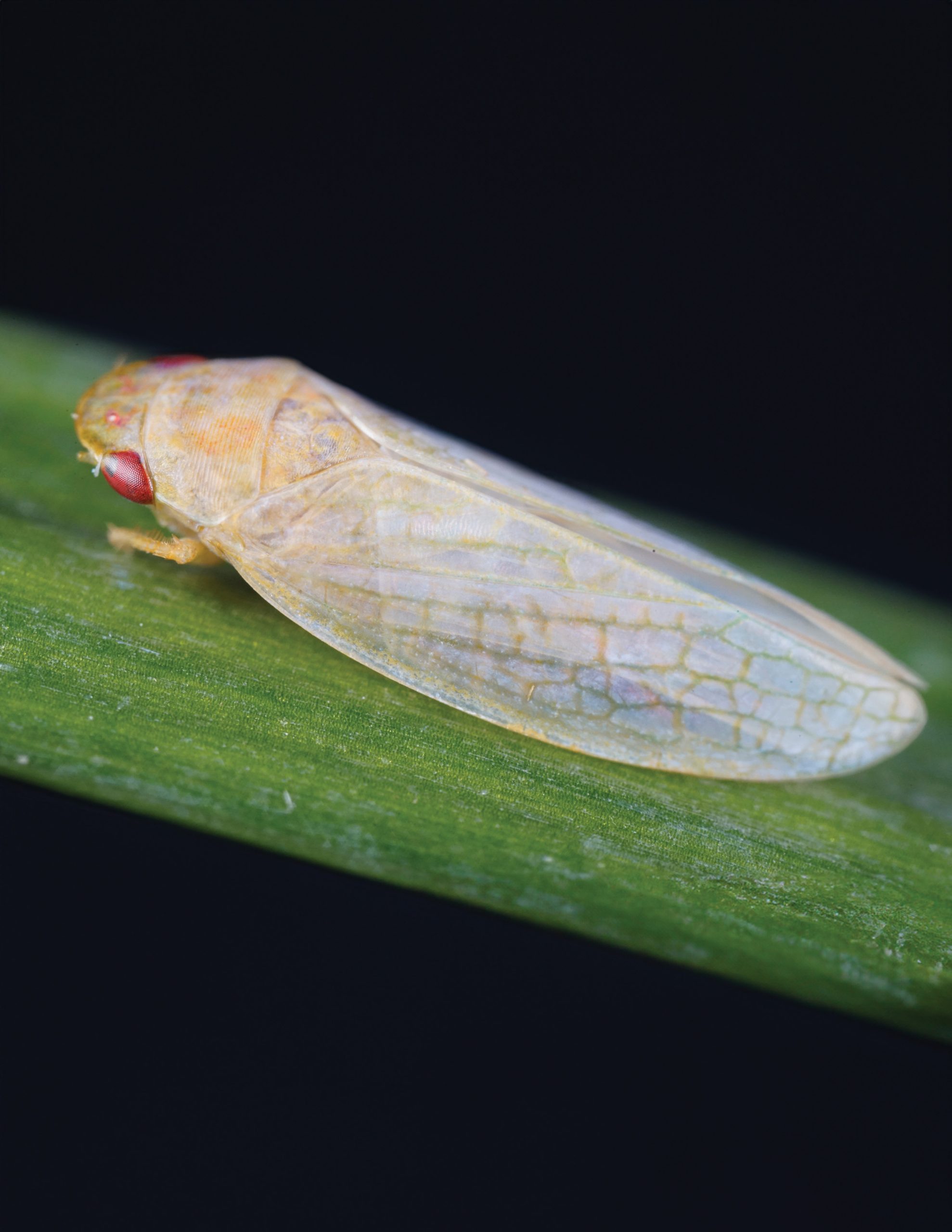
Leafhoppers, a common backyard insect, secrete and coat themselves in tiny mysterious particles that could provide both the inspiration and the instructions for next-generation technology, according to a new study led by Penn State researchers. In a first, the team precisely replicated the complex geometry of these particles, called brochosomes, and elucidated a better understanding of how they absorb both visible and ultraviolet light.
This could allow the development of bioinspired optical materials with possible applications ranging from invisible cloaking devices to coatings to more efficiently harvest solar energy, said Tak-Sing Wong, professor of mechanical engineering and biomedical engineering. Wong led the study, which was published today (March 18) in the Proceedings of the National Academy of Sciences of the United States of America (PNAS).
The Mystery of Brochosomes Unveiled
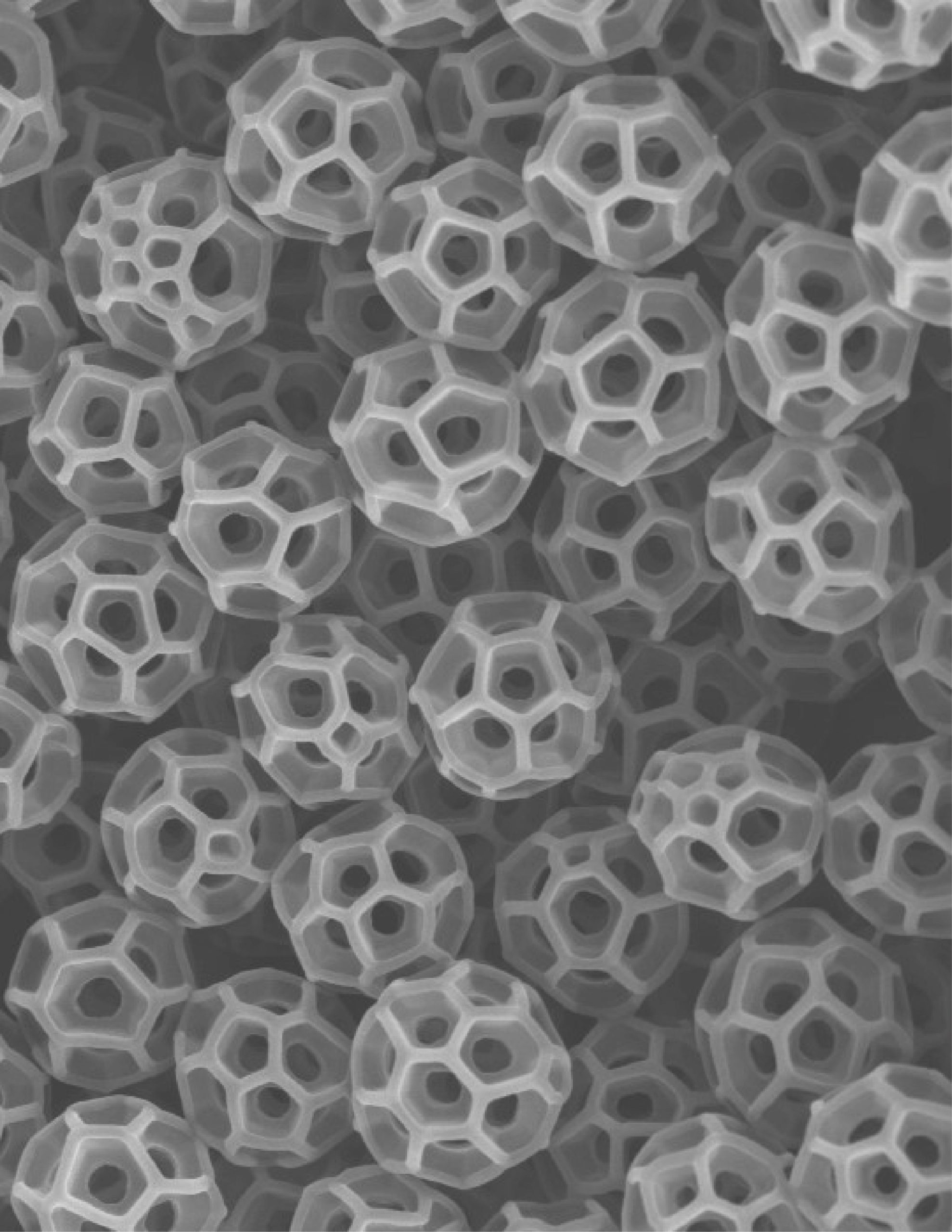
The unique, tiny particles have an unusual soccer ball-like geometry with cavities, and their exact purpose for the insects has been something of a mystery to scientists since the 1950s. In 2017, Wong led the Penn State research team that was the first to create a basic, synthetic version of brochosomes in an effort to better understand their function.
“This discovery could be very useful for technological innovation,” said Lin Wang, postdoctoral scholar in mechanical engineering and the lead author of the study. “With a new strategy to regulate light reflection on a surface, we might be able to hide the thermal signatures of humans or machines. Perhaps someday people could develop a thermal invisibility cloak based on the tricks used by leafhoppers. Our work shows how understanding nature can help us develop modern technologies.”
Wang went on to explain that even though scientists have known about brochosome particles for three-quarters of a century, making them in a lab has been a challenge due to the complexity of the particle’s geometry.
Understanding and Replicating Brochosomes
“It has been unclear why the leafhoppers produce particles with such complex structures,” Wang said, “We managed to make these brochosomes using a high-tech 3D-printing method in the lab. We found that these lab-made particles can reduce light reflection by up to 94%. This is a big discovery because it’s the first time we’ve seen nature do something like this, where it controls light in such a specific way using hollow particles.”
Theories on why leafhoppers coat themselves with a brochosome armor have ranged from keeping them free of contaminants and water to a superhero-like invisibility cloak. However, a new understanding of their geometry raises a strong possibility that its main purpose could be the cloak to avoid predators, according to Tak-Sing Wong, professor of mechanical engineering and biomedical engineering and corresponding author of the study.
The researchers have found that the size of the holes in the brochosome that give it a hollow, soccer ball-like appearance is extremely important. The size is consistent across leafhopper species, no matter the size of the insect’s body. The brochosomes are roughly 600 nanometers in diameter — about half the size of a single bacterium — and the brochosome pores are around 200 nanometers.
“That makes us ask a question,” Wong said. “Why this consistency? What is the secret of having brochosomes of about 600 nanometers with about 200-nanometer pores? Does that serve some purpose?”
Potential Applications and Future Directions
The researchers found the unique design of brochosomes serves a dual purpose — absorbing ultraviolet (UV) light, which reduces visibility to predators with UV vision, such as birds and reptiles, and scattering visible light, creating an anti-reflective shield against potential threats. The size of the holes is perfect for absorbing light at the ultraviolet frequency.
This potentially could lead to a variety of applications for humans using synthetic brochosomes, such as more efficient solar energy harvesting systems, coatings that protect pharmaceuticals from light-induced damage, advanced sunscreens for better skin protection against sun damage and even cloaking devices, researchers said. To test this, the team first had to make synthetic brochosomes, a major challenge in and of itself.
In their 2017 study, the researchers mimicked some features of brochosomes, particularly the dimples and their distribution, using synthetic materials. This allowed them to begin understanding the optical properties. However, they were only able to make something that looked like brochosomes, not an exact replica.
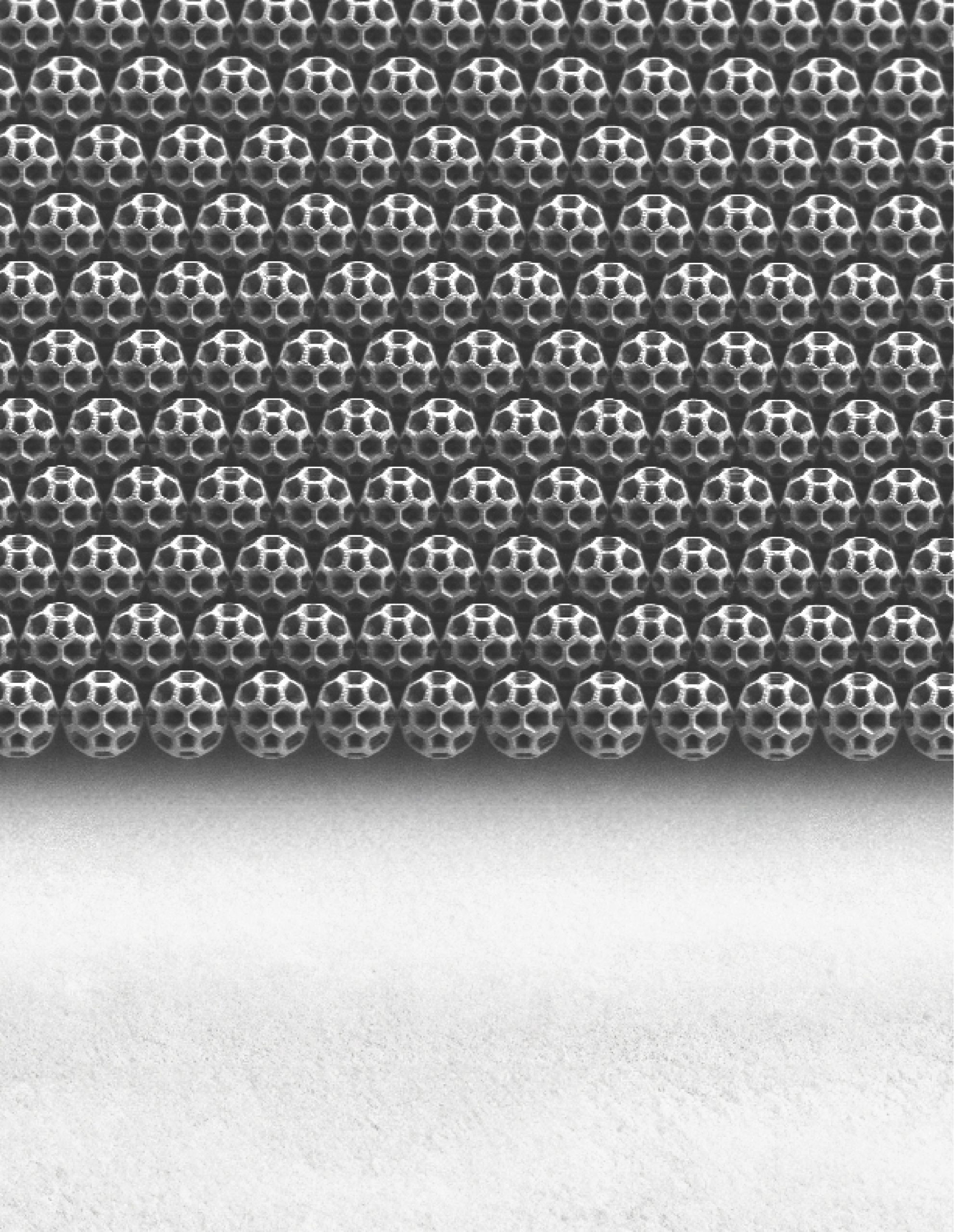
“This is the first time we are able to make the exact geometry of the natural brochosome,” Wong said, explaining that the researchers were able to create scaled synthetic replicas of the brochosome structures by using advanced 3D-printing technology.
They printed a scaled-up version that was 20,000 nanometers in size, or roughly one-fifth the diameter of a human hair. The researchers precisely replicated the shape and morphology, as well as the number and placement of pores using 3D printing, to produce still-small faux brochosomes that were large enough to characterize optically.
They used a Micro-Fourier transform infrared (FTIR) spectrometer to examine how the brochosomes interacted with infrared light of different wavelengths, helping the researchers understand how the structures manipulate the light.
Next, the researchers said they plan to improve the synthetic brochosome fabrication to enable production at a scale closer to the size of natural brochosomes. They will also explore additional applications for synthetic brochosomes, such as information encryption, where brochosome-like structures could be used as part of an encryption system where data is only visible under certain light wavelengths.
Wang noted that their brochosome work demonstrates the value of a biomimetic research approach, where scientists look to nature for inspiration.
“Nature has been a good teacher for scientists to develop novel advanced materials,” Wang said. “In this study, we have just focused on one insect species, but there are many more amazing insects out there that are waiting for material scientists to study, and they may be able to help us solve various engineering problems. They are not just bugs; they are inspirations.”
Reference: “Geometric design of antireflective leafhopper brochosomes” by Lin Wang, Zhuo Li, Sheng Shen and Tak-Sing Wong, 18 March 2024, Proceedings of the National Academy of Sciences.
DOI: 10.1073/pnas.2312700121
Along with Wong and Wang from Penn State, other researchers on the study include Sheng Shen, professor of mechanical engineering, and Zhuo Li, doctoral candidate in mechanical engineering, both at Carnegie Mellon University, who contributed to the simulations in this study. Wang and Li contributed equally to this work, for which the researchers have filed a U.S. provisional patent. The Office of Naval Research supported this research.
Never miss a breakthrough: Join the SciTechDaily newsletter.
Follow us on Google and Google News.