
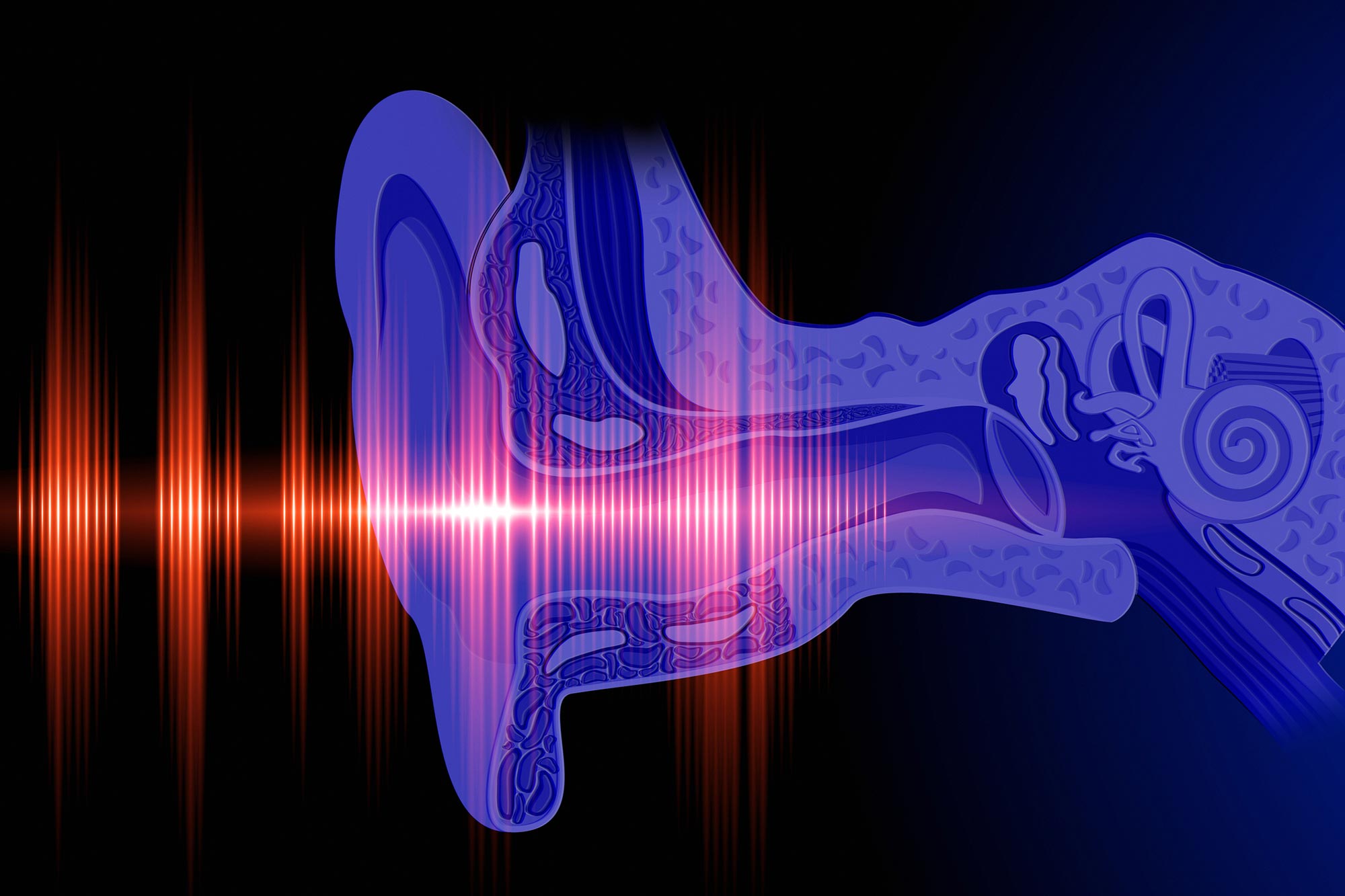
A cutting-edge study reveals how terahertz (THz) imaging technology has unlocked a new way to peer inside the intricate structure of the inner ear.
Using micrometer-level precision and advanced machine learning, researchers visualized the mouse cochlea in stunning 3D detail, opening doors to non-invasive diagnostics that could revolutionize hearing loss treatment and even early cancer detection.
The Cochlea and the Limits of Current Imaging
Thanks to advances in healthcare and technology, people are living longer than ever before. But with longer lifespans comes a rise in age-related conditions that affect quality of life. One of the most common is hearing loss in older adults. This can seriously impact communication, social engagement, and daily activities.
Hearing depends on the cochlea, a spiral-shaped structure in the inner ear that transforms sound waves into signals the brain can understand. When the cochlea is damaged or its function impaired, hearing loss can occur. To better diagnose and understand auditory disorders, it’s essential to clearly visualize this complex structure. However, traditional imaging methods often fall short, struggling to capture the cochlea’s fine details.
Breakthrough with Terahertz Imaging
In a recent study, researchers explored the potential of terahertz (THz) imaging as a new way to visualize the cochlea. Led by Associate Professor Kazunori Serita of Waseda University, in collaboration with Professors Takeshi Fujita and Akinobu Kakigi of Kobe University, and Professors Masayoshi Tonouchi and Luwei Zheng of Osaka University, the team used a micrometer-scale THz point source to image the internal structure of a mouse cochlea.
Published in Optica on March 27, 2025, the study highlights THz imaging as a non-invasive, high-resolution tool for analyzing biological tissues. “By leveraging THz waves, we can achieve deeper tissue penetration while preserving structural clarity,” explains Serita.

Micrometer Precision and 3D Reconstruction
To achieve high-resolution THz imaging, a micrometer-sized THz point source was generated using a femtosecond laser at a wavelength of 1.5 μm, which irradiated a GaAs substrate. The cochlea was placed directly on the substrate to facilitate near-field imaging. The system captured 2D THz time-domain images over a broad timescale, allowing structural visualization at varying depths.
By applying the time-of-flight principle, the time scale of each THz image was converted into a depth scale. Furthermore, k-means clustering, an unsupervised machine-learning technique, was used to extract structural features and enable 3D reconstruction of the cochlea, resulting in a 3D point cloud and surface mesh model.
Revealing the Inner Workings of the Cochlea
The study successfully demonstrated the first THz imaging of the internal structure of the mouse cochlea. The imaging technique provided clear structural information at varying depths, enabling the visualization of intricate cochlear features. The 3D reconstruction process yielded high-quality spatial representations of the cochlea, enhancing the understanding of its internal architecture. These results highlight the potential of THz imaging as a viable alternative to conventional methods for inner ear diagnostics.
Toward Future Medical Innovations
The findings of this study open the door to significant advancements in medical imaging. The proposed THz imaging technique could be developed into miniaturized devices, such as THz endoscopes and otoscopes, enabling non-invasive, in vivo imaging for cochlear diagnostics, dermatology, and early cancer detection.
“The integration of THz technology with existing medical devices, such as endoscopes, holds great potential for revolutionizing the way diseases are diagnosed, particularly in oncology and pathology,” says Serita. Additionally, “THz technology could significantly enhance the speed and accuracy of pathological diagnoses, reducing the time between testing and results, and ultimately improving patient outcomes,” he adds.
A Vision for Biomedical Diagnostics
By demonstrating the potential of THz imaging for visualizing the cochlea through near-field imaging and 3D reconstruction, this study explores its possible applications in biomedical diagnostics. With its non-invasive, high-resolution capabilities, THz technology may offer a useful approach for medical imaging and analysis.
Explore Further: Scientists Can Now See the Inner Ear in Stunning Detail Without Cutting
Reference: “Three-dimensional terahertz near-field imaging evaluation of cochlea” by Takeshi Fujita, Kazunori Serita, Haidong Chen, Akinobu Kakigi, Hironaru Murakami, Luwei Zheng, Masayoshi Tonouchi and Nicole Allen, 19 April 2025, Optica.
DOI: 10.1364/OPTICA.543436
Never miss a breakthrough: Join the SciTechDaily newsletter.
Follow us on Google and Google News.