
Close Menu
    Facebook X (Twitter) Instagram
    SciTechDaily
    • Biology
    • Chemistry
    • Earth
    • Health
    • Physics
    • Science
    • Space
    • Technology
    Facebook X (Twitter) Pinterest YouTube RSS
    SciTechDaily
    Home»Health»Yale Researchers Develop Method to Attack Cancer at Its Source
    Health

    Yale Researchers Develop Method to Attack Cancer at Its Source

    By Bill Hathaway, Yale UniversityNovember 18, 20142 Comments2 Mins Read
    Facebook Twitter Pinterest Telegram LinkedIn WhatsApp Email Reddit
    Share
    Facebook Twitter LinkedIn Pinterest Telegram Email Reddit
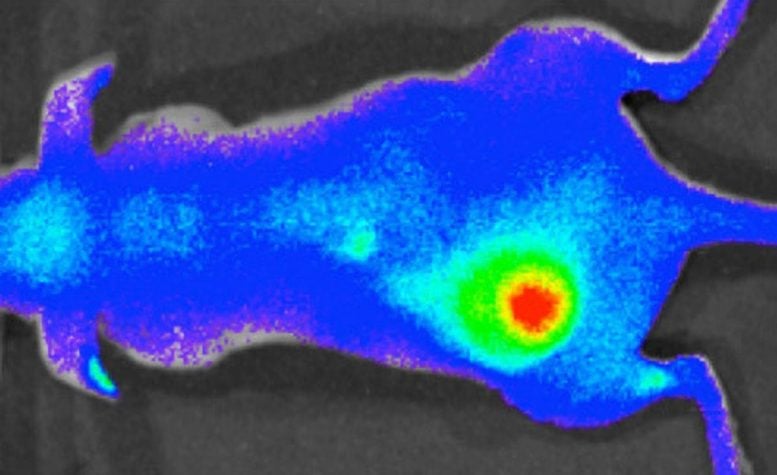
    Gene Therapy Delivery System Anti-Tumor Activity
    Anti-tumor activity resulting from new gene therapy delivery system is captured in red. Credit: Yale University

    A team of researchers at Yale University has developed a therapeutic molecule that both targets the acidic microenvironments of tumors and penetrates cells to deliver a therapeutic cargo.

    MicroRNAs may be tiny — as few as 20 genetic letters, compared to 3 billion in the DNA of a human — but they play a major role in biology, helping to determine which genes are expressed or silenced. In the last 10 years, researchers at Yale and elsewhere have shown they play a major role in formation and spread of tumors.

    However, their potential as a target for cancer therapy has not been realized because of a daunting problem that has held back clinical applications of gene therapy: How can you target minute pieces of genetic material locked safely inside the membranes of billions of cells?

    Now a multi-disciplinary team of Yale researchers has solved the problem by designing a therapeutic molecule that both targets the acidic microenvironments of tumors and penetrates cells to deliver a therapeutic cargo. The new delivery system effectively killed advanced tumors in mice, the team reports in the November 17 issue of the journal Nature.

    “This strategy opens up a new pathway to therapy, not just for the treatment of cancer but for a host of other diseases as well,” said Donald Engelman, a co-author of the paper and the Eugene Higgins Professor of Molecular Biophysics and Biochemistry at Yale.

    Reference: “MicroRNA silencing for cancer therapy targeted to the tumour microenvironment” by Christopher J. Cheng, Raman Bahal, Imran A. Babar, Zachary Pincus, Francisco Barrera, Connie Liu, Alexander Svoronos, Demetrios T. Braddock, Peter M. Glazer, Donald M. Engelman, W. Mark Saltzman and Frank J. Slack, 17 November 2014, Nature.
    DOI: 10.1038/nature13905

    The findings were the result of an extensive collaboration between labs of Engelman, Peter Glazer, Mark Saltzman and Frank Slack.

    Never miss a breakthrough: Join the SciTechDaily newsletter.
    Follow us on Google and Google News.

    Biotechnology Cancer Disease Molecular Biology Yale University
    Share. Facebook Twitter Pinterest LinkedIn Email Reddit

    Related Articles

    Researchers Identify a New Way to Suppress Lung Tumors

    New T Cell Subsets Have Potential to Improve Cellular Therapy for Cancer

    Yale Study Finds Racial Differences in Smoking Patterns

    Yale Researchers Discover New Complexities Behind Drug Resistance

    New Strategy to Better Protect Cancer Patients from the Flu

    Rare ALK Genetic Mutation Extends Cancer Survival

    Yale Study Reveals Why BRCA Gene Resists Cancer Treatment

    Unique Drug Combinations Show Positive Results in Fighting Late-Stage Melanoma

    New Antibody Drug Boosts the Immune System’s Capacity to Fight Cancer

    2 Comments

    1. Edel on July 24, 2025 4:55 am

      Hi very interested in your research 😊 thank you 😊

      Reply
    2. Fauci on April 8, 2026 9:39 pm

      Why on earth would you use a photo of a dog?

      Reply
    Leave A Reply Cancel Reply

    • Facebook
    • Twitter
    • Pinterest
    • YouTube

    Don't Miss a Discovery

    Subscribe for the Latest in Science & Tech!

    Trending News

    Giant Plasma Waves May Be Stripping Away Mars’ Atmosphere

    Scientists Thought SuperAgers Had Lucky Genes. They Were Wrong

    Astronomers Find Ancient Black Holes Shining With the Power of a Trillion Suns

    Researchers Solve Mystery Behind Contradictory Weight-Loss Drug Paradox

    Long-Lost Megalodon Fossils Found Hiding on a Museum Shelf

    Experimental Eye Drops Restore Sight in Blind Mice

    Scientists Discover the Brain May Enter a New Biological Phase Between 50 and 75

    New Research Reveals Autistic Brains Process Faces Differently

    Follow SciTechDaily
    • Facebook
    • Twitter
    • YouTube
    • Pinterest
    • Newsletter
    • RSS
    SciTech News
    • Biology News
    • Chemistry News
    • Earth News
    • Health News
    • Physics News
    • Science News
    • Space News
    • Technology News
    Recent Posts
    • Scientists Find Two New Ways To Break Down “Forever Chemicals” in Water
    • Nuclear Reactors Keep Emitting a Hidden Signal Long After They Shut Down
    • This Ancient Grain Could Help Transform Children’s Gut Health
    • Pesticide Exposure May Carry a Serious Neurological Risk Years Later
    • Ozempic Could Fight Addiction Too – Scientists Finally Know How
    Copyright © 1998 - 2026 SciTechDaily. All Rights Reserved.
    • Science News
    • About
    • Contact
    • Editorial Board
    • Privacy Policy
    • Terms of Use

    Type above and press Enter to search. Press Esc to cancel.