
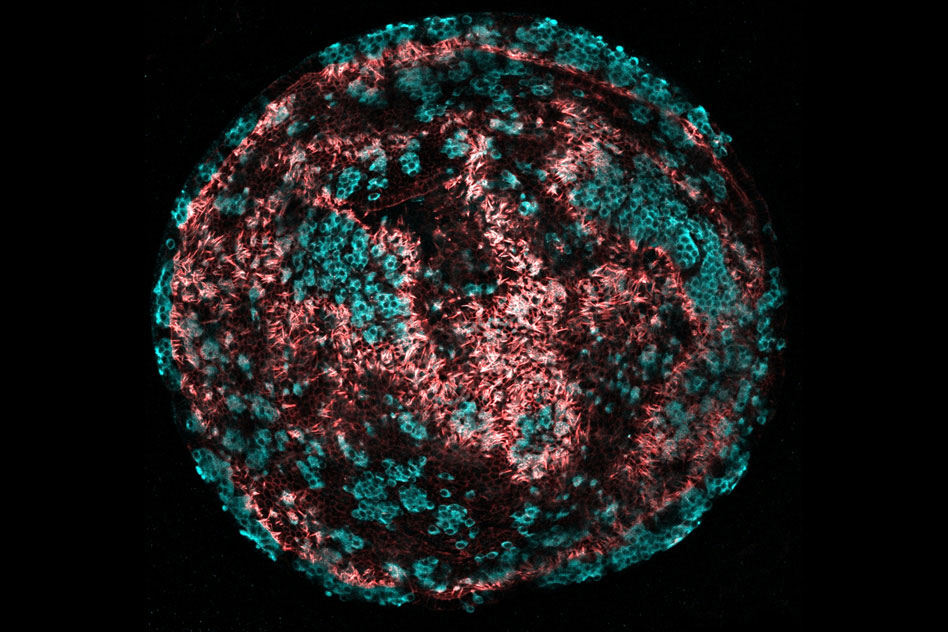
A team of researchers has discovered a drug combination that can regenerate hair cells in the inner ear, offering a potential new way to treat hearing loss.
Within the inner ear, thousands of hair cells detect sound waves and translate them into nerve signals that allow us to hear speech, music, and other everyday sounds. Damage to these cells is one of the leading causes of hearing loss, which affects 48 million Americans.
Each of us is born with about 15,000 hair cells per ear, and once damaged, these cells cannot regrow. However, researchers at MIT, Brigham and Women’s Hospital, and Massachusetts Eye and Ear have now discovered a combination of drugs that expands the population of progenitor cells (also called supporting cells) in the ear and induces them to become hair cells, offering a potential new way to treat hearing loss.
“Hearing loss is a real problem as people get older. It’s very much of an unmet need, and this is an entirely new approach,” says Robert Langer, the David H. Koch Institute Professor at MIT, a member of the Koch Institute for Integrative Cancer Research, and one of the senior authors of the study.
Jeffrey Karp, an associate professor of medicine at Brigham and Women’s Hospital (BWH) and Harvard Medical School in Boston; and Albert Edge, a professor of otolaryngology at Harvard Medical School based at Massachusetts Eye and Ear, are also senior authors of the paper, which appears in the February 21 issue of Cell Reports.
Lead authors are Will McLean, a recent Ph.D. recipient at the Harvard-MIT Division of Health Sciences and Technology, and Xiaolei Yin, an instructor at Brigham and Women’s and a research affiliate at the Koch Institute. Other authors are former MIT visiting student Lin Lu, Mass Eye and Ear postdoc Danielle Lenz, and Mass Eye and Ear research assistant Dalton McLean.
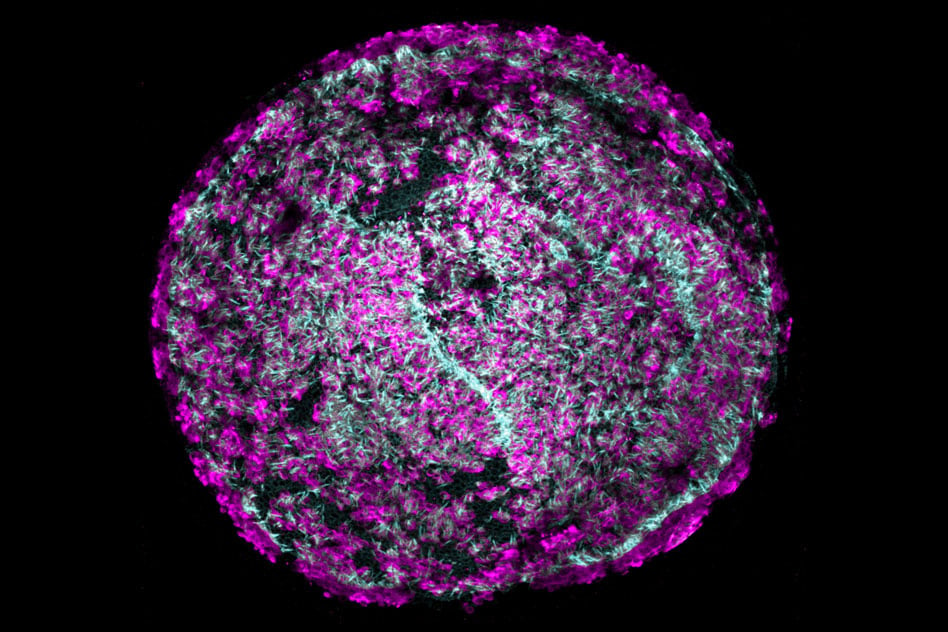
Cell regeneration
Noise exposure, aging, and some antibiotics and chemotherapy drugs can lead to hair cell death. In some animals, those cells naturally regenerate, but not in humans.
The research team began investigating the possibility of regenerating hair cells during an earlier study on cells of the intestinal lining. In that study, published in 2013, Karp, Langer, Yin, and others reported that they could generate large quantities of immature intestinal cells and then stimulate them to differentiate, by exposing them to certain molecules.
During that study, the team became aware that cells that provide structural support in the cochlea express some of the same surface proteins as intestinal stem cells. The researchers decided to explore whether the same approach would work in those supporting cells.
They exposed cells from a mouse cochlea, grown in a lab dish, to molecules that stimulate the Wnt pathway, which makes the cells multiply rapidly.
“We used small molecules to activate the supporting cells so they become proliferative and can generate hair cells,” Yin says.
At the same time, to prevent the cells from differentiating too soon, the researchers also exposed the cells to molecules that activate another signaling pathway known as Notch.
Once they had a large pool of immature progenitor cells (about 2,000-fold greater than any previously reported), the researchers added another set of molecules that provoked the cells to differentiate into mature hair cells. This procedure generates about 60 times more mature hair cells than the technique that had previously worked the best, which uses growth factors to induce the supporting cochlea cells to become hair cells without first expanding the population.
The researchers found that their new approach also worked in an intact mouse cochlea removed from the body. In that experiment, the researchers did not need to add the second set of drugs because once the progenitor cells were formed, they were naturally exposed to signals that stimulated them to become mature hair cells.
“We only need to promote the proliferation of these supporting cells, and then the natural signaling cascade that exists in the body will drive a portion of those cells to become hair cells,” Karp says.
Easy administration
Because this treatment involves a simple drug exposure, the researchers believe it could be easy to administer it to human patients. They envision that the drugs could be injected into the middle ear, from which they would diffuse across a membrane into the inner ear. This type of injection is commonly performed to treat ear infections.
Some of the researchers have started a company called Frequency Therapeutics, which has licensed the MIT/BWH technology and plans to begin testing it in human patients within 18 months.
Jeffrey Holt, a professor of otolaryngology and neurology at Boston Children’s Hospital and Harvard Medical School, says this approach holds potential for treating hearing loss, if its safety and effectiveness can be demonstrated.
“The ability to promote proliferation of inner-ear stem cells and direct their maturation toward an auditory hair cell fate is an important advance that will accelerate the pace of scientific discovery and facilitate translation of regenerative medicine approaches for restoration of auditory function in patients with acquired hearing loss,” says Holt, who was not involved in the research.
The researchers also hope their work will help other scientists who study hearing loss.
“Drug discovery for the inner ear has been limited by the inability to acquire enough progenitor cells or sensory hair cells to explore drug targets and their effects on these cell types,” McLean says. “We hope that our work will serve as a useful tool for other scientists to more effectively pursue studies of supporting cells and hair cells for basic research and potential therapeutic solutions to hearing loss.”
Karp, Langer, and Yin are also working on applying this approach to other types of cells, including types of intestinal cells involved in insulin regulation and control of the gut microbiota.
The research was funded by the National Institutes of Health, the European Commission, the Harvard-MIT IDEA2 Award, the Shulsky Foundation, and Robert Boucai.
Reference: “Clonal Expansion of Lgr5-Positive Cells from Mammalian Cochlea and High-Purity Generation of Sensory Hair Cells” by Will J. McLean, Xiaolei Yin, Lin Lu, Danielle R. Lenz, Dalton McLean, Robert Langer, Jeffrey M. Karp and Albert S.B. Edge, 21 February 2017, Cell Reports.
DOI: 10.1016/j.celrep.2017.01.066
Never miss a breakthrough: Join the SciTechDaily newsletter.
Follow us on Google and Google News.
16 Comments
What about Tinnitus would it help that I’ve had it since I was 4
I am 78 and cannot wait for 10-15 years would like to be part of clinical trial in Florida.
A profound improvement for many people’s lives if this works.
Sounds intriguing! How does a person get more information and sign up for testing? I am a perfect candidate with both heredity and military induced hearing loss.
Now this explains why the Indians have a diet that can regrow the hairs, Listed as the Medicine man. As this would also be a diet I see. The diet they have cost 37.00 to receive it as a download. At Medicineman.com. As I am deaf in the right ear because the blood has been blocked from flowing into this ear. I see there are many way’s people become deaf. Hope this information helps others.
“Noise exposure, aging, and some antibiotics and chemotherapy drugs can lead to hair cell death.”
Meniere’s disease (me) causes this hair cell loss also. Will be following this.
To the person who asked about tinnitus, hair cell regrowth should help with tinnitus as the loss of hair cells does cause ringing in the ear.
Would this also help with Hyperacusis and Tinnitus? If anyone has been relieved of Hyperacusis or Tinnitus after any surgery of any kind, please let me know. My Retina surgery resulted in a surprise side affect of stopping my Hyperacusis for two weeks, while also having my Tinnitus ease up a lot! Then, “back on” for both. LMK if this happened to you or anyone you know. I will lead this effort to get info the right facilities in Philadelphia, near where I live. Thanks!
Thanks for providing us with such useful information. My son currently four and a half years was diagnosed with profound hearing loss and with extensive testing it was found that his hair cells were severely damaged resulting in the hearing loss. Approximately 5 months ago we opted for a cochlear implant to the right ear, which has proven quiet successful. My question is will the new found development help him for the future and if so how do we go about finding out more on this process.
I understand you are looking for volunteers in BUFFALO I would like to apply
I have had hearing loss in left ear since birth due to the lack of the filaments needed to catch/ transmit/interpret sound particles and I wonder if these new findings/treatments would work to restore hearing in the left ear?
what is the current status of this research? I have been long time sufferer (45 years) of Vertigo (meneires , tinnitus and severe neurological episodes) Vertigo started after 2 weeks of serious ear infections at age 21, and subsequent hearing damage from loud noises. I’m very interested in following the progress of this therapy.
I was born with a hearing loss which is hereditary. My father and Grandmother both had hearing loss. I have a bilateral hearing loss left side worse than right. I could qualify for implants on left side but it has always been a dream of mine to be a part of a study like this. What would happen if you were able to solve hearing loss through my ears even if it didn’t help me. I have had ever kind of hearing aid. My favorite kind they no longer make (Siemens). Everything else is just expensive and doesn’t sound right or work. I work in an Otorhinolyrangology department and I have seen how cochlear implants work. As much as I would like to be able to hear normally and not be referred to as handicapped I cannot give up on that dream that I have always known inside me that we will figure this out. Look at back in the 80s they didn’t even know what tennitis was. All the audiologist said kid you are just making that noise up. Now I have ear problems because I where my hearing aids to much. Moisture gets stuck which causes a series of problems. I know you will succeed if I can help please let me know.
I am 90 years old . At the age of six I contracted an infection in both ears . When pus started to run out of my ears I was taken out of school for fear that I might be contagious . There were times when the pus would plug up causing terrible pain which was relieved by putting hot packs on my ears until the pus started flowing again . This went on for approximately 6 months . During this time I was being seen by a doctor and the only thing that I remember of that time was pricking my finger to get a blood sample . I did not get hearing aids until I was 27 years old .
Why cant a drug be developed from herbs in the form of a tablet that will activate the cells in the inner ear. I keep reading that stem cells will take another 10 years to be on the market. Surely, more emphasis be placed on hearing loss.
I am 69 years, developed a neuritus in my rightside inner earat age 66, a missed diagnosis of vestibular neuritus. Because of 2 week delayed prescription with the treatment of Prednizone protocol the subsequent ENT testing found that my right inner ear balance center canals had as they put it died, that the hairs were dead and would not regenerate. Some recovery though I am damaged with dizzy light headed disability that no amount of therapy will improve. I need help, as my quality of life is severely diminished by this disability. My research says that I need to find a group of scientists looking for human lab rats, where do I sign up? Help me help you
This article was 1st published in 2017. Frequency Therapeutics, a Company mentioned in this article, threw in the towel in 2023. Waste of time reading this. Why is it in my mailbox in 2026?