
Close Menu
    Facebook X (Twitter) Instagram
    SciTechDaily
    • Biology
    • Chemistry
    • Earth
    • Health
    • Physics
    • Science
    • Space
    • Technology
    Facebook X (Twitter) Pinterest YouTube RSS
    SciTechDaily
    Home»Health»U.S. Navy Researchers Evaluate Ultraviolet Lamps to Combat COVID-19
    Health

    U.S. Navy Researchers Evaluate Ultraviolet Lamps to Combat COVID-19

    By Naval Research LaboratoryOctober 26, 2020No Comments4 Mins Read
    Facebook Twitter Pinterest Telegram LinkedIn WhatsApp Email Reddit
    Share
    Facebook Twitter LinkedIn Pinterest Telegram Email Reddit
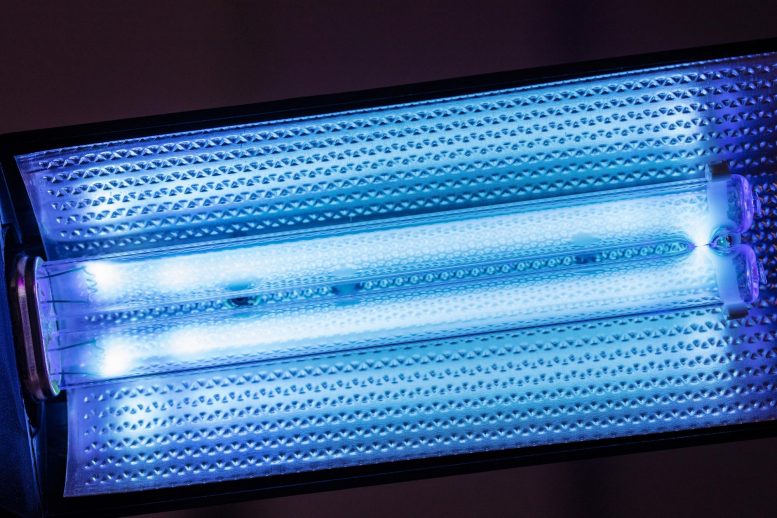
    Ultraviolet Lamp
    The Navy is researching UV-C light as a potential COVID-19 disinfection method for ship materials, common areas, and rooms on ships and shore facilities.

    U.S. Naval Research Laboratory researchers evaluated commercial ultraviolet (UV) sources for viral disinfection to combat COVID-19 on land and at sea, and established a dedicated UV characterization lab in five days to ensure safe introduction and effective operation of UV sources across the Fleet.

    The Navy is investigating UV-C band (UVC) light as a potential disinfection technique for niche applications against COVID-19 for materiel going onto a ship, for common use areas on a ship, and general room disinfection on ships or shore facilities.

    In a short period of time Brett Huhman, in NRL’s Plasma Physics Division, reconfigured a laboratory space, conferred with subject matter experts across the NRL Materials Science and Component Technology directorate, and borrowed needed equipment to establish a UV characterization laboratory.

    Brett Huhman
    Brett Huhman, U.S. Naval Research Laboratory senior research engineer, communicates with other team members over video chat during testing pulsed Xenon gas lamp source in support of COVID-19 at Washington, D.C. May 8, 2020. Huhman has been sending data to six other NRL researchers who have been teleworking to assess ultraviolet light sources applications against COVID-19 for Navy and Marine environments. Credit: U.S. Navy photo by Jonathan Steffen

    “Testing at NRL includes UV unit longevity and reliability, identifying easy-to-use dosimeters, reflections from shipboard surfaces, and secondary ozone generation from these UV systems,” Huhman said. “Scientists at other Navy labs are using NRL data to help them test efficacy against viral loads on Navy and Marine relevant surfaces, such as bare metal tools and painted metal surfaces, and cardboard boxes.”

    There are numerous companies offering products that produce UV light and are designed for a variety of small and large-scale applications. The Naval Sea Systems Command (NAVSEA) requested NRL scientists to study and characterize the energy density, UV spectrum, and reliability of commercially available units.

    “As the Navy wishes to quickly evaluate the efficacy of these commercial sources before procurement, a small investment was deemed necessary, in order to help the Navy ‘verify before we buy,'” said Joseph Schumer, branch head for NRL’s pulsed power physics group and program manager. “We have learned a lot about the reliability of commercial sources.”
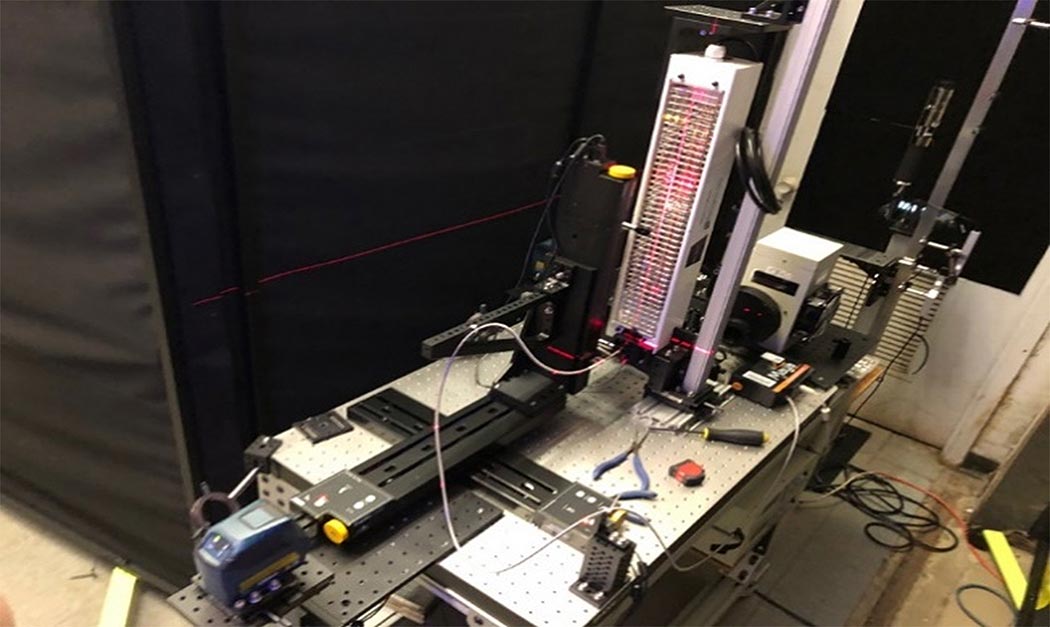
    High-Output Ultraviolet Source
    A high-output ultraviolet (UV) source candidate is tested on the new 3-axis automated UV scanning system, July 9, 2020. The newly constructed system is completely computer-controlled to measure the UV emission in a 300 x 300 x 300 mm cube around the source. The previous design required manual movement of the sensor device by personnel, which was time consuming. The new system will record an entire 300 mm x 300 mm plane in 40 minutes, where with the manual system it would require an entire week. Credit: U.S. Naval Research Laboratory photo

    Ultraviolet (UV) is light with wavelengths between 200 and 400 nanometers (nm). UV can be divided into 3 bands in this range: UVA (315-400 nm), UVB (280-315 nm), and UVC (200-280 nm). Each band represents a specific part of the UV spectrum and travels through the atmosphere differently. UVC from the Sun is unable to get to the Earth’s surface, as the atmosphere will block it.

    Testing began in mid-April after NRL received 15 18-watt, hand-held wands from NAVSEA. Since then, the team has tested nine different mercury and xenon-based UV sources with plans to evaluate both LED and plasma-based excimer sources.

    “LED and plasma-based sources are emerging technologies, and represent the use of wavelengths not traditionally used for germicidal disinfection,” said Huhman. “Mercury sources have historically dominated the market.”

    Navy researchers continue to evaluate commercial units already being used in hospitals and for other applications for efficacy on Navy-relevant surfaces. The NRL UV team is receiving items on a bi-weekly basis to evaluate.

    NRL’s work will help identify situations where use of UV provides sufficient viral disinfection at a particular energy level and also develop standard operating procedures to ensure safe UV operation for the Fleet.

    Never miss a breakthrough: Join the SciTechDaily newsletter.
    Follow us on Google and Google News.

    COVID-19 U.S. Naval Research Laboratory Virology
    Share. Facebook Twitter Pinterest LinkedIn Email Reddit

    Related Articles

    Single Mutation Could Significantly Enhance Wuhan Coronavirus

    Strains of Coronavirus 2019-nCoV Detected in France Isolated

    Whole Genome of the Wuhan Coronavirus, 2019-nCoV Sequenced

    Scientific Estimates of Spread of Coronavirus Much Higher Than Official Reports

    Confirmed Coronavirus Cases Climb to 6065 Globally – 132 Deaths in China

    Potential Global Spread of New Coronavirus Mapped by New Study

    Three Cases of Novel Coronavirus Reported in France – Virus Recently Emerged in China

    Research Underway to Address Threat of Novel Coronavirus That Recently Emerged in China

    “Snake Pneumonia” – Coronavirus Outbreak in China Traced to Snakes by Genetic Analysis

    Leave A Reply Cancel Reply

    • Facebook
    • Twitter
    • Pinterest
    • YouTube

    Don't Miss a Discovery

    Subscribe for the Latest in Science & Tech!

    Trending News

    New Research Shows Vitamin B12 May Hold the Key to Healthy Aging

    These Simple Daily Habits Can Quickly Improve Blood Pressure and Heart Risk Factors

    A Common Nutrient May Play a Surprising Role in Anxiety

    Doing This After 9 p.m. Could Double Your Risk of Gut Issues

    Scientists Discover How Coffee Impacts Memory, Mood, and Gut Health

    Why Did the Neanderthals Disappear? Scientists Reveal Humans Had a Hidden Advantage

    Physicists Propose Strange Experiment Where Time Goes Quantum

    Magnesium Magic: New Drug Melts Fat Even on a High-Fat, High-Sugar Diet

    Follow SciTechDaily
    • Facebook
    • Twitter
    • YouTube
    • Pinterest
    • Newsletter
    • RSS
    SciTech News
    • Biology News
    • Chemistry News
    • Earth News
    • Health News
    • Physics News
    • Science News
    • Space News
    • Technology News
    Recent Posts
    • This New Memory Technology Could Make Devices Last Months on One Charge
    • Scientists Turn Cancer’s Own Bacteria Against It in Breakthrough Therapy
    • Cannabis Can Make You Remember Things That Never Happened
    • Doctors Are Surprised by What This Vaccine Is Doing to the Heart
    • Quantum Breakthrough Turns Simple Forces Into Powerful New Interactions
    Copyright © 1998 - 2026 SciTechDaily. All Rights Reserved.
    • Science News
    • About
    • Contact
    • Editorial Board
    • Privacy Policy
    • Terms of Use

    Type above and press Enter to search. Press Esc to cancel.