
Close Menu
    Facebook X (Twitter) Instagram
    SciTechDaily
    • Biology
    • Chemistry
    • Earth
    • Health
    • Physics
    • Science
    • Space
    • Technology
    Facebook X (Twitter) Pinterest YouTube RSS
    SciTechDaily
    Home»Health»UC Berkeley Study Links Sleep Deprivation to Junk Food Cravings
    Health

    UC Berkeley Study Links Sleep Deprivation to Junk Food Cravings

    By Yasmin Anwar, UC BerkeleyAugust 9, 2013No Comments3 Mins Read
    Facebook Twitter Pinterest Telegram LinkedIn WhatsApp Email Reddit
    Share
    Facebook Twitter LinkedIn Pinterest Telegram Email Reddit
    Study Links Sleep Deprivation to Junk Food Cravings
    Study links sleep deprivation to increased junk food cravings.

    A UC Berkeley has linked sleep deprivation to junk food cravings, finding that high-level brain regions required for complex judgments and decisions become blunted by a lack of sleep, while more primal brain structures that control motivation and desire are amplified.

    Berkeley — A sleepless night makes us more likely to reach for doughnuts or pizza than for whole grains and leafy green vegetables, suggests a new study from UC Berkeley that examines the brain regions that control food choices. The findings shed new light on the link between poor sleep and obesity.

    Using functional magnetic resonance imaging (fMRI), UC Berkeley researchers scanned the brains of 23 healthy young adults, first after a normal night’s sleep and next, after a sleepless night. They found impaired activity in the sleep-deprived brain’s frontal lobe, which governs complex decision-making, but increased activity in deeper brain centers that respond to rewards. Moreover, the participants favored unhealthy snacks and junk foods when they were sleep-deprived.

    “What we have discovered is that high-level brain regions required for complex judgments and decisions become blunted by a lack of sleep, while more primal brain structures that control motivation and desire are amplified,” said Matthew Walker, a UC Berkeley professor of psychology and neuroscience and senior author of the study published in the journal Nature Communications.

    Moreover, he added, “High-calorie foods also became significantly more desirable when participants were sleep-deprived. This combination of altered brain activity and decision-making may help explain why people who sleep less also tend to be overweight or obese.”

    Previous studies have linked poor sleep to greater appetites, particularly for sweet and salty foods, but the latest findings provide a specific brain mechanism explaining why food choices change for the worse following a sleepless night, Walker said.

    “These results shed light on how the brain becomes impaired by sleep deprivation, leading to the selection of more unhealthy foods and, ultimately, higher rates of obesity,” said Stephanie Greer, a doctoral student in Walker’s Sleep and Neuroimaging Laboratory and lead author of the paper. Another co-author of the study is Andrea Goldstein, also a doctoral student in Walker’s lab.

    In this newest study, researchers measured brain activity as participants viewed a series of 80 food images that ranged from high to low-calorie and healthy and unhealthy, and rated their desire for each of the items. As an incentive, they were given the food they most craved after the MRI scan.

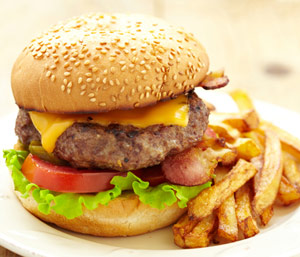
    Food choices presented in the experiment ranged from fruits and vegetables, such as strawberries, apples, and carrots, to high-calorie burgers, pizza, and doughnuts. The latter are examples of the more popular choices following a sleepless night.

    On a positive note, Walker said, the findings indicate that “getting enough sleep is one factor that can help promote weight control by priming the brain mechanisms governing appropriate food choices.”

    Reference: “The impact of sleep deprivation on food desire in the human brain” by Stephanie M. Greer, Andrea N. Goldstein and Matthew P. Walker, 6 August 2013, Nature Communications.
    DOI: 10.1038/ncomms3259

    Never miss a breakthrough: Join the SciTechDaily newsletter.
    Follow us on Google and Google News.

    Behavioral Science Neuroscience Obesity UC Berkeley
    Share. Facebook Twitter Pinterest LinkedIn Email Reddit

    Related Articles

    Want to Reduce Your Depression Risk by Double Digits? Wake Up an Hour Earlier

    The Hunger Games: Scientists Uncover the Secret of the Hunger Switch in the Brain

    Contrary to Theory, Stress Does Not Lead to Loss of Self-Control in Eating Disorders

    Too-Little Sleep Can Increase the Rewarding Properties of Cocaine, Paving Way to Addiction

    Marijuana Concentrates Boost THC Levels but Not Impairment – Mobile Lab Offers First Glimpse of Real-World Use

    Yale Researchers Show Parents Underestimate Their Children’s Weight

    Study Shows Poor Sleep Linked to Alzheimer’s Disease

    ‘Healthy Neuroticism’ Lowers Risk of Chronic Disease

    Ketamine Produces Rapid Antidepressant Responses

    Leave A Reply Cancel Reply

    • Facebook
    • Twitter
    • Pinterest
    • YouTube

    Don't Miss a Discovery

    Subscribe for the Latest in Science & Tech!

    Trending News

    Millions Take These IBS Drugs, But a New Study Finds Serious Risks

    Scientists Unlock Hidden Secrets of 2,300-Year-Old Mummies Using Cutting-Edge CT Scanner

    Bread Might Be Making You Gain Weight Even Without Eating More Calories

    Scientists Discover Massive Magma Reservoir Beneath Tuscany

    Europe’s Most Active Volcano Just Got Stranger – Here’s Why Scientists Are Rethinking It

    Alzheimer’s Symptoms May Start Outside the Brain, Study Finds

    Millions Take This Popular Supplement – Scientists Discover a Concerning Link to Heart Failure

    The Universe Is Expanding Too Fast and Scientists Can’t Explain Why

    Follow SciTechDaily
    • Facebook
    • Twitter
    • YouTube
    • Pinterest
    • Newsletter
    • RSS
    SciTech News
    • Biology News
    • Chemistry News
    • Earth News
    • Health News
    • Physics News
    • Science News
    • Space News
    • Technology News
    Recent Posts
    • Simple Blood Test May Predict Alzheimer’s Years Before Brain Scans Show Signs
    • Scientists Say Adding This Unusual Seafood to Your Diet Could Reverse Signs of Aging
    • U.S. Waste Holds $5.7 Billion Worth of Crop Nutrients
    • Scientists Say a Hidden Structure May Exist Inside Earth’s Core
    • Doctors Surprised by the Power of a Simple Drug Against Colon Cancer
    Copyright © 1998 - 2026 SciTechDaily. All Rights Reserved.
    • Science News
    • About
    • Contact
    • Editorial Board
    • Privacy Policy
    • Terms of Use

    Type above and press Enter to search. Press Esc to cancel.