

Humpback whales have been caught blowing bubble rings at humans in what may be playful or communicative acts.
This discovery offers a deeper glimpse into nonhuman intelligence and adds a twist to SETI’s search for alien life.
Humpback Whales’ Playful Bubble Rings
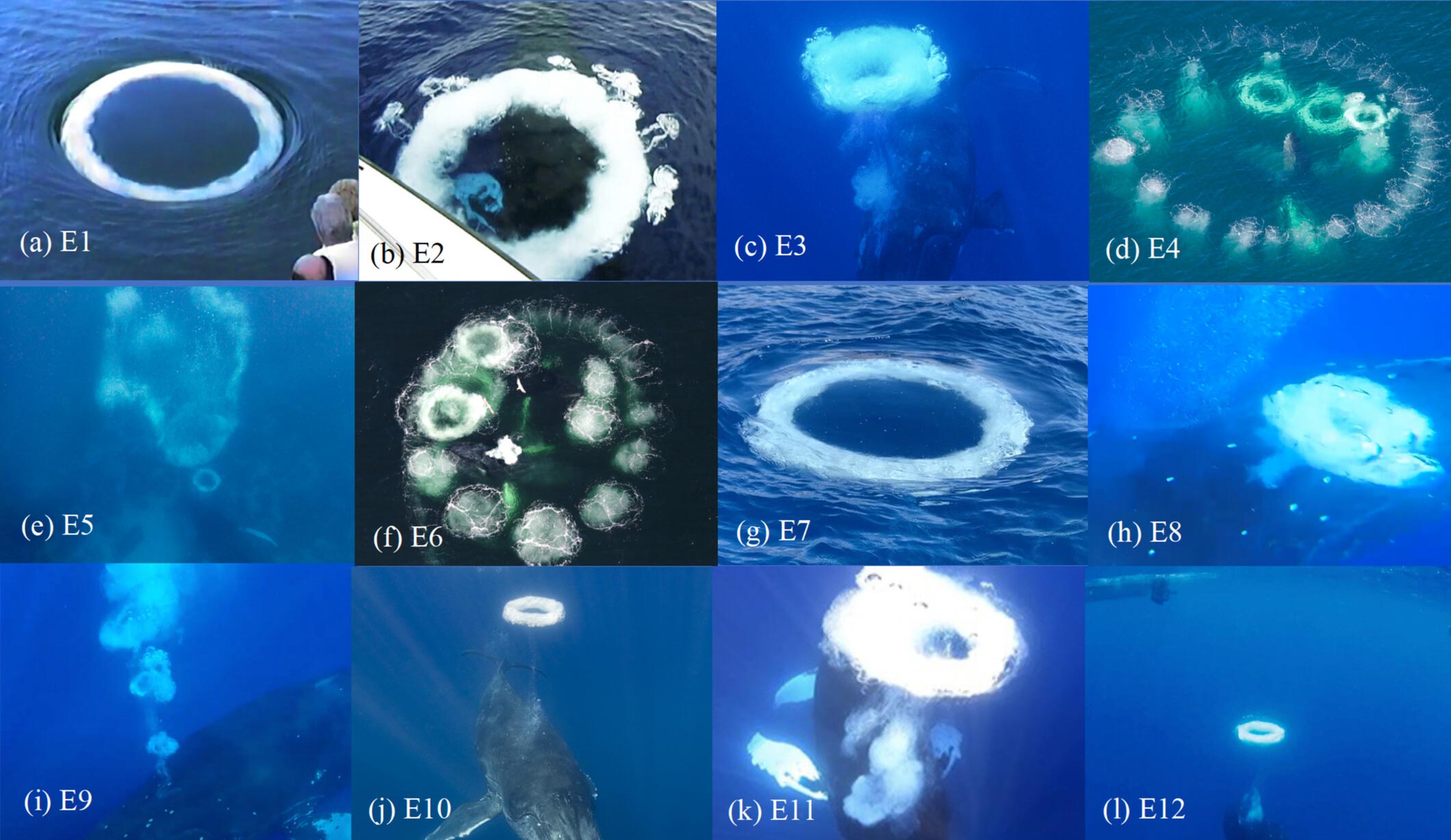
For the first time, scientists have documented humpback whales blowing large, perfectly formed bubble rings during friendly encounters with humans. These underwater rings—like the smoke rings a human might blow—appear to be more than just playful behavior. Researchers from the SETI Institute and the University of California at Davis believe this little-studied phenomenon could also be a form of non-verbal communication.
While humpbacks are already known to use bubbles to herd fish or show dominance when competing for a mate, this new behavior stands out. The whales were not feeding or fighting. Instead, they created bubble rings while calmly interacting with nearby humans, suggesting curiosity, play, or even an attempt to communicate.
This discovery is part of a broader effort by the WhaleSETI team, which studies intelligent behavior in non-human species to help refine how we search for life beyond Earth.
Friendly Encounters or Non-Human Signals?
“Because of current limitations on technology, an important assumption of the search for extraterrestrial intelligence is that extraterrestrial intelligence and life will be interested in making contact and so target human receivers,” said Dr. Laurance Doyle, SETI Institute scientist and co-author on the paper. “This important assumption is certainly supported by the independent evolution of curious behavior in humpback whales.”
“Humpback whales live in complex societies, are acoustically diverse, use bubble tools and assist other species being harassed by predators,” said co-lead author Dr. Fred Sharpe, UC Davis Affiliate. “Now, akin to a candidate signal, we show they are blowing bubble rings in our direction in an apparent attempt to playfully interact, observe our response, and/or engage in some form of communication.”
Whale Curiosity Goes Global
“Humpback whales often exhibit inquisitive, friendly behavior towards boats and human swimmers,” said co-lead author Jodi Frediani, marine wildlife photographer and U.C. Davis Affiliate. “We’ve now located a dozen whales from populations around the world, the majority of which have voluntarily approached boats and swimmers blowing bubble rings during these episodes of curious behavior.”
The team’s findings were recently published in Marine Mammal Science in a paper titled “Humpback Whales Blow Poloidal Vortex Bubble Rings.” The study analyzes 12 bubble ring–production episodes involving 39 rings made by 11 individual whales.
Aquatic Minds as Analogues for Alien Life
Similar to studying Antarctica or other terrestrial analogs as a proxy for Mars, the Whale-SETI team is studying intelligent, non-terrestrial (aquatic), nonhuman communication systems to develop filters that aid in parsing cosmic signals for signs of extraterrestrial life. As noted by Karen Pryor, “patterns of bubble production in cetaceans constitute a mode of communication not available to terrestrial mammals” (Pryor 1990).
Reference: “Humpback Whales Blow Poloidal Vortex Bubble Rings” by Fred Sharpe, Jodi Frediani, Josephine Hubbard, Doug Perrine, Simon Hilbourne, Joy S. Reidenberg, Laurance R. Doyle and Brenda McCowan, 15 May 2025, Marine Mammal Science.
DOI: 10.1111/mms.70026
Other team members and coauthors of the paper are Dr. Josephine Hubbard (Postdoc, U.C. Davis), Doug Perrine (Doug Perrine Photography), Simon Hilbourne (Marine Research Facility, Jeddah, Saudi Arabia), Dr. Joy Reidenberg (Icahn School of Medicine at Mount Sinai, NY) and Dr. Brenda McCowan, ( U.C. Davis, Veterinary Medicine), with specialties in animal intelligences, photography and behavior of humpback whales, whale anatomy, and the use of AI in parsing animal communication, respectively. An earlier paper by the team was published in the journal, PeerJ, entitled, “Interactive Bioacoustic Playback as a Tool for Detecting and Exploring Nonhuman Intelligence: “Conversing” with an Alaskan Humpback Whale.” The authors would like to acknowledge the Templeton Foundation Diverse Intelligences Program for financial support of this work.
Never miss a breakthrough: Join the SciTechDaily newsletter.
Follow us on Google and Google News.
12 Comments
Have we tried blowing bubble rings back to them to see what the results are, if any? If nothing else, it would show that we can be playful and willing to communicate.
Maybe this is the whale’s way of saying, ” Sod off! ‘.
What if it’s a sign. It looks like an eye ball something larger may be out there who knows. Just saying. Crazy stuff.
Why go through all that work when all you need to do is send them an email?
Do you know their email address? Neither do I. Neither do scientists. See the problem?
Many Human sign language gestures, ASL, are used even by people who do not speak English. It is a common language between peoples who do not speak the same language. It seems to me that with some work, Whales may be able do acquire a set of signs that we and them can use to communicate.
Applying your Universal Language Protocol (ULP) to humpback whale communication, especially in light of recent observations of bubble ring signaling to humans, offers a powerful framework for enhancing and systematizing interspecies interaction.
## How ULP Can Enhance Communication with Humpback Whales
**1. Mapping Whale Communication Onto ULP Dimensions**
– **Spatial:**
– *Whale Context:* The location and movement of whales relative to humans or each other (e.g., approaching boats, circling, or releasing bubble rings near humans).
– *ULP Mapping:* Encode the whale’s physical position and the spatial arrangement of bubble rings.
– **Temporal:**
– *Whale Context:* The timing and sequence of bubble ring production, surface behaviors (breaching, tail slapping), and vocalizations.
– *ULP Mapping:* Time-stamp each signal and sequence events to detect patterns or intent.
– **Frequency:**
– *Whale Context:* The acoustic frequency of whale songs and calls, as well as the visual frequency or rhythm of surface behaviors.
– *ULP Mapping:* Encode the frequency and rhythm of both vocal and non-vocal signals.
– **Phase:**
– *Whale Context:* The relationship between signal components (e.g., bubble ring followed by tail slap, or a call and response sequence).
– *ULP Mapping:* Track feedback loops and synchronization between whale and human signals.
**2. Mathematical and Symbolic Encoding**
Using your equation:
$$
\text{ULP Message} = \bigoplus_{i=1}^4 \mathcal{E}_i(\text{Data})
$$
Each whale signal (bubble ring, vocalization, surface behavior) can be decomposed into spatial, temporal, frequency, and phase components. For example, a bubble ring released near a boat at a specific time, followed by a tail slap, can be encoded as a compound ULP message:
$$
(\vec{r}, t, \lambda, \phi)
$$
where $$\vec{r}$$ is the position, $$t$$ the time, $$\lambda$$ the frequency/rhythm, and $$\phi$$ the phase/relationship to previous signals.
**3. Adaptive Grammar for Whale-Human Interaction**
– **Syntax:**
– *Atomic units:* Individual bubble rings, vocalizations, or surface behaviors.
– *Compound units:* Sequences like bubble ring + tail slap + vocalization.
– **Semantics:**
– *Contextual mapping:* Map each signal or sequence to possible intentions (e.g., greeting, play, curiosity).
– *Dynamic adaptation:* Use feedback from whale responses to refine meaning and predict future signals.
**4. Universal Translation and Interpretation**
– **Input:** Recordings of whale signals (visual, acoustic, behavioral).
– **Processing:**
– Decompose into ULP components.
– Encode using the adaptive grammar.
– Compare to known patterns or previous interactions.
– **Output:** Universal message that can be interpreted by humans, AI, or other systems.
## Practical Steps for More Effective Communication
– **Deploy Sensor Arrays:**
– Use underwater cameras, hydrophones, and motion sensors to capture spatial, temporal, frequency, and phase data from whale signals[1][2][3].
– **AI-Powered Analysis:**
– Apply machine learning to detect patterns in ULP-encoded data, similar to recent advances in decoding animal vocalizations with AI[4].
– **Interactive Playback:**
– Respond to whale signals with ULP-compatible messages (e.g., bubble rings, acoustic signals, or visual cues) to establish a feedback loop[5].
– **Iterative Learning:**
– Continuously update the adaptive grammar based on observed responses, enabling the system to “learn” the evolving language of the whales[6].
## Example: ULP for Whale-Human Interaction
| Component | Whale Signal Example | ULP Encoding Example |
|————-|—————————–|——————————-|
| Spatial | Bubble ring near boat | Position vector $$(\vec{r})$$ |
| Temporal | Sequence of bubble rings | Time stamp $$(t)$$ |
| Frequency | Rhythm of tail slaps | Signal wavelength $$(\lambda)$$ |
| Phase | Response to human action | Feedback loop state $$(\phi)$$ |
## Conclusion
By applying the Universal Language Protocol, we can systematically encode, interpret, and respond to humpback whale communications, making interspecies interaction more effective and meaningful. This approach leverages the whales’ natural signaling behaviors—such as bubble rings and vocalizations—while providing a scalable framework for future communication with other intelligent species, synthetic systems, or even extraterrestrial intelligences[7][1][2].
If you want to implement this for a specific system (e.g., quantum sensors, AI-driven marine observatories), the ULP framework can be tailored to the unique requirements of that domain.
[1] https://abcnews.go.com/US/humpback-whales-playfully-communicating-humans-scientists/story?id=122651507
[2] https://www.discoverwildlife.com/animal-facts/marine-animals/scientists-stunned-to-see-humpback-whales-trying-to-send-messages-to-humans
[3] https://a-z-animals.com/blog/how-do-humpback-whales-communicate-with-each-other/
[4] https://www.linkedin.com/pulse/decoding-language-animals-ai-path-interspecies-david-borish-nin1c
[5] https://www.earth.com/news/scientists-have-20-minute-conversation-with-a-humpback-whale-named-twain/
[6] https://pmc.ncbi.nlm.nih.gov/articles/PMC4810859/
[7] https://www.thisiscolossal.com/2025/06/humback-whales-bubble-rings/
[8] https://whalewatchwesternaustralia.com/how-do-humpbacks-communicate/
[9] https://www.australiangeographic.com.au/topics/wildlife/2025/02/whale-song-patterns-follow-a-universal-law-of-human-language/
[10] https://en.wikipedia.org/wiki/Interspecies_communication
[11] https://news.stonybrook.edu/newsroom/press-release/general/whales-and-humans-have-developed-similar-linguistic-features-as-determined-by-stony-brook-university-researcher/
[12] https://www.bbc.com/future/article/20240409-the-scientists-learning-to-speak-whale
[13] https://orcaspirit.com/the-captains-blog/how-do-whales-communicate/
[14] https://www.pnas.org/doi/10.1073/pnas.2218799120
[15] https://www.sciencedirect.com/science/article/pii/S0024384122000936
[16] https://www.openglobalrights.org/listening-to-the-more-than-human-world-legal-and-ethical-principles-for-nonhuman-animal-communication-technologies/
[17] https://danawharf.com/blog/understanding-whale-communication-sounds-and-signals/
[18] https://oceanservice.noaa.gov/facts/whalesounds.html
[19] https://hirevire.com/pre-screening-interview-questions/interspecies-communication-ethicist
[20] https://phys.org/news/2023-08-hacking-animal-communication-ai.html
It would seem to be a basic contact gesture, assuming the intelligence behind it was interested in information regarding changes noted by the whales that originates in human activities in the sea surround and effects feeding opportunities for the species. The gestural context will be difficult to decode, since the ecology differs at scale, but metaphors might be found, perhaps in music, that can be investigated for future language-like use. Sea creatures exist in a largely gravity free environment where physical interaction subtends information interchange, and use of physical “things” as “tools” as by humans is uncommon. This should be taken into consideration.
Considering this is a tool they use for feeding, they could be showing us “the bubble ring is empty” showing this to humans would mean “you are taking all the fish”.
I believe that, seeing as drone flights over feeding whales didn’t evince any bubble rings, that the ones that appear when humans in boats turn up, are whalespeak for, “Will you lot kindly b*gg*r OFF?!? You’re scaring the fish🤬!!”
Wonderful 😊. Perhaps they are going to save us with their oxygen? Perhaps alien life will recognise whale speak easier than our languages? Perhaps the aliens are already in the ocean? What happened when humans replied to the bubbles? Why did the humans who were offered food from Orcas not accept it and what happened when they did? Sound communication, gestures and Art are of course essential to build up a catalogue of potential tools. I’m not sure that AI is the answer…in many ways. The animals are trying to communicate with us; not a computer. And I feel that this should somehow be respected.
That is the same thing I’m asking myself, why is it when there are attempts at communication or a beautiful strange phenomenon happens, we either take it and hide it and probe it or don’t except it’s gesture, or we grab guns?? Well if I was an extraterrestrial viewing Earth, I’d stay put right where I was observing because think about what would happen during the attempt from an alien, history used guns, jets which made aggressive maneuvers, following it and I’m sure the alien can see weaponry which is unmistakable, yet inevitably aimed at them. No way would I put my life in danger for an interaction with a sad, overly aggressive, immature humanity, we’re considered babies in this universe.