
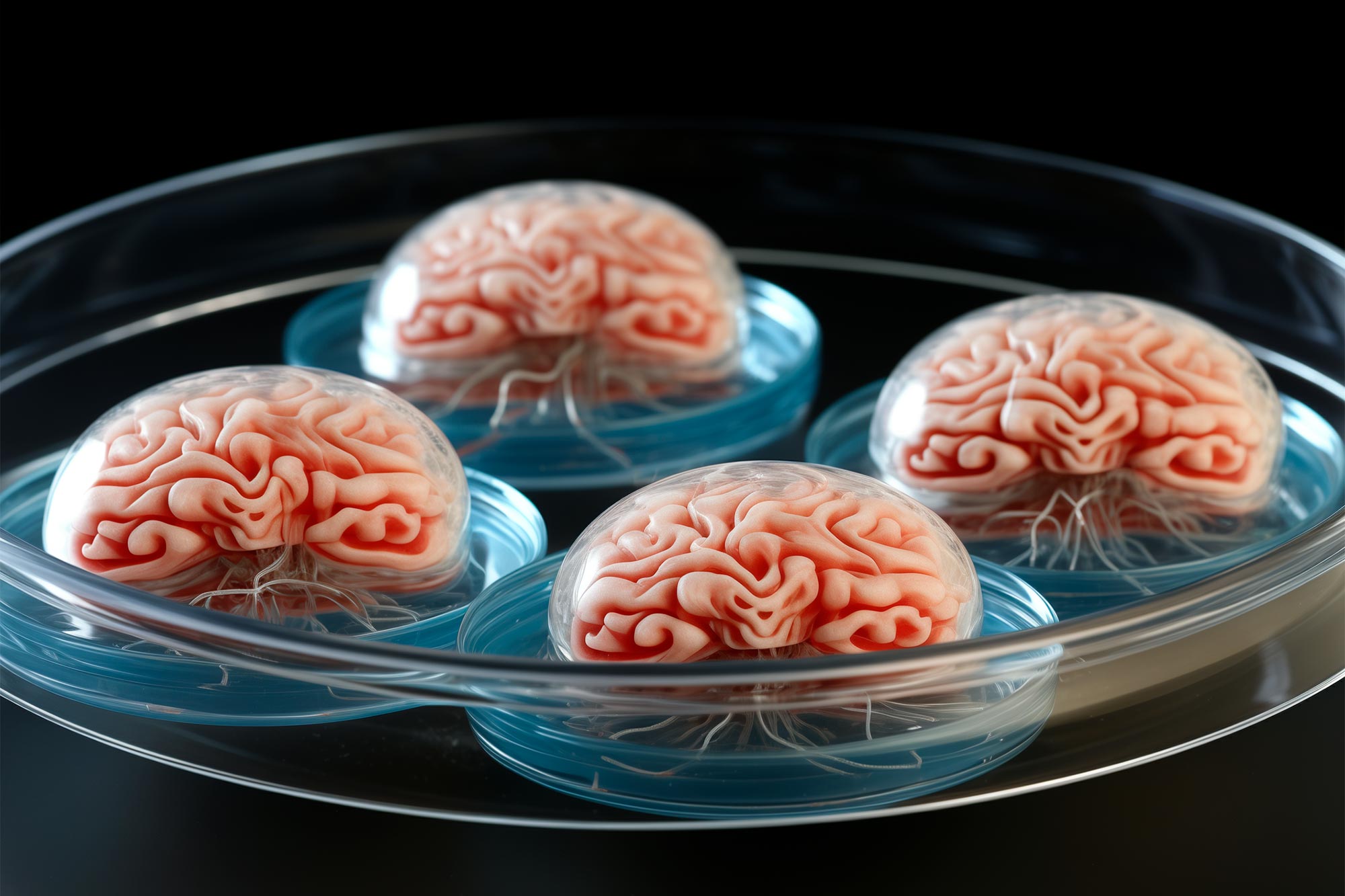
Scientists from Mayo Clinic and Yale University used organoids, or mini-brain models, to study the development of autism spectrum disorder (ASD).
They discovered an imbalance in excitatory cortical neurons, which are crucial for brain communication and function. By analyzing gene expression in these neurons, they identified changes in transcription factors that may underlie ASD. The research highlights the potential of using organoids to understand brain disorders and possibly prevent ASD through prenatal genetic testing.
Unraveling Autism’s Origins With Mini-Brains
Using human “mini-brain” models known as organoids, Mayo Clinic and Yale University scientists have discovered that the roots of autism spectrum disorder may be associated with an imbalance of specific neurons that play a critical role in how the brain communicates and functions. The specific cells are known as excitatory cortical neurons.
The study was published in the scientific journal Nature Neuroscience.
Key Findings in Autism Research
The team found an abnormal imbalance of excitatory neurons in the forebrain of people with the disorder, depending on their head size.
“This organoid technology allowed us to recreate the brain development alteration that happened in the patients when they were in the uterus, which is believed to be the time when autism spectrum disorder originates,” says Alexej Abyzov, Ph.D., a genomic researcher in the Department of Quantitative Health Sciences at the Mayo Clinic Center for Individualized Medicine. Dr. Abyzov is a senior author of the study.
Understanding Autism Spectrum Disorder
Autism spectrum disorder is a neurological condition that affects the way people perceive and interact with others, leading to challenges in social communication and behavior. The term “spectrum” emphasizes the broad range of symptoms and severity, and includes autism, Asperger’s syndrome, childhood disintegrative disorder and an unspecified form of pervasive developmental disorder.
Nearly 1 in 36 children in the U.S. has been identified with autism spectrum disorder, according to estimates from the Centers for Disease Control’s Autism and Developmental Disabilities Monitoring Network.
Pioneering Research With “Mini-Brains”
For the study, the scientists first created miniature 3D brain-like models, called organoids. The pea-sized clusters of cells began as skin cells from people with autism spectrum disorder. The skin cells were placed in a culture dish and “reprogrammed” back into a stem-cell-like state, called induced pluripotent stem cells. These so-called master cells can be coaxed to develop into any cell in the body, including brain cells.
Next, the scientists used a special technology called single-cell RNA sequencing to study the gene expression patterns of individual brain cells. In all, they examined 664,272 brain cells at three different stages of brain development.
The scientists also discovered that the neuron imbalance stemmed from changes in the activity of certain genes known as “transcription factors,” which play a crucial role in directing the development of cells during the initial stages of brain formation.
The Future of Autism Diagnosis and Prevention
This study builds on 13 years of published studies on autism spectrum disorder by Dr. Abyzov and his collaborators, including Flora Vaccarino, M.D., a neuroscientist at Yale University. In one pioneering study, they showed molecular differences in organoids between people with autism and those without and implicated the deregulation of a specific transcription factor called FOXG1 as an underlying cause of the disorder.
“Autism is mostly a genetic disease. Our goal is to be able to determine the risk of autism spectrum disorder and possibly prevent it in an unborn child using prenatal genetic testing. However, this would require detailed knowledge of how brain regulation gets derailed during development. There are many aspects in which organoids could help in this direction,” says Dr. Abyzov.
Reference: “Modeling idiopathic autism in forebrain organoids reveals an imbalance of excitatory cortical neuron subtypes during early neurogenesis” by Alexandre Jourdon, Feinan Wu, Jessica Mariani, Davide Capauto, Scott Norton, Livia Tomasini, Anahita Amiri, Milovan Suvakov, Jeremy D. Schreiner, Yeongjun Jang, Arijit Panda, Cindy Khanh Nguyen, Elise M. Cummings, Gloria Han, Kelly Powell, Anna Szekely, James C. McPartland, Kevin Pelphrey, Katarzyna Chawarska, Pamela Ventola, Alexej Abyzov and Flora M. Vaccarino, 10 August 2023, Nature Neuroscience.
DOI: 10.1038/s41593-023-01399-0
Never miss a breakthrough: Join the SciTechDaily newsletter.
Follow us on Google and Google News.
2 Comments
That’s a disgrace calling Autism a disease. Think about all the innovators in world history that have been neurodiverse. Shame.
The “prevention” of autism?! As an autistic person, I’m wondering what you mean by this.