
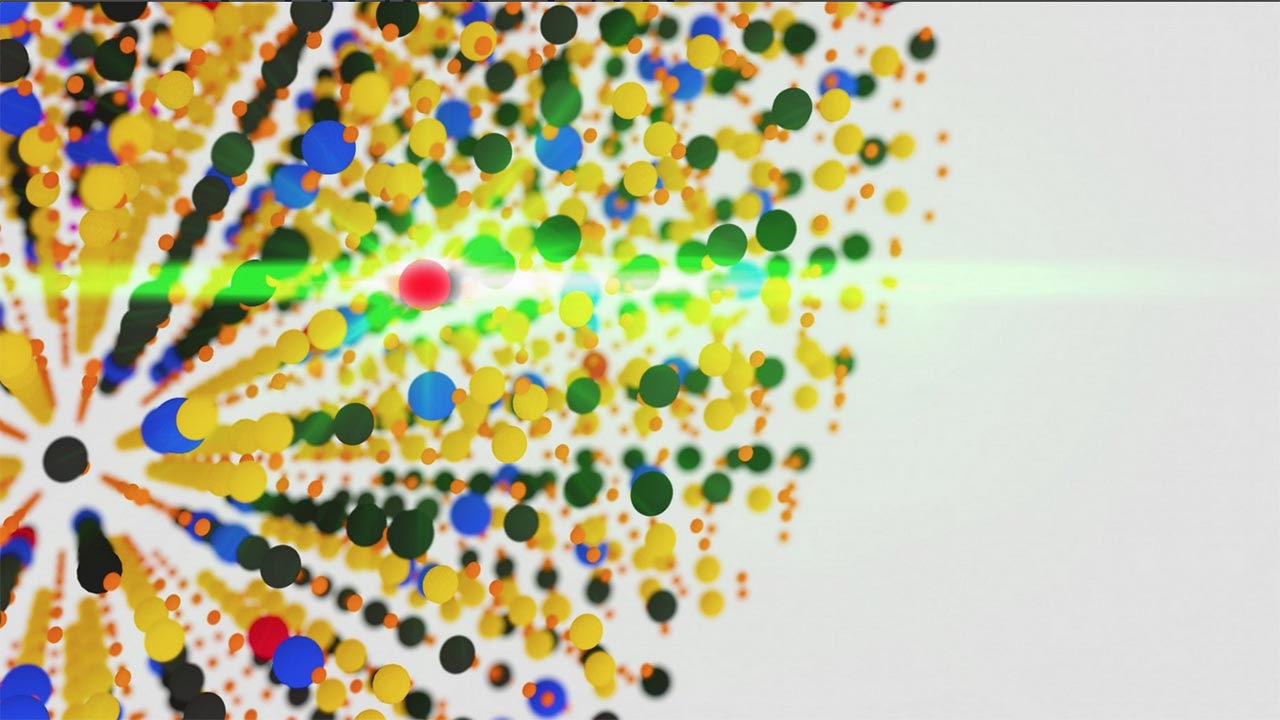
Revolutionary photon-avalanching nanosensors have been developed by researchers at Columbia Engineering, promising to transform technologies ranging from robotics to space travel.
These sensors can measure mechanical forces with unprecedented sensitivity and scope, making them capable of probing environments and processes previously deemed unreachable.
Photon-Avalanching Nanosensors
Mechanical force plays a critical role in many physical and biological processes. Accurately measuring these forces remotely, with high sensitivity and precise spatial resolution, is vital for applications spanning robotics, cellular biophysics, medicine, and even space exploration. While nanoscale luminescent force sensors are adept at detecting tiny piconewton forces, larger sensors are effective for measuring micronewton forces.
However, significant gaps remain in the range of forces that can be measured remotely, particularly at subsurface or interfacial locations. Currently, no single non-invasive sensor exists that can operate across the wide dynamic range required to fully understand many complex systems.
Revolutionizing Force Sensing with New Nanosensors
In a paper published on January 1 by Nature, a team led by Columbia Engineering researchers and collaborators report that they have invented new nanoscale sensors of force. They are luminescent nanocrystals that can change intensity and/or color when you push or pull on them. These “all-optical” nanosensors are probed with light only and therefore allow for fully remote read-outs — no wires or connections are needed.
The researchers, led by Jim Schuck, associate professor of mechanical engineering, and Natalie Fardian-Melamed, a postdoctoral scholar in his group, along with the Cohen and Chan groups at Lawrence Berkeley National Lab (Berkeley Lab), developed nanosensors that have attained both the most sensitive force response and largest dynamic range ever realized in similar nanoprobes. They have 100 times better force sensitivity than the existing nanoparticles that utilize rare-earth ions for their optical response, and an operational range that spans more than four orders of magnitude in force, a much larger range — 10-100 times larger — than any previous optical nanosensor.
“We expect our discovery will revolutionize the sensitivities and dynamic range achievable with optical force sensors, and will immediately disrupt technologies in areas from robotics to cellular biophysics and medicine to space travel,” Schuck says.
Expanding Sensor Capabilities
The new nanosensors achieve high-resolution, multiscale function with the same nanosensor for the first time. This is important as it means that just this nanosensor, rather than a suite of different classes of sensors, can be employed for the continuous study of forces, from the subcellular to the whole-system level in engineered and biological systems, such as developing embryos, migrating cells, batteries, or integrated NEMS, very sensitive nanoelectromechanical systems in which the physical motion of a nanometer-scale structure is controlled by an electronic circuit, or vice versa.
“What makes these force sensors unique – apart from their unparalleled multiscale sensing capabilities – is that they operate with benign, biocompatible, and deeply penetrating infrared light,” Fardian-Melamed says. “This allows one to peer deep into various technological and physiological systems, and monitor their health from afar. Enabling the early detection of malfunction or failure in these systems, these sensors will have a profound impact on fields ranging from human health to energy and sustainability.”
Harnessing Photon-Avalanching for Enhanced Sensing
The team was able to build these nanosensors by exploiting the photon-avalanching effect within nanocrystals. In photon-avalanching nanoparticles, which were first discovered by Schuck’s group at Columbia Engineering, the absorption of a single photon within a material sets off a chain reaction of events that ultimately leads to the emission of many photons. So: one photon is absorbed, many photons are emitted. It is an extremely nonlinear and volatile process that Schuck likes to describe as “steeply nonlinear,’ playing on the word “avalanche.”
The optically active components within the study’s nanocrystals are atomic ions from the lanthanide row of elements in the periodic table, also known as rare-earth elements, which are doped into the nanocrystal. For this paper, the team used thulium.
Uncovering Unexpected Sensitivities
The researchers found that the photon avalanching process is very, very sensitive to several things, including the spacing between lanthanide ions. With this in mind, they tapped on some of their photon avalanching nanoparticles (ANPs) with an atomic force microscopy (AFM) tip, and discovered that the avalanching behavior was greatly impacted by these gentle forces — much more than they had ever expected.
“We discovered this almost by accident,” Schuck says. “We suspected these nanoparticles were sensitive to force, so we measured their emission while tapping on them. And they turned out to be way more sensitive than anticipated! We actually didn’t believe it at first; we thought the tip may be having a different effect. But then Natalie did all the control measurements and discovered that the response was all due to this extreme force sensitivity.”
Knowing how sensitive the ANPs were, the team then designed new nanoparticles that would respond to forces in different ways. In one new design, the nanoparticle changes the color of its luminescence depending on the applied force. In another design, they made nanoparticles that do not demonstrate photon avalanching under ambient conditions, but do begin to avalanche as force is applied — these have turned out to be extremely sensitive to force.
Future Directions in Nanosensor Applications
For this study, Schuck, Fardian-Melamed, and other members of the Schuck nano-optics team worked closely with a team of researchers at the Molecular Foundry at Lawrence Berkeley National Lab (Berkeley Lab) headed by Emory Chan and Bruce Cohen. The Berkeley lab team developed the custom ANPs based on the feedback from Columbia, synthesizing and characterizing dozens of samples to understand and optimize the particles’ optical properties.
The team now aims to apply these force sensors to an important system where they can achieve significant impact, such as a developing embryo, like those studied by Columbia’s Mechanical Engineering Professor Karen Kasza. On the sensor design front, the researchers are hoping to add self-calibrating functionality into the nanocrystals, so that each nanocrystal can function as a standalone sensor. Schuck believes this can easily be done with the addition of another thin shell during nanocrystal synthesis.
“The importance of developing new force sensors was recently underscored by Ardem Patapoutian, the 2021 Nobel Laureate who emphasized the difficulty in probing environmentally sensitive processes within multiscale systems – that is to say, in most physical and biological processes. (Nature Reviews Mol. Cell Biol. 18, 771 (2017)),” Schuck notes. “We are excited to be part of these discoveries that transform the paradigm of sensing, allowing one to sensitively and dynamically map critical changes in forces and pressures in real-world environments that are currently unreachable with today’s technologies.
Reference: “Infrared nanosensors of piconewton to micronewton forces” by Natalie Fardian-Melamed, Artiom Skripka, Benedikt Ursprung, Changhwan Lee, Thomas P. Darlington, Ayelet Teitelboim, Xiao Qi, Maoji Wang, Jordan M. Gerton, Bruce E. Cohen, Emory M. Chan and P. James Schuck, 1 January 2025, Nature.
DOI: 10.1038/s41586-024-08221-2
Acknowledgments: N.F.-M. gratefully acknowledges support from the European Union’s Horizon 2020 research and innovation program under the Marie Skłodowska-Curie grant agreement No. 893439, the US Department of State Fulbright Scholarship Program, the Zuckerman-CHE STEM Leadership Program, the Israel Scholarship Education Foundation (ISEF) International Fellowship Program, and the Weizmann Institute’s Women’s Postdoctoral Career Development Award. B.U. and P.J.S. acknowledge support by the National Science Foundation under grant no. CHE-2203510. A.S. acknowledges the support from the European Union’s Horizon 2020 research and innovation program under the Marie Skłodowska-Curie grant agreement No. 895809 (MONOCLE). Work at the Molecular Foundry was supported by the Office of Science, Office of Basic Energy Sciences, of the US Department of Energy under contract number DE-AC02-05CH11231. X.Q., B.E.C., and E.M.C. were supported in part by the Defense Advanced Research Projects Agency (DARPA) ENVision program under contract HR0011257070, and C.L. and P.J.S. under DARPA ENVision contract HR00112220006. T.P.D. and P.J.S. also acknowledge support for the scan-probe measurements from Programmable Quantum Materials, an Energy Frontier Research Center funded by the US DOE, Office of Science, Basic Energy Sciences (BES), under award DE-SC0019443.
Never miss a breakthrough: Join the SciTechDaily newsletter.
Follow us on Google and Google News.