
Close Menu
    Facebook X (Twitter) Instagram
    SciTechDaily
    • Biology
    • Chemistry
    • Earth
    • Health
    • Physics
    • Science
    • Space
    • Technology
    Facebook X (Twitter) Pinterest YouTube RSS
    SciTechDaily
    Home»Space»Unlocking the Building Blocks of Life With NASA’s Bennu Samples
    Space

    Unlocking the Building Blocks of Life With NASA’s Bennu Samples

    By Rachel Barry, NASA’s Johnson Space CenterApril 2, 2024No Comments3 Mins Read
    Facebook Twitter Pinterest Telegram LinkedIn WhatsApp Email Reddit
    Share
    Facebook Twitter LinkedIn Pinterest Telegram Email Reddit
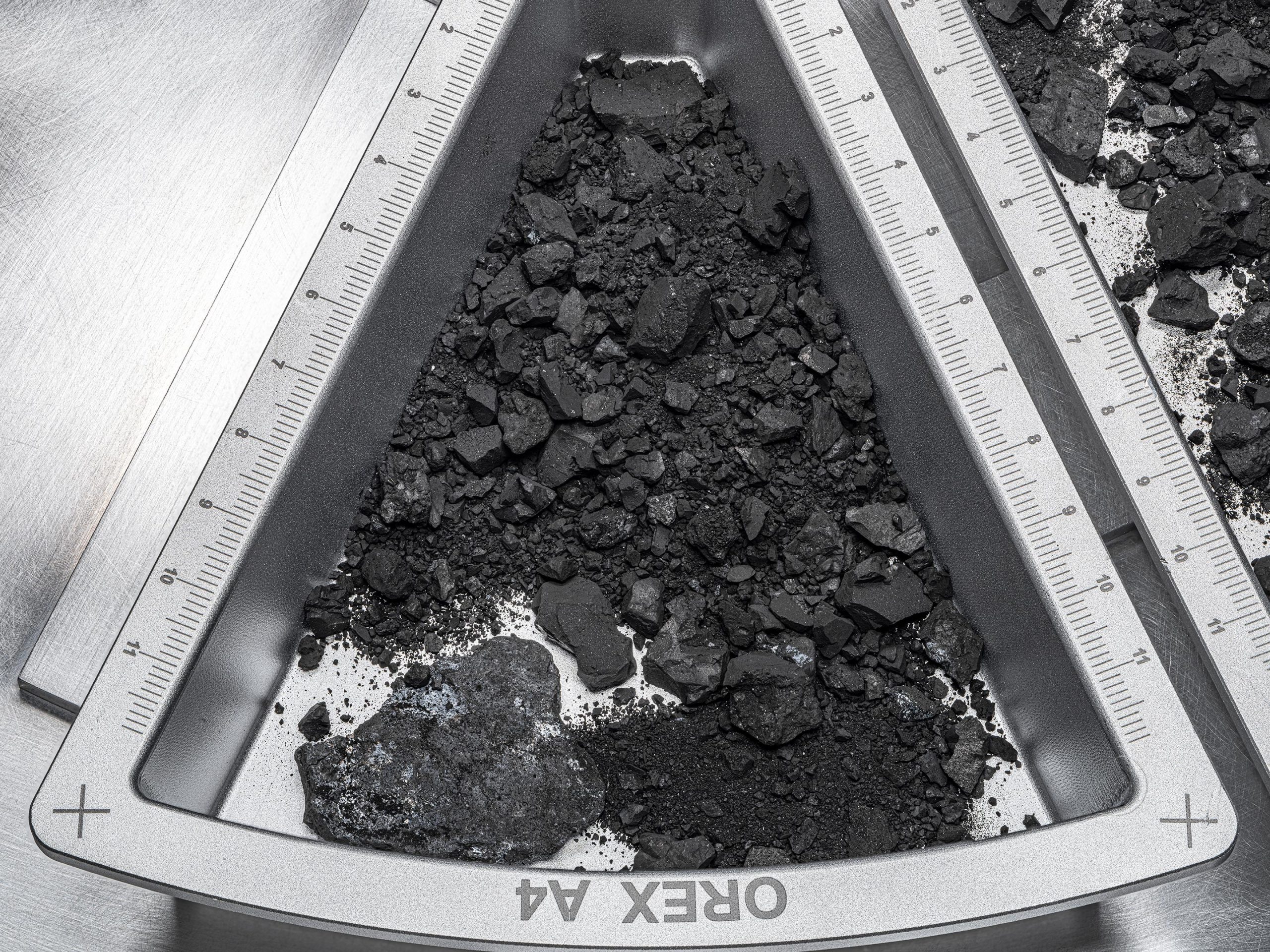
    Rocks and Dust From Asteroid Bennu
    A top-down view of one of the containers holding rocks and dust from asteroid Bennu, with hardware scale marked in centimeters. Erika Blumenfeld, creative lead for the Advanced Imaging and Visualization of Astromaterials (AIVA) and Joe Aebersold, AIVA project management lead, captured this picture using manual high-resolution precision photography and a semi-automated focus stacking procedure. The result is a sample image that can be zoomed in on to show extreme detail. Credit: NASA/Erika Blumenfeld and Joseph Aebersold

    Scientists now have access to detailed information on Bennu asteroid samples, enabling them to conduct research on these materials which may contain the building blocks of life.

    Scientists outside of NASA’s OSIRIS-REx team are getting their first close look at the asteroid Bennu samples available for independent research just six months after their delivery to Earth.

    The curation team at NASA’s Johnson Space Center in Houston has released the OSIRIS-REx sample catalog detailing the small rocks and dust that scientists around the globe can request for their research.

    The Significance of Bennu Samples

    “This is exciting because, until this point, with the exception of what has been shown at conferences … really nobody outside of the curation or mission teams has had a chance to see the Bennu samples in detail,” said Jemma Davidson, branch chief of Astromaterials Acquisition and Curation Office in the Astromaterials Research and Exploration Science (ARES) Division at Johnson.

    OSIRIS-REx delivered 4.29 ounces (121.6 grams) of material from asteroid Bennu; the largest asteroid sample ever collected in space and over twice the mission’s mass requirement. Some samples have already been distributed to members of the OSIRIS-REx sample analysis team, who have found evidence of organic molecules and minerals bearing phosphorous and water, which together could indicate the building blocks essential for life may be found in these rocks.
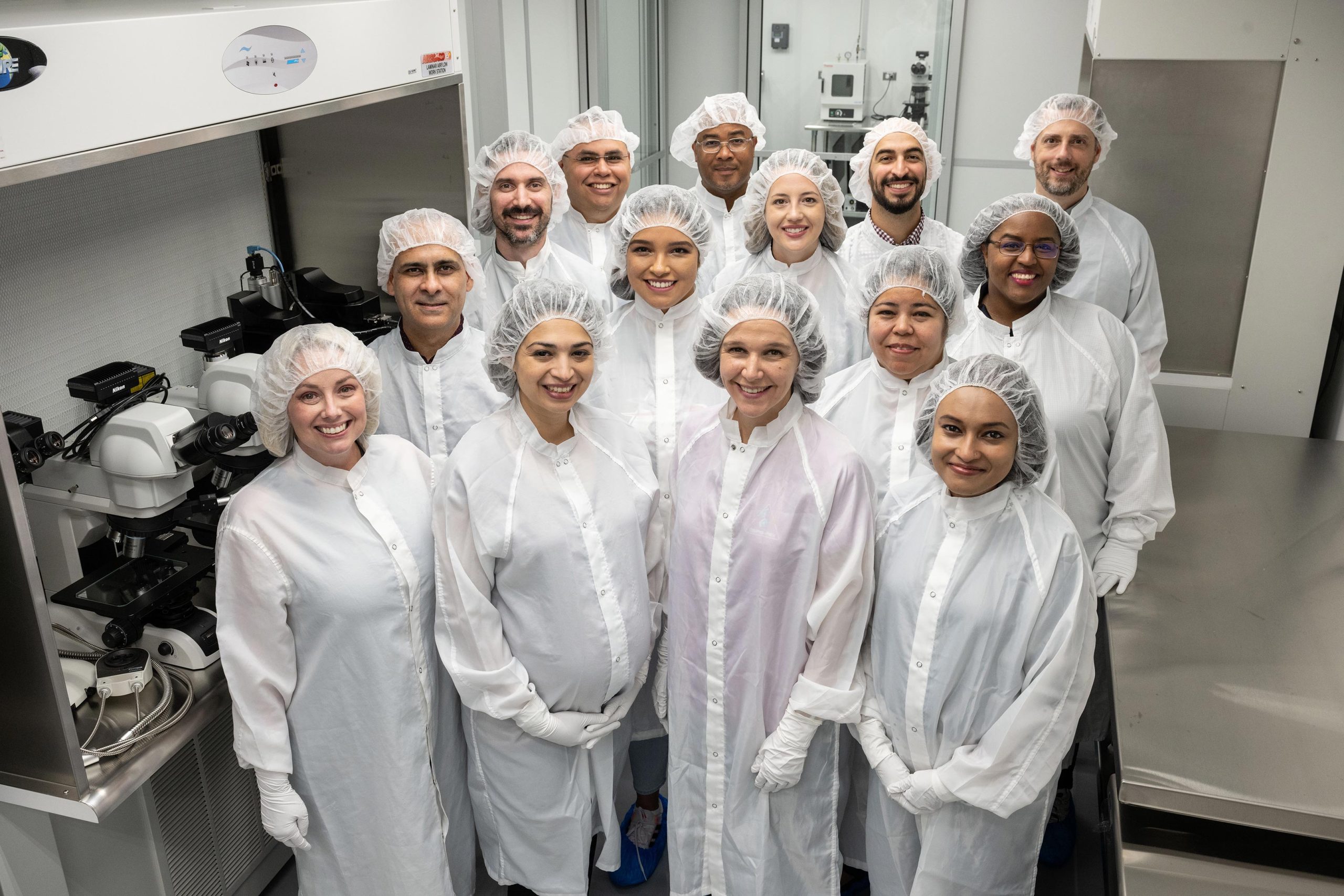
    OSIRIS-REx Curation Integrated Processing and Engineering Team
    The OSIRIS-REx curation integrated processing and engineering team in the H2-OREx Staging area just outside the pristine OSIRIS-REx laboratory. Left-to-right and front-to-back: Rachel Funk, Carla Gonzalez, Nicole Lunning, Jannatul Ferdous, Neftali Hernandez, Mari Montoya, Melissa Rodriguez, Curtis Calva, Julia Plummer, Kimberly Allums-Spencer, Gabriel Lugo, Christopher Snead, Sal Martinez, and Wayland Connelly. Credit: NASA/James Blair

    Access and Research Opportunities

    The catalog details each sample with images, weights, and descriptions. Scientists may use the database to find specific pieces of the Bennu sample that could support their research. To do so, they will need to submit a well-justified scientific proposal of why they would like to request specific pieces, how they will perform their analysis, what they hope to learn, and how their analysis may affect the sample. A detailed guide to submitting a proposal is available in the sample request form on the ARES curation website. Requests will be reviewed by a panel from the Astromaterials Allocation Review Board (AARB), experts who review sample requests for all NASA astromaterials.

    The deadline for this first round of proposals is 5 p.m. CDT on June 25, 2024. This is the only opportunity to request Bennu samples in 2024, but subsequent years will have spring and fall opportunities for requests.

    Achievements and Future Prospects

    “Building this sample catalog and making it available to the scientific community within six months of those samples coming back is a phenomenal achievement,” Davidson said. “The curation team worked so incredibly hard and persistently to overcome various challenges to get the sample catalog out. It’s a major achievement for the curation team. It’s a huge milestone for the mission, and it’s also a big deal for the wider sample analysis community.”

    Never miss a breakthrough: Join the SciTechDaily newsletter.
    Follow us on Google and Google News.

    Asteroid Astrobiology Johnson Space Center NASA OSIRIS-REx Popular
    Share. Facebook Twitter Pinterest LinkedIn Email Reddit

    Related Articles

    NASA Uncovers Life’s Building Blocks in Asteroid Bennu’s Pristine Sample

    Scientists Just Found DNA’s Building Blocks in Asteroid Bennu – Could This Explain Life’s Origins?

    Beyond the Mission Goals: How NASA Surpassed Expectations With Asteroid Bennu

    NASA’s OSIRIS-REx Team Triumphs Over Fasteners – Gains Access to Remaining Asteroid Sample

    NASA’s OSIRIS-REx Will Deliver 4.5 Billion-Year-Old Asteroid Samples to Specially Designed Facility

    NASA Finds Some Asteroids Aged Early by Sun – “We Were Surprised”

    Surprise – Again! NASA Spacecraft Reveals Asteroid Bennu Is Not What It Seemed

    NASA’s OSIRIS-REx Spacecraft Observes Asteroid Bennu’s Boulder “Body Armor”

    NASA’s OSIRIS-REx Spacecraft To Visit Another Near-Earth Asteroid, Apophis

    Leave A Reply Cancel Reply

    • Facebook
    • Twitter
    • Pinterest
    • YouTube

    Don't Miss a Discovery

    Subscribe for the Latest in Science & Tech!

    Trending News

    This Strange New Magnetism Could Change How Computers Work

    Scientists Decode a 12,000-Year-Old Mystery Hidden in Ancient Spear Points

    Rare Mutation May Shield the Brain From Alzheimer’s Damage

    James Webb Telescope Detects the Fingerprints of Catastrophic Planetary Collisions

    New Fat-Dissolving Shot Cuts Hidden Visceral Fat in Early Human Trials

    Scientists Discover “Pac-Man Enzyme” That Eats Plastic

    Study Finds Exercise May Be a Surprisingly Powerful Treatment for Pain

    New Research Reveals Dinosaurs May Have Eaten Seaweed

    Follow SciTechDaily
    • Facebook
    • Twitter
    • YouTube
    • Pinterest
    • Newsletter
    • RSS
    SciTech News
    • Biology News
    • Chemistry News
    • Earth News
    • Health News
    • Physics News
    • Science News
    • Space News
    • Technology News
    Recent Posts
    • Just 1,000 More Steps a Day Linked to Better Mental Health in Teens
    • Scientists Find a Surprising Blood Sugar Benefit to Eating With a Loved One
    • Why Too Much Cannabis Can Flip an Anxiety Switch in the Brain
    • Scientists Uncover Two Hidden Forms of Disorder in Next-Generation Semiconductors
    • Biofluorescence Discovered in Fire Salamanders for the First Time
    Copyright © 1998 - 2026 SciTechDaily. All Rights Reserved.
    • Science News
    • About
    • Contact
    • Editorial Board
    • Privacy Policy
    • Terms of Use

    Type above and press Enter to search. Press Esc to cancel.