

Close Menu
    Facebook X (Twitter) Instagram
    SciTechDaily
    • Biology
    • Chemistry
    • Earth
    • Health
    • Physics
    • Science
    • Space
    • Technology
    Facebook X (Twitter) Pinterest YouTube RSS
    SciTechDaily
    Home»Technology»Unusual Sound Waves Induced Using Laser Pulses – 140 Years After Alexander Graham Bell Reported That Light Can Be Converted Into Sound Waves
    Technology

    Unusual Sound Waves Induced Using Laser Pulses – 140 Years After Alexander Graham Bell Reported That Light Can Be Converted Into Sound Waves

    By RIKENAugust 7, 2020No Comments3 Mins Read
    Facebook Twitter Pinterest Telegram LinkedIn WhatsApp Email Reddit
    Share
    Facebook Twitter LinkedIn Pinterest Telegram Email Reddit
    Unusual Sound Waves
    Breakthrough enables engineers to enhance precision control of heat flow and sound in nanodevices using light.

    Ultrashort laser pulses induce unusual sound waves via a structural instability in a material.

    RIKEN physicists have initiated unusual sound waves in a flake using ultrashort pulses of laser light and then created videos of their movement using electron microscopy. This advance should help engineers to achieve higher precision control of heat flow and sound in nanodevices using light.
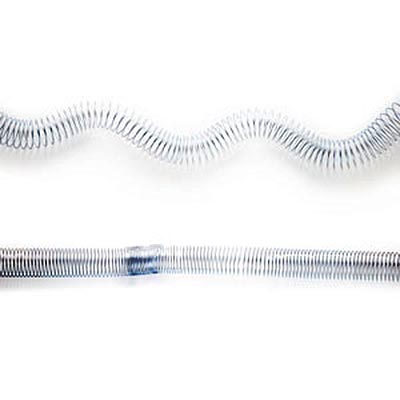
    Longitudinal and Transverse Sound Waves
    Figure 1: Most sound waves are longitudinal waves (bottom of image), but some are transverse (top of image) and cause the atoms or molecules of the material to oscillate perpendicular to their direction of travel. RIKEN researchers have succeeded in generating transverse sound waves in a thin flake of VTe2. Credit: © 2020 SCIENCE PHOTO LIBRARY

    In 1880, Alexander Graham Bell, of telephone fame, reported that light can be converted into sound waves in some materials. Now, 140 years later, this effect is generating a lot of interest because it can be used to control the flow of heat and sound in nanomaterials.

    “By utilizing this effect we can manage heat and sound on a nanometer scale,” says Asuka Nakamura of the RIKEN Center for Emergent Matter Science. “This allows us to make novel functionality in very small devices.”

    Most sound waves compress and expand the material along the direction they travel in—these are known as longitudinal waves. But some sound waves are transverse and cause the atoms or molecules of the material to oscillate perpendicular to their direction of travel (Figure 1).

    In previous experiments that used light to induce sound waves in nanomaterials, the light heated the material, causing it to expand in all directions and thereby creating longitudinal sound waves. Now, Nakamura and his co-workers have used a different mechanism to produce transverse sound waves in a thin flake of VTe2.

    Asuka Nakamura
    Asuka Nakamura and co-workers have created transverse photoacoustic waves in a thin flake of VTe2 and imaged them using ultrafast electron microscopy. Credit: © 2020 RIKEN

    The researchers used ultrashort laser pulses to induce a structural instability, altering the crystal structure of the material and producing a transverse sound wave. They were able to detect this change in structure from electron diffraction measurements.

    Transverse waves promise to give engineers greater versatility. “By utilizing this new mechanism, it may be possible to control the direction of atomic displacement in sound waves in the future,” says Nakamura.

    The team imaged the waves in the flake using a special electron microscope—one of only two in Japan. This was no mean feat because the flake was just 75 nanometers thick and the time resolution was on the order of picoseconds (1 picosecond = 10−12 second). “This ultrafast electron microscopy was one of the most important aspects of our study,” says Nakamura. “It allowed us to take electron microscopy videos of the sound waves.”

    The researchers are excited by the potential of their microscope. “It will allow us to evaluate quantitatively the amplitude of acoustic waves by electron diffraction,” says Nakamura. “Also, our system can visualize magnetic structures and waves.”

    Reference: “Nanoscale Imaging of Unusual Photoacoustic Waves in Thin Flake VTe2” by Asuka Nakamura, Takahiro Shimojima, Yusuke Chiashi, Manabu Kamitani, Hideaki Sakai, Shintaro Ishiwata, Han Li and Kyoko Ishizaka, 28 May 2020, Nano Letters.
    DOI: 10.1021/acs.nanolett.0c01006

    Never miss a breakthrough: Join the SciTechDaily newsletter.
    Follow us on Google and Google News.

    Lasers Nanotechnology Optics RIKEN
    Share. Facebook Twitter Pinterest LinkedIn Email Reddit

    Related Articles

    Microscopic Marvel: A Photonic Device that Could Change Physics and Lasers Forever

    Tiny but Mighty: How a Laser on a Chip Is Changing the Game in Photonics

    Unlocking Nature’s Fastest Timescales: Ultrafast Lasers Shrunk to Fingertip Size

    Nano-Sized Powerhouses: Ultrafast Laser Technology Miniaturized on Tiny Photonic Chips

    World’s First Super-Chiral Light Produced by New Metasurface Laser

    Tiny Micromotor Is Powered Directly With Light

    Tiny, Biocompatible Laser Could Function Inside Living Tissues for Imaging or Treatment

    High Resolution 3D Printer Prints 5 Meters per Second

    Using Lasers to Cool Semiconductors

    Leave A Reply Cancel Reply

    • Facebook
    • Twitter
    • Pinterest
    • YouTube

    Don't Miss a Discovery

    Subscribe for the Latest in Science & Tech!

    Trending News

    Scientists Warn That This Common Pet Fish Can Wreck Entire Ecosystems

    Scientists Make Breakthrough in Turning Plastic Trash Into Clean Fuel Using Sunlight

    This Popular Supplement May Interfere With Cancer Treatment, Scientists Warn

    Scientists Finally Solved One of Water’s Biggest Mysteries

    Could This New Weight-Loss Pill Disrupt the Entire Market? Here’s What You Should Know About Orforglipron

    Earth’s Crust Is Tearing Open in Africa, and It Could Form a New Ocean

    Breakthrough Bowel Cancer Trial Leaves Patients Cancer-Free for Nearly 3 Years

    Natural Compound Shows Powerful Potential Against Rheumatoid Arthritis

    Follow SciTechDaily
    • Facebook
    • Twitter
    • YouTube
    • Pinterest
    • Newsletter
    • RSS
    SciTech News
    • Biology News
    • Chemistry News
    • Earth News
    • Health News
    • Physics News
    • Science News
    • Space News
    • Technology News
    Recent Posts
    • The Most Effective Knee Arthritis Treatments Aren’t What You Expect
    • Scientists Develop Bioengineered Chewing Gum That Could Help Fight Oral Cancer
    • Popular Weight-Loss Drugs Found To Cut Heart Attack and Stroke Risk
    • After 37 Years, the World’s Longest-Running Soil Warming Experiment Uncovers a Startling Climate Secret
    • NASA Satellite Captures First-Ever High-Res View of Massive Pacific Tsunami
    Copyright © 1998 - 2026 SciTechDaily. All Rights Reserved.
    • Science News
    • About
    • Contact
    • Editorial Board
    • Privacy Policy
    • Terms of Use

    Type above and press Enter to search. Press Esc to cancel.