
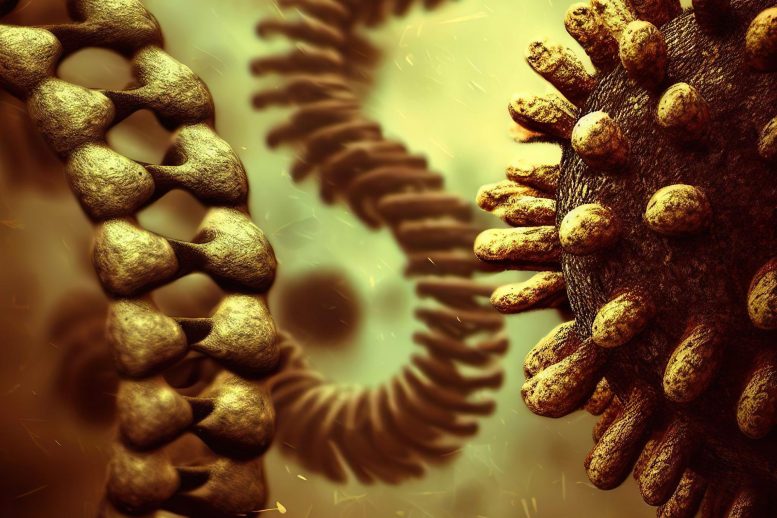
Researchers surprised to find fragments of RNA viruses in coral partners’ genomes.
Scientists have discovered ancient RNA virus remnants in the DNA of organisms living within reef-building corals. This unexpected find, detailed in Communications Biology, could provide valuable insights into coral health and viral infections, especially in the context of climate change.
An international team of marine biologists has discovered the remnants of ancient RNA viruses embedded in the DNA of symbiotic organisms living inside reef-building corals.
The RNA fragments are from viruses that infected the symbionts as long ago as 160 million years. The discovery is described in an open-access study published on June 1 in the Nature journal Communications Biology, and it could help scientists understand how corals and their partners fight off viral infections today. But it was a surprising find because most RNA viruses are not known for embedding themselves in the DNA of organisms they infect.
The research showed that endogenous viral elements, or EVEs, appear widely in the genomes of coral symbionts. Known as dinoflagellates, the single-celled algae live inside corals and provide them with their dramatic colors. The EVE discovery underscores recent observations that viruses other than retroviruses can integrate fragments of their genetic code into their hosts’ genomes.
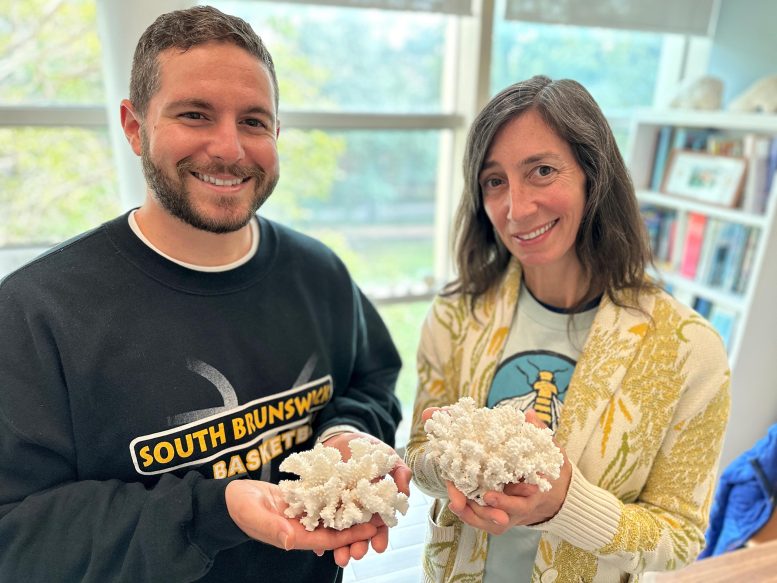
“So why did it get in there?” asked study co-author Adrienne Correa of Rice University. “It could just be an accident, but people are starting to find that these ‘accidents’ are more frequent than scientists had previously believed, and they’ve been found across all kinds of hosts, from bats to ants to plants to algae.”
That an RNA virus appears at all in coral symbionts was also a surprise.
“This is what made this project so interesting to me,” said study lead author Alex Veglia, a graduate student in Correa’s research group. “There’s really no reason, based on what we know, for this virus to be in the symbionts’ genome.”
The study was supported by the Tara Ocean Foundation and the National Science Foundation and led by Correa, Veglia and two scientists from Oregon State University, postdoctoral scholar Kalia Bistolas and marine ecologist Rebecca Vega Thurber. The research provides clues that can help scientists better understand the ecological and economic impact of viruses on reef health.
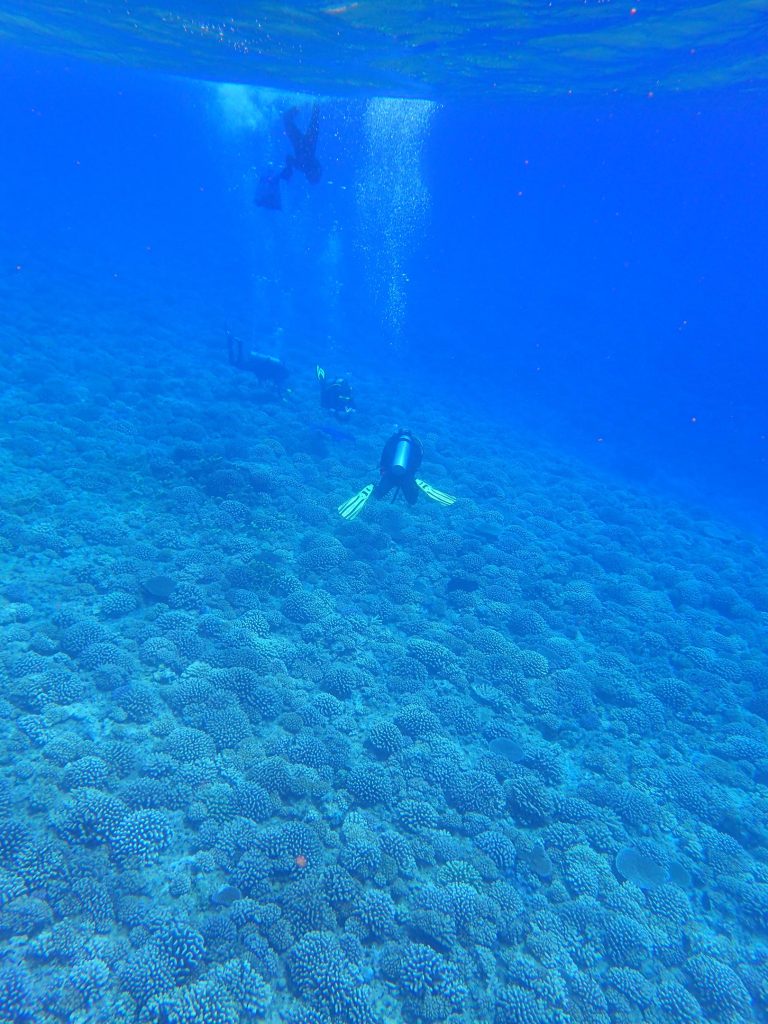
The researchers did not find EVEs from RNA viruses in samples of filtered seawater or in the genomes of dinoflagellate-free stony corals, hydrocorals, or jellyfish. But EVEs were pervasive in coral symbionts that were collected from dozens of coral reef sites, meaning the pathogenic viruses were — and probably remain — picky about their target hosts.
“There’s a huge diversity of viruses on the planet,” said Correa, an assistant professor of biosciences. “Some we know a lot about, but most viruses haven’t been characterized. We might be able to detect them, but we don’t know who serves as their hosts.”
She said viruses, including retroviruses, have many ways to replicate by infecting hosts. “One reason our study is cool is because this RNA virus is not a retrovirus,” Correa said. “Given that, you wouldn’t expect it to integrate into host DNA.
“For quite a few years, we’ve seen a ton of viruses in coral colonies, but it’s been hard to tell for sure what they were infecting,” Correa said. “So this is likely the best, most concrete information we have for the actual host of a coral colony-associated virus. Now we can start asking why the symbiont keeps that DNA, or part of the genome. Why wasn’t it lost a long time ago?”
The discovery that the EVEs have been conserved for millions of years suggests they may somehow be beneficial to the coral symbionts and that there is some kind of mechanism that drives the genomic integration of the EVEs.
“There are a lot of avenues we can pursue next, like whether these elements are being used for antiviral mechanisms within dinoflagellates, and how they are likely to affect reef health, especially as oceans warm,” Veglia said.
“If we’re dealing with an increase in the temperature of seawater, is it more likely that Symbiodiniaceae species will contain this endogenous viral element? Does having EVEs in their genomes improve their odds of fighting off infections from contemporary RNA viruses?” he said.
“In another paper, we showed there was an increase in RNA viral infections when corals underwent thermal stress. So there are a lot of moving parts. And this is another good piece of that puzzle.”
Correa said, “We can’t assume that this virus has a negative effect. But at the same time, it does look like it’s becoming more productive under these temperature stress conditions.”
Reference: “Endogenous viral elements reveal associations between a non-retroviral RNA virus and symbiotic dinoflagellate genomes” by Alex J. Veglia, Kalia S. I. Bistolas, Christian R. Voolstra, Benjamin C. C. Hume, Hans-Joachim Ruscheweyh, Serge Planes, Denis Allemand, Emilie Boissin, Patrick Wincker, Julie Poulain, Clémentine Moulin, Guillaume Bourdin, Guillaume Iwankow, Sarah Romac, Sylvain Agostini, Bernard Banaigs, Emmanuel Boss, Chris Bowler, Colomban de Vargas, Eric Douville, Michel Flores, Didier Forcioli, Paola Furla, Pierre E. Galand, Eric Gilson, Fabien Lombard, Stéphane Pesant, Stéphanie Reynaud, Shinichi Sunagawa, Olivier P. Thomas, Romain Troublé, Didier Zoccola, Adrienne M. S. Correa and Rebecca L. Vega Thurber, 1 June 2023, Communications Biology.
DOI: 10.1038/s42003-023-04917-9
Thurber is the Emile F. Pernot Distinguished Professor in Oregon State’s Department of Microbiology.
The study included more than 20 co-authors from the University of Konstanz, Germany; the Institute of Microbiology and Swiss Institute of Bioinformatics, Zürich; the University of Perpignan, France; the Scientific Center of Monaco; the Université Paris-Saclay, Evry, France; the Tara Ocean Foundation, Paris; the University of Maine; Sorbonne University, France; the University of Tsukuba, Japan; Paris Science and Letters University, France; the University of Paris-Saclay; the Weizmann Institute of Science, Rehovot, Israel; Côte d’Azur University, Nice, France; the European Bioinformatics Institute, University of Cambridge, England; Ohio State University; and the National University of Ireland, Galway.
National Science Foundation support was provided by three grants (2145472, 2025457, 1907184).
Never miss a breakthrough: Join the SciTechDaily newsletter.
Follow us on Google and Google News.