
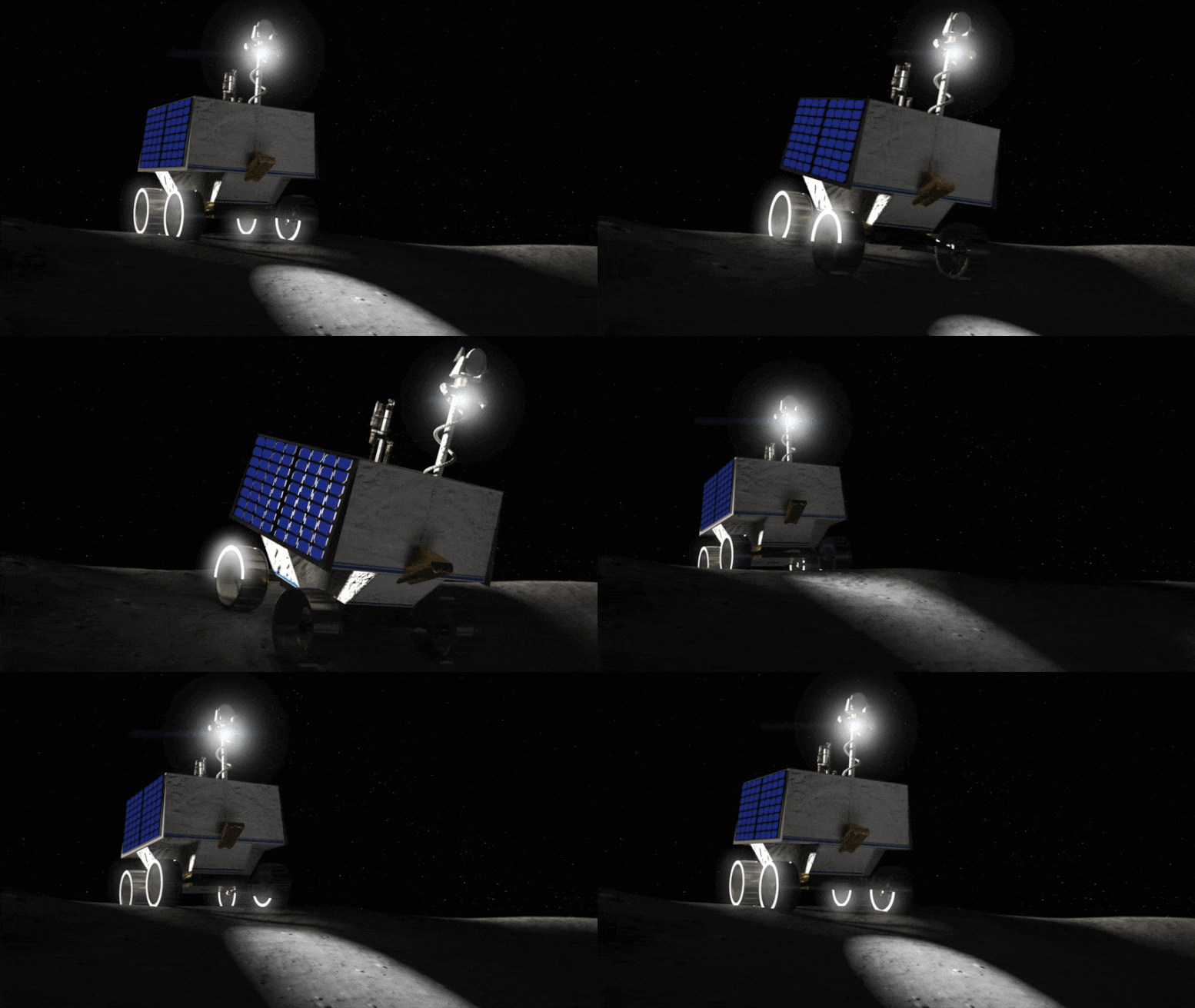
VIPER, NASA’s first lunar rover with headlights, will explore the Moon’s South Pole to locate ice and assess resources for future Artemis missions.
As part of the Artemis program, NASA is planning to send its first mobile robot to the Moon in late 2023 in search of ice and other resources on and below the lunar surface. Data from the Volatiles Investigating Polar Exploration Rover, or VIPER, would help the agency map resources at the lunar South Pole that could one day be harvested for long-term human exploration at the Moon.
VIPER’s design calls for using the first headlights on a lunar rover to aid in exploring the permanently shadowed regions of the Moon. These areas haven’t seen sunlight in billions of years and are some of the coldest spots in the solar system. Running on solar power, VIPER will need to quickly maneuver around the extreme swings in light and dark at the lunar South Pole.
“The data received from VIPER has the potential to aid our scientists in determining precise locations and concentrations of ice on the Moon and will help us evaluate the environment and potential resources at the lunar south pole in preparation for Artemis astronauts,” said Lori Glaze, director for NASA’s Planetary Science Division at the agency’s Headquarters in Washington. “This is yet another example of how robotic science missions and human exploration go hand in hand, and why both are necessary as we prepare to establish a sustainable presence on the Moon.”
NASA awarded a task order to Astrobotic for VIPER’s launch, transit, and delivery to the lunar surface as part of the agency’s Commercial Lunar Payload Services (CLPS) initiative.
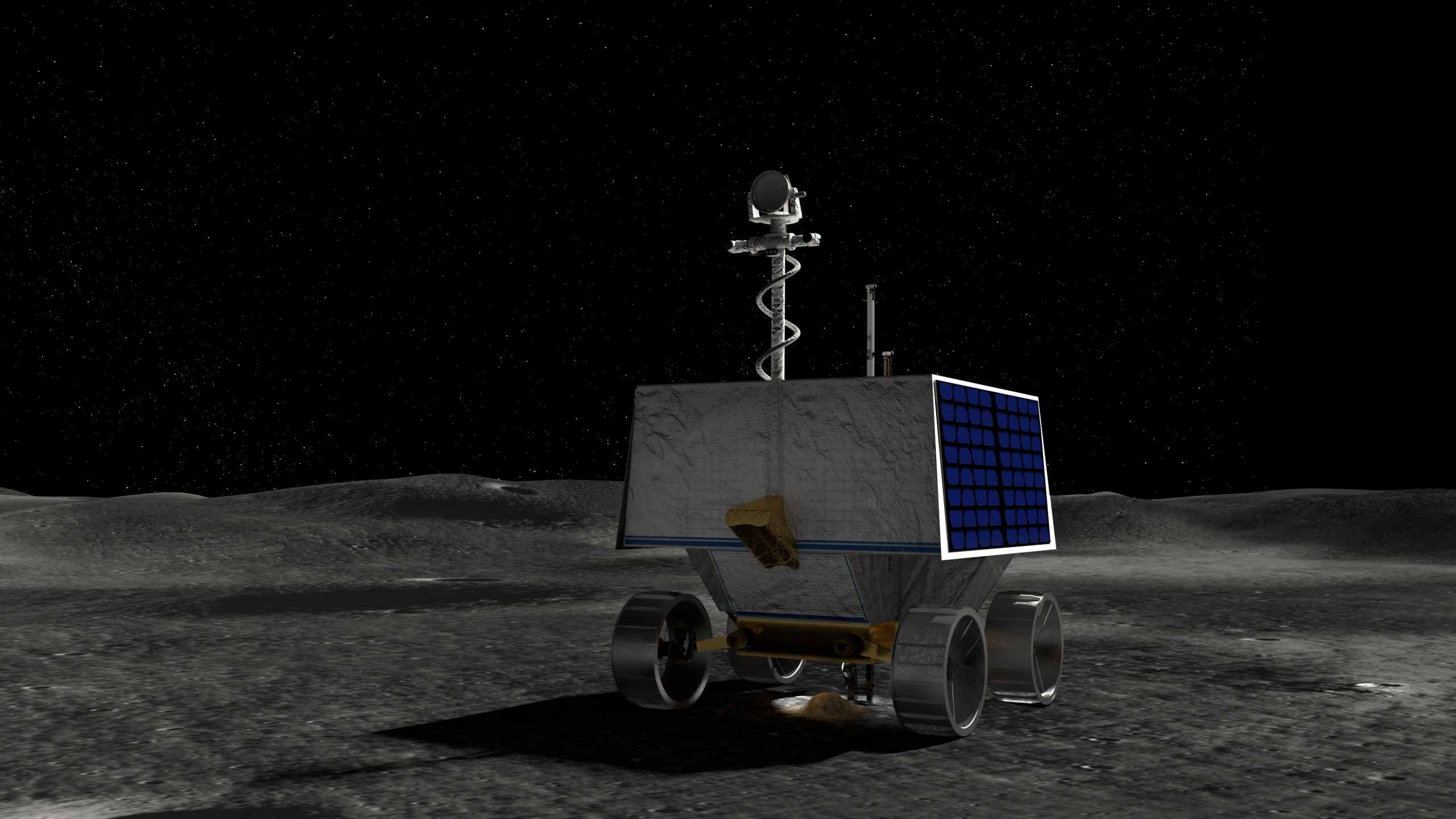
Once on the Moon, the rover will explore lunar craters using a specialized set of wheels and suspension system to cover a variety of inclines and soil types. The rover’s design significantly enhances upon a former robotic concept to prospect the Moon called Resource Prospector, which NASA canceled in early 2018. Since then, the VIPER mission duration was extended from one to three lunar days (100 Earth days). VIPER has evolved to increase its science capabilities, enabling more data collection at the lunar surface.
Cutting-Edge Instruments for Subsurface Science
VIPER will carry four instruments, including the Regolith and Ice Drill for Exploring New Terrains (TRIDENT) hammer drill, the Mass Spectrometer Observing Lunar Operations (MSolo) instrument, the Near Infrared Volatiles Spectrometer System (NIRVSS) and the Neutron Spectrometer System (NSS). Earlier versions of these instruments will be tested on the lunar surface ahead of the VIPER mission, allowing the team to reduce risk and test instrument performance data.
Slated to arrive via Astrobotic’s first flight, MSolo, NVSS, and NIRVSS are among the payloads that will land on the lunar surface on one of the first CLPS deliveries to the Moon. Versions of TRIDENT and MSolo will ride to the Moon in late 2022 aboard the Polar Resources Ice Mining Experiment (PRIME-1) technology demonstration, delivered by Intuitive Machines on its second CLPS flight.

The VIPER design has come a long way. Following the completion of its formulation phase, the agency recently approved the rover to enter the mission development phase. VIPER progress continues moving full speed ahead. NASA’s investment in the mid-size rover for mission development costs and operations is $433.5 million. The current delivery contract value for Astrobotic to deliver VIPER to the Moon through CLPS is approximately $226.5 million.
“VIPER will be the most capable robot NASA has ever sent to the lunar surface and allow us to explore parts of the Moon we’ve never seen,” said Sarah Noble, program scientist for VIPER at NASA Headquarters. “The rover will teach us about the origin and distribution of water on the Moon and prepare us to harvest resources 240,000 miles from Earth that could be used to safely send astronauts even farther into space, including Mars.”
Throughout the Artemis program, NASA will send robots and humans to explore more of the Moon than ever before. When astronauts return to the lunar surface for the first time since 1972, they will follow in VIPER’s wheel prints and land at the lunar South Pole. That mission will include landing the first woman on the Moon. She will be one of two crew members paving the way for sustainable lunar exploration missions with crew.
Never miss a breakthrough: Join the SciTechDaily newsletter.
Follow us on Google and Google News.
2 Comments
… cool, but when and if …
Bonjour….merci….