
Close Menu
    Facebook X (Twitter) Instagram
    SciTechDaily
    • Biology
    • Chemistry
    • Earth
    • Health
    • Physics
    • Science
    • Space
    • Technology
    Facebook X (Twitter) Pinterest YouTube RSS
    SciTechDaily
    Home»Space»Testing NASA’s Volatiles Investigating Polar Exploration Rover (VIPER) in the Sand
    Space

    Testing NASA’s Volatiles Investigating Polar Exploration Rover (VIPER) in the Sand

    By NASAJanuary 29, 2022No Comments2 Mins Read
    Facebook Twitter Pinterest Telegram LinkedIn WhatsApp Email Reddit
    Share
    Facebook Twitter LinkedIn Pinterest Telegram Email Reddit
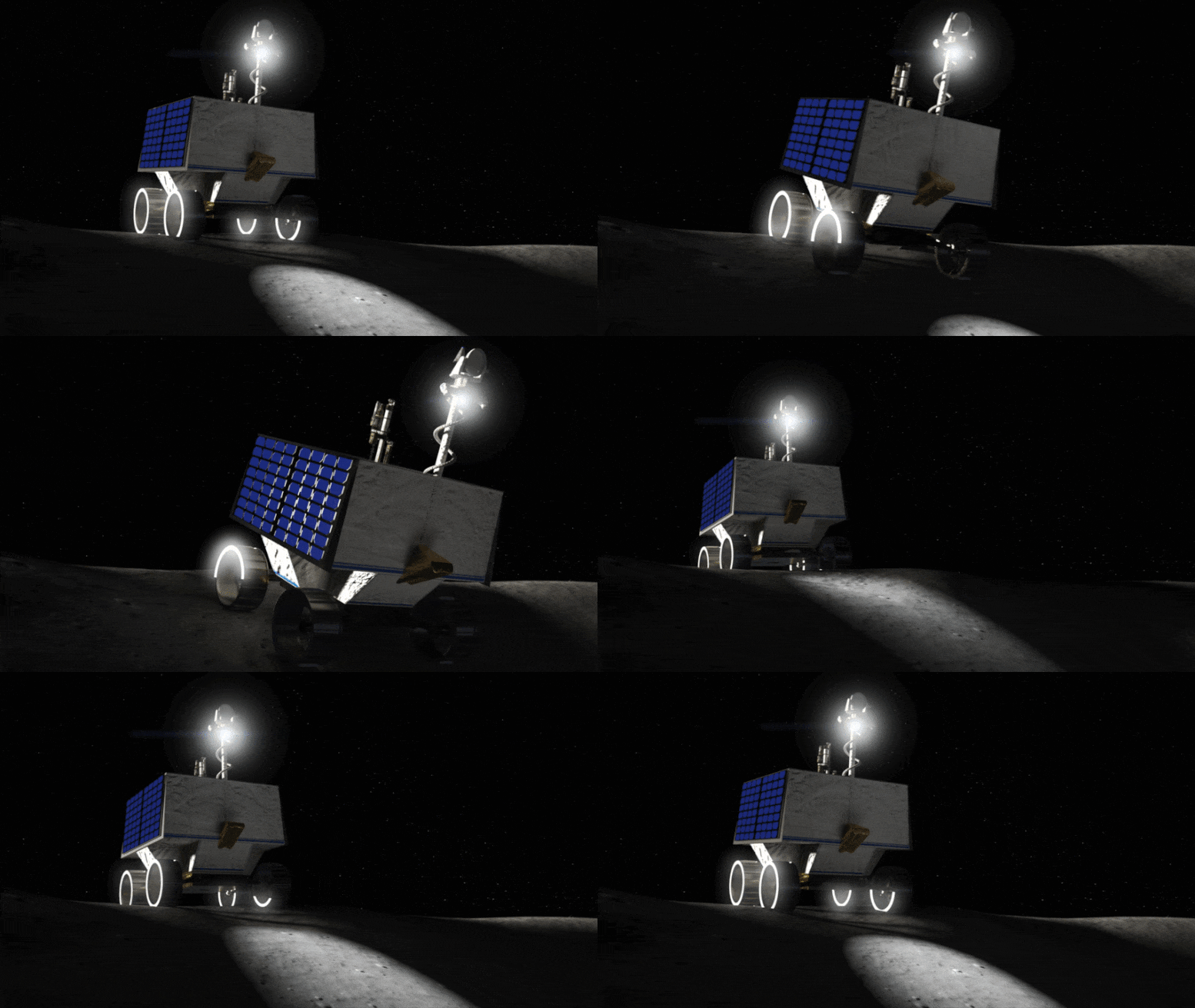
    VIPER Rover
    Animation of NASA’s Volatiles Investigating Polar Exploration Rover (VIPER) on the surface of the Moon. Credit: NASA Ames/Daniel Rutter

    VIPER’s MGRU3 prototype was tested at SLOPE to ensure readiness for its 2023 lunar mission.

    In the image below, the test version of NASA’s Volatiles Investigating Polar Exploration Rover, or VIPER, kicks up high sinkage sand-like material while transiting NASA Glenn’s Simulated Lunar Operations Laboratory, or SLOPE bed. In November 2021, the latest test rover visited SLOPE to complete the next iteration of mobility testing, a critical step toward ensuring the rover is ready for its 2023 mission to the Moon’s South Pole to get a close-up view of the location and concentration of ice and other resources. 

    The latest prototype of the rover, known as Moon Gravitation Representative Unit 3, or MGRU3, has the same wheel design and base size as the rover that will go to the Moon. It also has the flight design motors, gearboxes, and joints, as well as the newest version of the flight software.

    VIPER Sand Testing
    The test version of NASA’s Volatiles Investigating Polar Exploration Rover, or VIPER, kicks up high sinkage sand-like material while transiting NASA Glenn’s Simulated Lunar Operations Laboratory, or SLOPE bed. Credit: Jef Janis, NASA Glenn Research Center

    This test was the third mobility assessment conducted by VIPER at SLOPE to collect critical data on the software mobility controls, the onboard navigation system, and mobility performance over hazards and on loose soil. For over two weeks, the team used the facility’s unique capabilities to drive MGRU3 over various obstacles and up steep slopes. The data collected at Glenn, along with a concurrent wheel-only test at the ProtoInnovations lab in Pittsburgh, will help inform the rover operations and science teams on route planning.

    Later this spring, yet an even more flight-like rover will return to SLOPE for verification and validation testing. It is comparable to the final exam where the rover will need to prove it’s capable of meeting design requirements with its hardware, software, and electronics.  

    VIPER will be delivered to the surface of the Moon in late 2023 by Astrobotic’s Griffin lander as part of NASA’s Commercial Lunar Payload Services initiative.

    Never miss a breakthrough: Join the SciTechDaily newsletter.
    Follow us on Google and Google News.

    Moon NASA VIPER
    Share. Facebook Twitter Pinterest LinkedIn Email Reddit

    Related Articles

    Join NASA’s Artemis Mission: Send Your Name to the Moon With VIPER Rover

    Engineering Marvels: NASA’s VIPER Moon Rover Hits Key Milestone

    NASA Begins Building VIPER – Its First Robotic Moon Rover

    NASA’s VIPER Lunar Rover Prototype Motors Through Moon-Like Obstacle Course

    NASA VIPER: Artemis Moon Rover’s Wheels Are Ready To Roll

    NASA’s VIPER Moon Rover To Land Near Nobile Crater at the Lunar South Pole

    NASA to Announce Landing Site on Moon for Artemis Lunar Robotic Rover

    New NASA Moon Maps Help Developers Plan Lunar Road Trip for VIPER’s Artemis Mission

    Astrobotic Selected by NASA to Fly VIPER Rover to the Moon [Video]

    Leave A Reply Cancel Reply

    • Facebook
    • Twitter
    • Pinterest
    • YouTube

    Don't Miss a Discovery

    Subscribe for the Latest in Science & Tech!

    Trending News

    Scientists Discover Two Monster Black Holes at the Dawn of Time That Shouldn’t Exist

    Not All Physical Activity Protects Your Brain, Scientists Warn

    Rewriting History: New Research Reveals Ancient Iron Age King May Have Been a Woman

    A Strange Black Hole Gap Could Reveal Stars That Died Without Exploding

    A Deadly Blood Cancer May Begin More Than 50 Years Before Symptoms Appear

    Scientists Discover a Giant 66-Pound Rodent That Lived 34 Million Years Ago

    Scientists Unlock a New Way To Photograph Events That Vanish in Trillionths of a Second

    Why Do We Feel Colder As We Get Older? New Study Uncovers a Hidden Mechanism

    Follow SciTechDaily
    • Facebook
    • Twitter
    • YouTube
    • Pinterest
    • Newsletter
    • RSS
    SciTech News
    • Biology News
    • Chemistry News
    • Earth News
    • Health News
    • Physics News
    • Science News
    • Space News
    • Technology News
    Recent Posts
    • Scientists Discover That Producing Light More Slowly Could Improve Future Quantum Networks
    • A New Light-Powered Quantum Processor Could Overcome a Major Computing Barrier
    • Mysterious Radio Signals From 5,000 Light-Years Away Lead Scientists to a Surprising Discovery
    • New FDA-Approved Pill Lowers High Blood Pressure and May Slow Kidney Disease
    • Why Sleeping 9 Hours After 50 May Be a Warning Sign for Your Career
    Copyright © 1998 - 2026 SciTechDaily. All Rights Reserved.
    • Science News
    • About
    • Contact
    • Editorial Board
    • Privacy Policy
    • Terms of Use

    Type above and press Enter to search. Press Esc to cancel.