
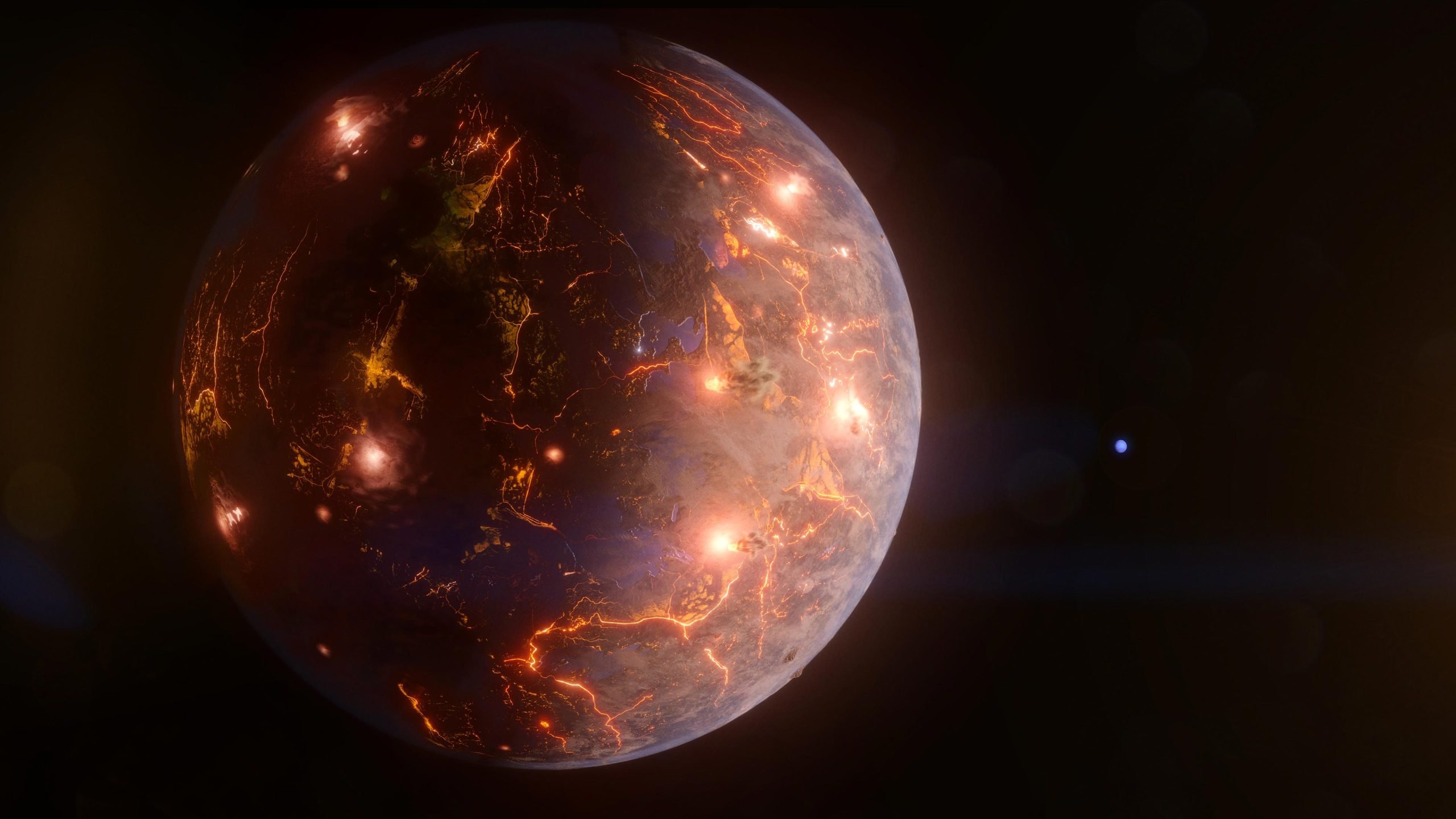
Astronomers have discovered an Earth-sized exoplanet, LP 791-18 d, believed to be highly volcanic. The planet’s volcanic activity could sustain an atmosphere potentially allowing for water condensation on its cooler side. It orbits a small red dwarf star approximately 90 light-years away, sitting on the edge of the habitable zone. Future studies are planned using the James Webb Space Telescope.
Scientists have discovered an Earth-size exoplanet, or world beyond our solar system, that may be carpeted with volcanoes. Called LP 791-18 d, the planet could undergo volcanic outbursts as often as Jupiter’s moon Io, the most volcanically active body in our solar system.
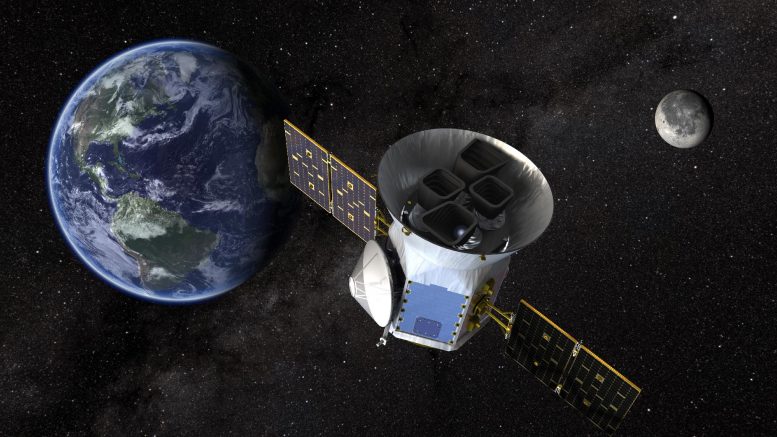
They found and studied the planet using data from NASA’s TESS (Transiting Exoplanet Survey Satellite) and retired Spitzer Space Telescope, as well as a suite of ground-based observatories.
A paper about the planet – led by Merrin Peterson, a graduate of the Trottier Institute for Research on Exoplanets (iREx) based at the University of Montreal – appears in the May 17 edition of the scientific journal Nature.
“LP 791-18 d is tidally locked, which means the same side constantly faces its star,” said Björn Benneke, a co-author and astronomy professor at iREx who planned and supervised the study. “The day side would probably be too hot for liquid water to exist on the surface. But the amount of volcanic activity we suspect occurs all over the planet could sustain an atmosphere, which may allow water to condense on the night side.”
LP 791-18 d orbits a small red dwarf star about 90 light-years away in the southern constellation Crater. The team estimates it’s only slightly larger and more massive than Earth.

Astronomers already knew about two other worlds in the system before this discovery, called LP 791-18 b and c. The inner planet b is about 20% bigger than Earth. The outer planet c is about 2.5 times Earth’s size and more than seven times its mass.
During each orbit, planets d and c pass very close to each other. Each close pass by the more massive planet c produces a gravitational tug on planet d, making its orbit somewhat elliptical. On this elliptical path, planet d is slightly deformed every time it goes around the star. These deformations can create enough internal friction to substantially heat the planet’s interior and produce volcanic activity at its surface. Jupiter and some of its moons affect Io in a similar way.
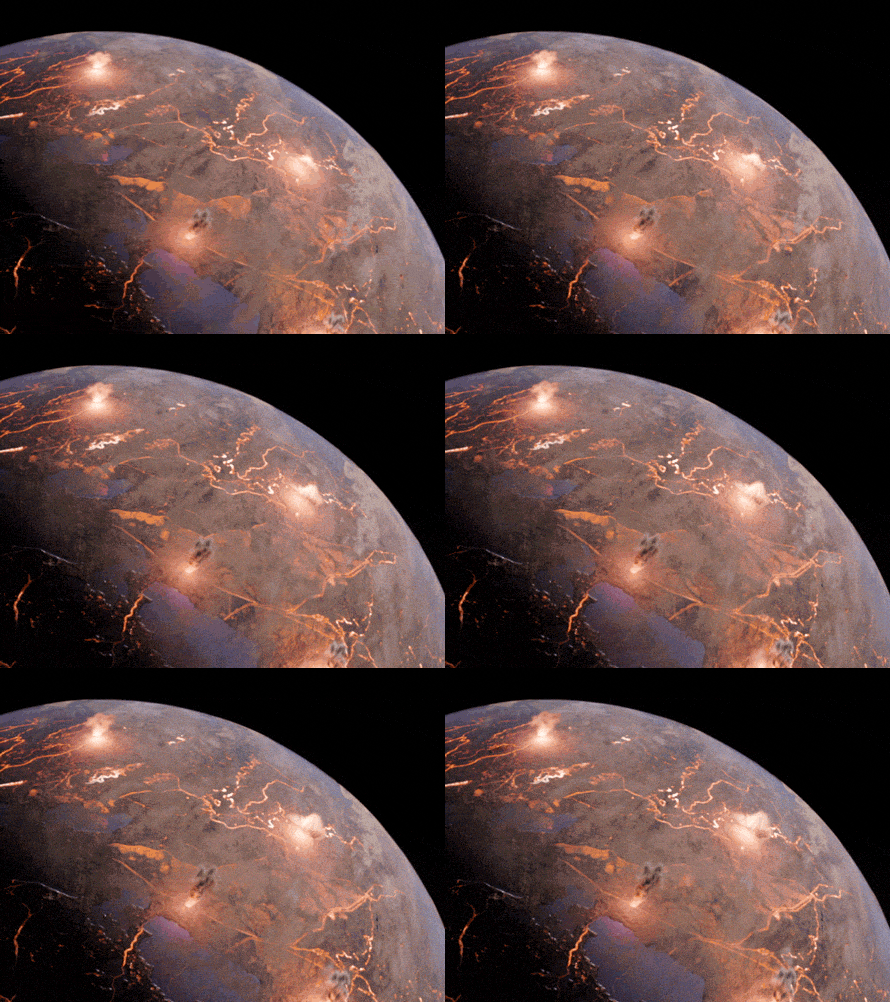
Planet d sits on the inner edge of the habitable zone, the traditional range of distances from a star where scientists hypothesize liquid water could exist on a planet’s surface. If the planet is as geologically active as the research team suspects, it could maintain an atmosphere. Temperatures could drop enough on the planet’s night side for water to condense on the surface.
Planet c has already been approved for observing time on the James Webb Space Telescope, and the team thinks planet d is also an exceptional candidate for atmospheric studies by the mission.
“A big question in astrobiology, the field that broadly studies the origins of life on Earth and beyond, is if tectonic or volcanic activity is necessary for life,” said co-author Jessie Christiansen, a research scientist at NASA’s Exoplanet Science Institute at the California Institute of Technology in Pasadena. “In addition to potentially providing an atmosphere, these processes could churn up materials that would otherwise sink down and get trapped in the crust, including those we think are important for life, like carbon.”
Spitzer’s observations of the system were among the last the satellite collected before it was decommissioned in January 2020.
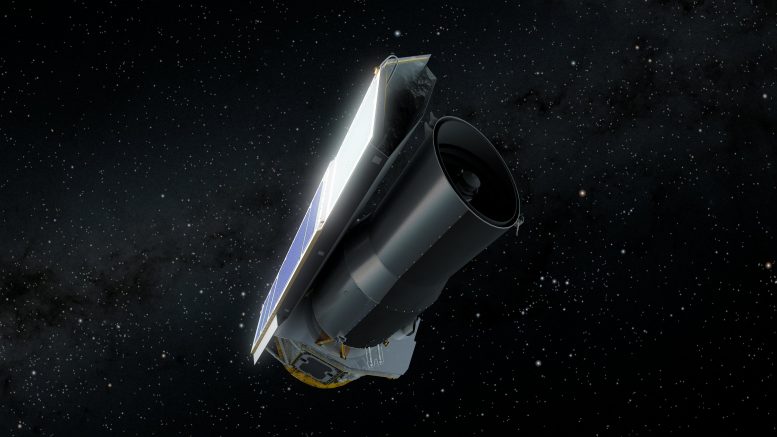
“It is incredible to read about the continuation of discoveries and publications years beyond Spitzer’s end of mission,” said Joseph Hunt, Spitzer project manager at NASA’s Jet Propulsion Laboratory in Southern California. “That really shows the success of our first-class engineers and scientists. Together they built not only a spacecraft but also a data set that continues to be an asset for the astrophysics community.”
For more on this discovery, see Earth-Sized Planet With Fiery Volcanoes Discovered in Habitable Zone.
Reference: “A temperate Earth-sized planet with tidal heating transiting an M6 star” by Merrin S. Peterson, Björn Benneke, Karen Collins, Caroline Piaulet, Ian J. M. Crossfield, Mohamad Ali-Dib, Jessie L. Christiansen, Jonathan Gagné, Jackie Faherty, Edwin Kite, Courtney Dressing, David Charbonneau, Felipe Murgas, Marion Cointepas, Jose Manuel Almenara, Xavier Bonfils, Stephen Kane, Michael W. Werner, Varoujan Gorjian, Pierre-Alexis Roy, Avi Shporer, Francisco J. Pozuelos, Quentin Jay Socia, Ryan Cloutier, Jeremy Dietrich, Jonathan Irwin, Lauren Weiss, William Waalkes, Zach Berta-Thomson, Thomas Evans, Daniel Apai, Hannu Parviainen, Enric Pallé, Norio Narita, Andrew W. Howard, Diana Dragomir, Khalid Barkaoui, Michaël Gillon, Emmanuel Jehin, Elsa Ducrot, Zouhair Benkhaldoun, Akihiko Fukui, Mayuko Mori, Taku Nishiumi, Kiyoe Kawauchi, George Ricker, David W. Latham, Joshua N. Winn, Sara Seager, Howard Isaacson, Alex Bixel, Aidan Gibbs, Jon M. Jenkins, Jeffrey C. Smith, Jose Perez Chavez, Benjamin V. Rackham, Thomas Henning, Paul Gabor, Wen-Ping Chen, Nestor Espinoza, Eric L. N. Jensen, Kevin I. Collins, Richard P. Schwarz, Dennis M. Conti, Gavin Wang, John F. Kielkopf, Shude Mao, Keith Horne, Ramotholo Sefako, Samuel N. Quinn, Dan Moldovan, Michael Fausnaugh, Gábor Fűűrész and Thomas Barclay, 17 May 2023, Nature.
DOI: 10.1038/s41586-023-05934-8
TESS is a NASA Astrophysics Explorer mission led and operated by MIT in Cambridge, Massachusetts, and managed by NASA’s Goddard Space Flight Center. Additional partners include Northrop Grumman, based in Falls Church, Virginia; NASA’s Ames Research Center in California’s Silicon Valley; the Center for Astrophysics | Harvard & Smithsonian in Cambridge, Massachusetts; MIT’s Lincoln Laboratory; and the Space Telescope Science Institute in Baltimore. More than a dozen universities, research institutes, and observatories worldwide are participants in the mission.
The entire body of scientific data collected by Spitzer during its lifetime is available to the public via the Spitzer data archive, housed at the Infrared Science Archive at IPAC at Caltech in Pasadena, California. NASA’s Jet Propulsion Laboratory, a division of Caltech, managed Spitzer mission operations for the agency’s Science Mission Directorate in Washington. Science operations were conducted at the Spitzer Science Center at IPAC at Caltech. Spacecraft operations were based at Lockheed Martin Space in Littleton, Colorado.
Never miss a breakthrough: Join the SciTechDaily newsletter.
Follow us on Google and Google News.
1 Comment
Yooo Mustafar! :O