
Close Menu
    Facebook X (Twitter) Instagram
    SciTechDaily
    • Biology
    • Chemistry
    • Earth
    • Health
    • Physics
    • Science
    • Space
    • Technology
    Facebook X (Twitter) Pinterest YouTube RSS
    SciTechDaily
    Home»Space»When Stars Explode – Spiral Galaxy NGC 4981
    Space

    When Stars Explode – Spiral Galaxy NGC 4981

    By SciTechDailyFebruary 6, 2017No Comments2 Mins Read
    Facebook Twitter Pinterest Telegram LinkedIn WhatsApp Email Reddit
    Share
    Facebook Twitter LinkedIn Pinterest Telegram Email Reddit
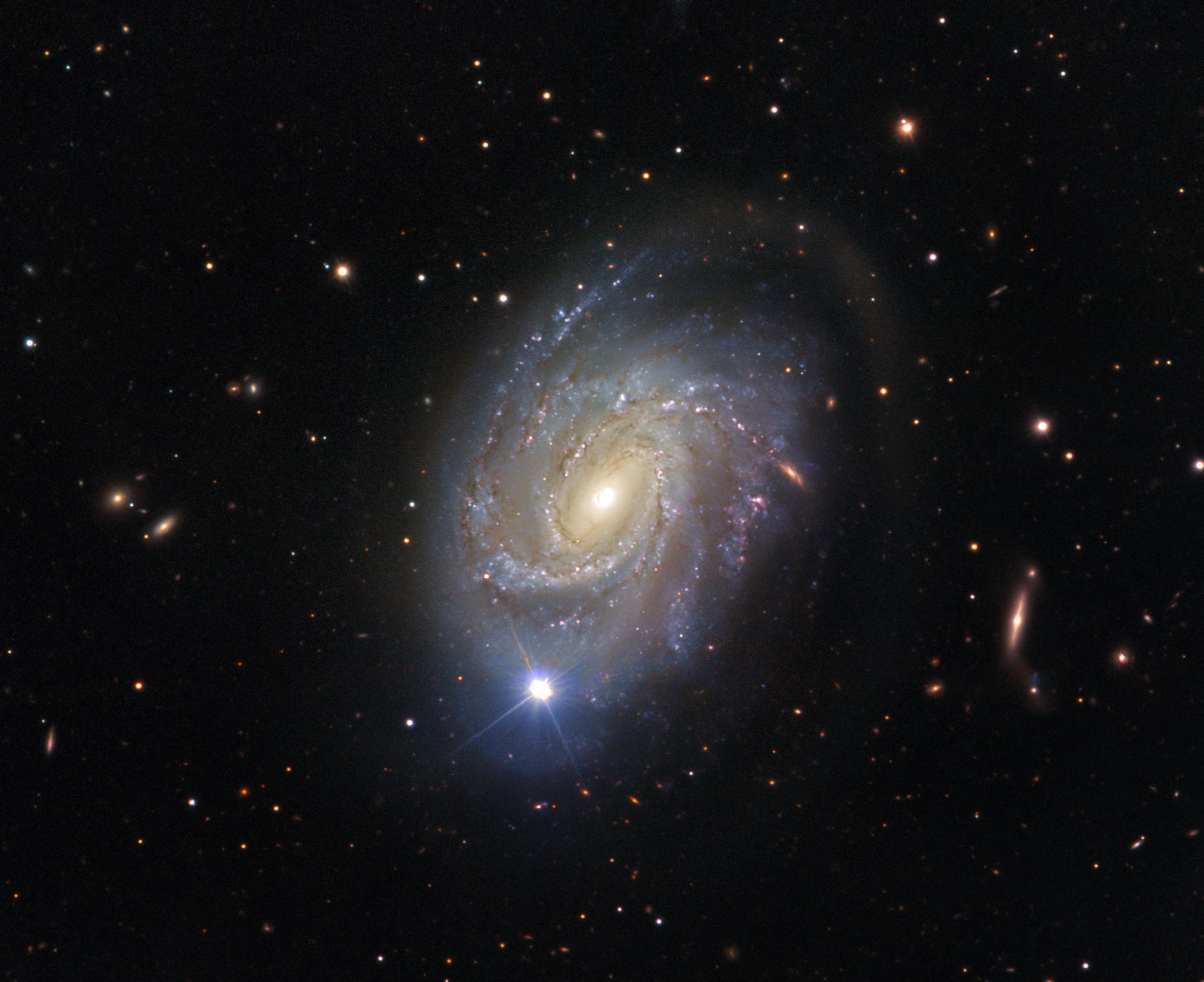
    ESO Views Spiral Galaxy NGC 4981
    NGC 4981 is over 75 million light-years away in the constellation of Virgo (The Virgin). Credit: ESO Acknowledgment: Flickr user Josh Barrington

    This newly released ESO image shows spiral galaxy NGC 4981.

    Over 75 million light-years away in the constellation of Virgo (The Virgin) lies NGC 4981 — a spiral galaxy with a rather explosive past.

    NGC 4981 was discovered on 17 April 1784 by William Herschel, and subsequently documented in John Dreyer’s New General Catalog. Over a century later, on 23 April 1968, the galaxy once again made it into the records when a Type la supernova — a stellar explosion in a binary star system — occurred within its confines: SN 1968I. SN 1968I, however, was not to be the galaxy’s only supernova. Decades later, the core collapse of a massive star led to supernova SN 2007c.

    This spectacular shot of NGC 4981 — not showing any of the supernovae explosions; the bright star visible in the image is a foreground star — was captured by FORS, the visible and near-UV FOcal Reducer and low dispersion Spectrograph for ESO’s Very Large Telescope (VLT). FORS is the Swiss Army knife of ESO’s instruments — it is able to study many different astronomical objects in many different ways, and is responsible for some of the most iconic photos ever captured with the VLT.

    The data to create this image was selected from the ESO archive by Josh Barrington as part of the Hidden Treasures competition.

    Never miss a breakthrough: Join the SciTechDaily newsletter.
    Follow us on Google and Google News.

    Astronomy European Southern Observatory Supernova
    Share. Facebook Twitter Pinterest LinkedIn Email Reddit

    Related Articles

    Astronomers Captured a Star’s Final Explosion in Stunning Detail

    Star Explodes Twice: Astronomers Capture Stunning Supernova Remains

    This Supernova Explosion Still Looks Breathtaking 11,000 Years Later

    A Spooky Ghost of a Giant Star: What Remains After the Explosive Death of a Massive Star

    A New Class of Magnetar-Powered Supernova

    Two Merging Stars Destined to Ignite a Vast Supernova Explosion

    ALMA Views the Remains of Supernova 1987A

    PESSTO Survey Views Spiral Galaxy Messier 74

    Astronomers View the Aftermath of Supernova SN 1999em and Its Host Galaxy

    Leave A Reply Cancel Reply

    • Facebook
    • Twitter
    • Pinterest
    • YouTube

    Don't Miss a Discovery

    Subscribe for the Latest in Science & Tech!

    Trending News

    Nanoscale “Defects” Unlock a Major Heat Transfer Breakthrough

    Adults Taking More Vitamin D Scored 13% Higher on a Cognitive Test

    A 35,000-Year-Old Neanderthal Pelvis May Explain Why Men and Women Walk Differently

    Dual Stem Cell Treatment Restores Vision in First Human Trial

    Your Waist Size May Reveal More About Your Health Than You Think

    Scientists Turn Red Strawberries White With a Single Gene Edit

    A SpaceX Falcon 9 Rocket Hit the Moon and Blasted Open a 60-Foot Crater

    Study Reveals Your Organs May Be Aging at Very Different Speeds

    Follow SciTechDaily
    • Facebook
    • Twitter
    • YouTube
    • Pinterest
    • Newsletter
    • RSS
    SciTech News
    • Biology News
    • Chemistry News
    • Earth News
    • Health News
    • Physics News
    • Science News
    • Space News
    • Technology News
    Recent Posts
    • Scientists Discover a Mysterious New Snake Species Hiding in New Guinea
    • Bats Have a Secret Immune System Scientists Have Never Seen in Any Other Mammal
    • A Star’s Spin Could Solve a Longstanding Black Hole Mystery
    • NASA Is Building “Air Traffic Control” for the Moon
    • NASA Finds Earth Microbes Could Hide in the Moon’s Deep Shadows
    Copyright © 1998 - 2026 SciTechDaily. All Rights Reserved.
    • Science News
    • About
    • Contact
    • Editorial Board
    • Privacy Policy
    • Terms of Use

    Type above and press Enter to search. Press Esc to cancel.