
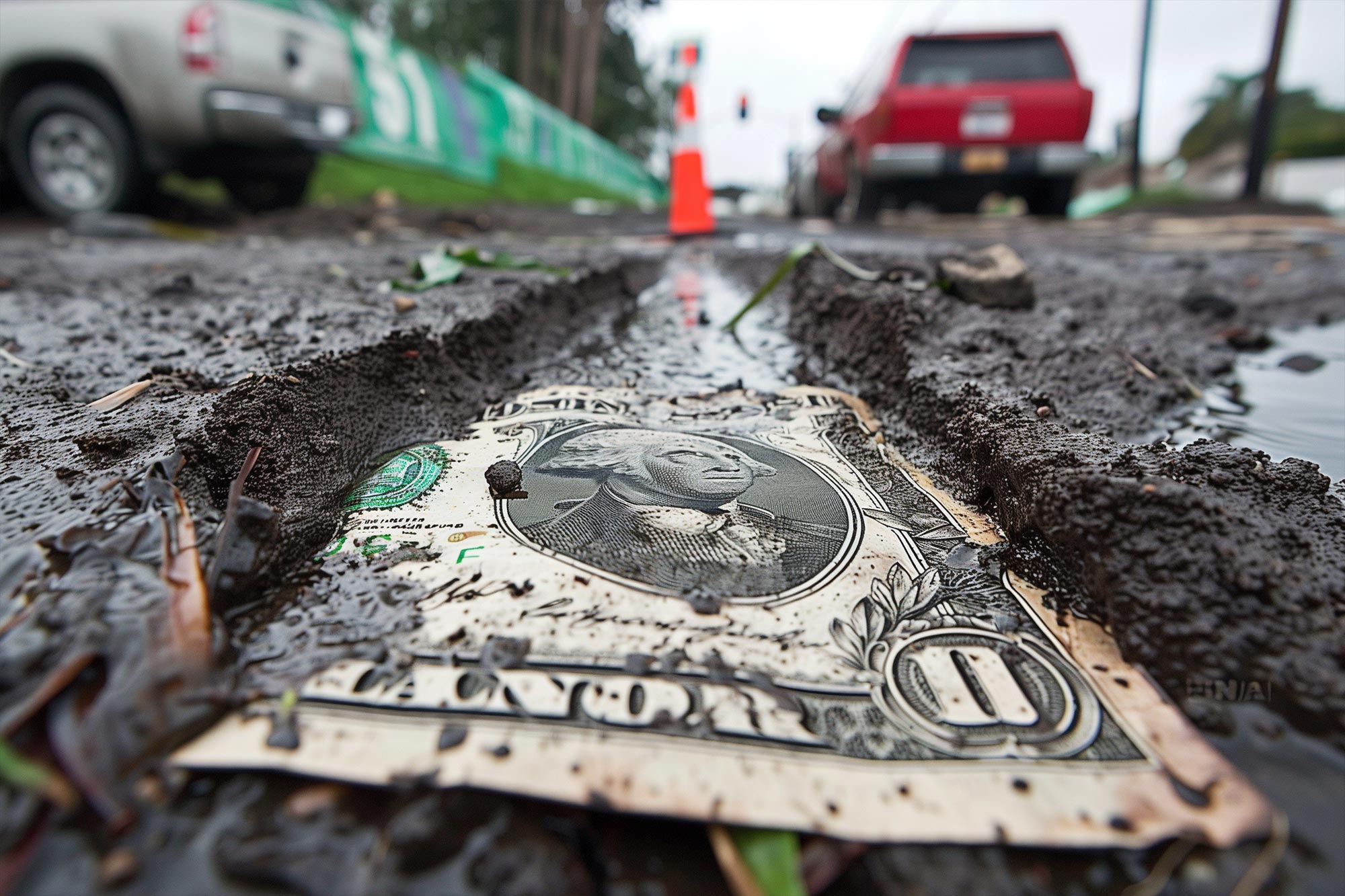
A study from the Potsdam Institute for Climate Impact Research highlights the disparate economic impacts of climate change across income groups, revealing that while the poorest face the greatest risks, the wealthy are experiencing the fastest-growing threats.
Countries like Brazil and China are particularly vulnerable due to severe weather impacts and negative trade repercussions. As global warming escalates, these challenges are expected to intensify, threatening global supply chains and affecting goods and services globally.
Global Economic Impact of Climate Change
In a new study by the Potsdam Institute for Climate Impact Research (PIK), researchers analyzed how erratic weather events, increasingly intensified by global warming, affect global production and consumption across different income groups. The results confirm previous studies that the poorest people worldwide bear the greatest economic risks from climate change.
Surprisingly, the risk for the wealthy is growing the fastest. Economies in transition like Brazil or China are also highly vulnerable to severe impacts and negative trade effects. Across countries, these countries face the highest risks due to severe impacts of volatile weather and adverse trade effects.
As the planet continues to warm, these risks are expected to worsen across most countries, with ripple effects along global supply chains, impacting goods and services worldwide.
Wealth and Vulnerability in a Warming World
“In the next 20 years, climate change will increase economic risks from erratic weather,” states PIK scientist Anders Levermann. “The highest risks remain with the poorest around the world. But the increase of economic risk is strongest for the wealthy, in countries like the US and the EU.
“Consumers all around the world, regardless of their income, will thus face increasing challenges due to global warming – without a transition towards carbon neutrality we will eventually not be able to meet these challenges.”
Reference: “Global economic impact of weather variability on the rich and the poor” by Lennart Quante, Sven N. Willner, Christian Otto and Anders Levermann, 13 September 2024, Nature Sustainability.
DOI: 10.1038/s41893-024-01430-7
Never miss a breakthrough: Join the SciTechDaily newsletter.
Follow us on Google and Google News.
2 Comments
There is NO global warming. There IS cyclic warming, and it appears we are entering a time of cooling because the sun is slowing its sunspot activity. The sun is the determining factor for warming NOT human activity.
Welcome to the Eddy Minimum the third Grand Solar Minimum since the 1600’s. Currently projected to last to 2055 or about three decades. What does a Grand Solar Minimum look like?
Bitter Cold, Extremely Hot, 1000 Year Floods, Huge amount of Snow and Ice some locations, Droughts, High Winds, Very Large Hail, Huge to almost Complete Crop Losses, Starvation, Disease, Loss of Life, Social Upheaval, Human Migrations, Fall of Governments, Electromagnetic Displays, Increased Large Earthquakes, VEI 3 to VEI 7 or greater, Volcanic Eruptions, Atmospheric Compression, and High Cosmic Ray Environment..
Since the early2000’s, the thesis that it’s the Sun, not us, that’s responsible for global “climate change” has been enormously strengthened by the research of astrophysicist Professor Valentina Zharkova of Northumbria University in the UK. Her research of the causes of cycles of solar activity shows the Sun has a “dual dynamo” mechanism coupled with a “quadrupole” magnetic component resulting in three solar cycles:
*The standard magnetic cycle = ~22 yrs (the full 11 year cycle from high to low, then 11 years low back to high)
*The Gleissberg cycle = ~90-110 yrs, avg. 100 yrs
*The ‘Grand’ cycle = ~350-400 yrs
Moreover, we are now at the minimum of all three, particularly the Grand, which she predicts will last from ~2020 to ~2053 (this is the approximate length of the Grand’s minimum out of the 400 years for the full cycle). Meaning we have entered a three decade-long period of Global Cooling, the opposite of Warming.
She explains this in her paper: Modern Grand Solar Minimum Will Lead To Terrestrial Cooling.
This is a science paper published in PubMed Central, but she explains clearly why and how we are headed for another Maunder Minimum (1645-1710) during which the Thames River in London and the Po River in northern Italy froze regularly, and all of Europe and North America went into a deep freeze.
What could we do about it? We could put a lot more CO2 in the air to begin with. I hope Skye in the Forum will suggest other solutions.
Meanwhile – it should be of some solace to those millions of Americans shivering in the cold and dark that at least it’s Mother Nature causing their suffering, and not some depraved evil monster shelling with artillery their electricity grid.
Perhaps at this point we should note the irony that Dr. Zharkova is Ukrainian, graduating from Kiev National University and gaining her Ph.D. in Astrophysics at the Main Astronomical Observatory in Kiev.
References: Dennis Delaurier “Surviving the Super Grand Solar Minimum”
Jack Wheeler “The Point News”