
Close Menu
    Facebook X (Twitter) Instagram
    SciTechDaily
    • Biology
    • Chemistry
    • Earth
    • Health
    • Physics
    • Science
    • Space
    • Technology
    Facebook X (Twitter) Pinterest YouTube RSS
    SciTechDaily
    Home»Physics»Yale Engineers Develop Hybrid System for Quantum Communication
    Physics

    Yale Engineers Develop Hybrid System for Quantum Communication

    By SEAS; Yale UniversityOctober 9, 2014No Comments3 Mins Read
    Facebook Twitter Pinterest Telegram LinkedIn WhatsApp Email Reddit
    Share
    Facebook Twitter LinkedIn Pinterest Telegram Email Reddit
    Yale Engineers Develop System for Quantum Communication
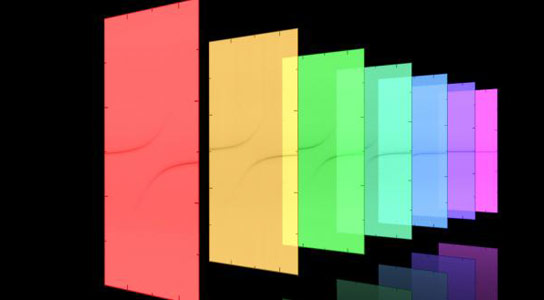
    Yale engineers created a hybrid system that effectively links magnons (smallest magnetic spin excitation units) and microwave photons. This high-coherence system holds promise for information storage and transfer. Credit: Yale University

    Using microwaves and magnets, researchers at the Yale School of Engineering & Applied Science developed a hybrid system for quantum communication.

    Yale engineers have developed a hybrid system that strongly couples magnons—the smallest unit of measurement for a magnetic spin excitation—with microwave photons. According to the researchers, the hybrid system achieved an ultrahigh coherence between the two platforms which makes the system suitable for storing and transferring information.

    “Magnons, because they can interact with many different information carriers, can be an ideal bridge to platforms as diverse as microwaves, light waves, and acoustic waves,” says Hong Tang, associate professor of electrical engineering, physics & applied physics and principal investigator of the research published October 7 in Physical Review Letters. “This ability makes magnons a promising new platform for quantum communication and possibly for the development of a quantum computer.”

    The Yale team’s hybrid system utilized a small sphere made of yttrium iron garnet (YIG)—a magnetic insulator that has very low magnon attenuation—placed inside a microwave cavity. The geometry of both the YIG sphere and the cavity resulted in uniform coupling between the microwave photons and magnons, and at a higher quality than previous experiments that used YIG thin films. The coupling was in fact so strong that information carried by the microwave signal can be written to or read from the magnon five billion times per second; such a processing speed allowed the information stored in a single magnon to be accessed 10,000 times before its energy was dissipated and the information lost.

    In addition to the ultrahigh coherence and ultrastrong coupling between the magnons and microwave photons, the researchers also argue for further magnon use because of the platform’s high tunability and nonlinearity; these two attributes enable the platform to flexibly couple with other platforms.

    “Nonlinearity is also crucial because it enables not only integration with other platforms, but also more complex manipulations to the information signal itself, such as one magnon being split into two magnons, each with half the energy of the original magnon, or perhaps two identical magnons being converted into two magnons with different frequencies,” says Xufeng Zhang, a Yale engineering doctoral student and lead author of the paper. “Our next step is to explore such nonlinear processes. With these linear and nonlinear properties, magnons become a very promising candidate as carriers for information processing and communication.”

    Other authors of the article include Chang-Ling Zou and Liang Jiang. The article is titled “Strongly Coupled Magnons and Cavity Microwave Photons.”

    Reference: “Strongly Coupled Magnons and Cavity Microwave Photons” by Xufeng Zhang, Chang-Ling Zou, Liang Jiang and Hong X. Tang, 7 October 2014, Physical Review Letters.
    DOI: 10.1103/PhysRevLett.113.156401
    arXiv: 1405.7062


    Never miss a breakthrough: Join the SciTechDaily newsletter.
    Follow us on Google and Google News.

    Engineering Popular Quantum Computing Yale School of Engineering & Applied Science Yale University
    Share. Facebook Twitter Pinterest LinkedIn Email Reddit

    Related Articles

    Yale Engineers Advance Quantum Technology With Photon Control

    Chip-Scale Device Enables Yale Engineers to ‘See Without Looking’

    Physicists Track Quantum Errors in Real Time

    Electron’s Shape – Rounder than Predicted by Standard Model

    Physicists Create and Control a Large Quantum Mechanical System Built on Photons

    Engineers at SEAS Develop a Microelectronic Device That Mimics Functions of Real Cells

    Yale Physicists Observe Quantum Information While Preserving Its Integrity

    Nanoparticle-Based System Advances Stem Cell Culture Techniques

    Evidence of Elusive Majorana Fermions Raises Possibilities for Quantum Computing

    Leave A Reply Cancel Reply

    • Facebook
    • Twitter
    • Pinterest
    • YouTube

    Don't Miss a Discovery

    Subscribe for the Latest in Science & Tech!

    Trending News

    Scientists Uncover Potential Brain Risks of Popular Fish Oil Supplements

    Scientists Discover a Surprising Way To Make Bread Healthier and More Nutritious

    After 60 Years, Scientists Uncover Unexpected Brain Effects of Popular Diabetes Drug Metformin

    New Research Uncovers Hidden Side Effects of Popular Weight-Loss Drugs

    Scientists Rethink Extreme Warming After Surprising Ocean Discovery

    Landmark Study Links Never Marrying to Significantly Higher Cancer Risk

    Researchers Discover Unknown Beetle Species Just Steps From Their Lab

    Largest-Ever Study Finds Medicinal Cannabis Ineffective for Anxiety, Depression, PTSD

    Follow SciTechDaily
    • Facebook
    • Twitter
    • YouTube
    • Pinterest
    • Newsletter
    • RSS
    SciTech News
    • Biology News
    • Chemistry News
    • Earth News
    • Health News
    • Physics News
    • Science News
    • Space News
    • Technology News
    Recent Posts
    • Researchers Uncover Source of Strange Deformation in Earth’s Largest Continental Rift
    • Scientists Solve Mystery of Where the Colorado River Vanished Millions of Years Ago
    • Not Just Alzheimer’s: Scientists Uncover Clues to a Second, Overlooked Disorder
    • Scientists Uncover Dangerous Connection Between Serotonin and Heart Valve Disease
    • Scientists Discover a “Protector” Protein That Could Help Reverse Hair Loss
    Copyright © 1998 - 2026 SciTechDaily. All Rights Reserved.
    • Science News
    • About
    • Contact
    • Editorial Board
    • Privacy Policy
    • Terms of Use

    Type above and press Enter to search. Press Esc to cancel.