
Close Menu
    Facebook X (Twitter) Instagram
    SciTechDaily
    • Biology
    • Chemistry
    • Earth
    • Health
    • Physics
    • Science
    • Space
    • Technology
    Facebook X (Twitter) Pinterest YouTube RSS
    SciTechDaily
    Home»Space»Hubble Telescope Views Nitrogen-Rich Planetary Nebula
    Space

    Hubble Telescope Views Nitrogen-Rich Planetary Nebula

    By European Space AgencyJune 26, 20151 Comment2 Mins Read
    Facebook Twitter Pinterest Telegram LinkedIn WhatsApp Email Reddit
    Share
    Facebook Twitter LinkedIn Pinterest Telegram Email Reddit
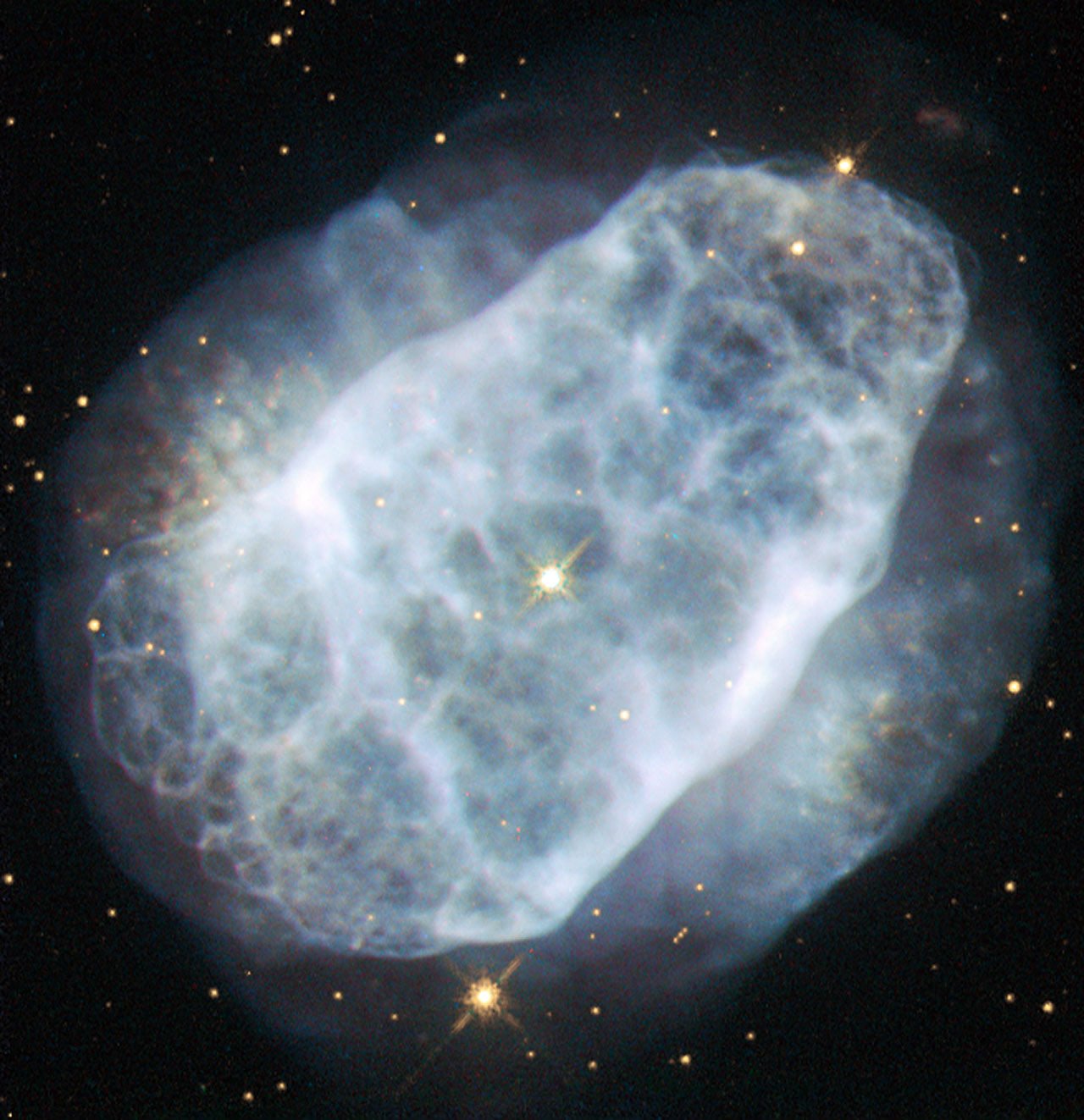
    Hubble Views Nitrogen-Rich Nebula
    NGC 6153 is located about 4,000 light-years away in the southern constellation of Scorpius. Credit: ESA/Hubble & NASA, Acknowledgment: Matej Novak

    This newly released Hubble image shows planetary nebula NGC 6153, which is located about 4,000 light-years away in the southern constellation of Scorpius.

    The faint blue haze across the frame shows what remains of a star like the sun after it has depleted most of its fuel. When this happens, the outer layers of the star are ejected, and get excited and ionized by the energetic ultraviolet light emitted by the bright hot core of the star, forming the nebula.

    NGC 6153 is a planetary nebula that is elliptical in shape, with an extremely rich network of loops and filaments, shown clearly in this Hubble image. However, this is not what makes this planetary nebula so interesting for astronomers.

    Measurements show that NGC 6153 contains large amounts of neon, argon, oxygen, carbon, and chlorine — up to three times more than can be found in the solar system. The nebula contains a whopping five times more nitrogen than our sun! Although it may be that the star developed higher levels of these elements as it grew and evolved, it is more likely that the star originally formed from a cloud of material that already contained a lot more of these elements.

    Never miss a breakthrough: Join the SciTechDaily newsletter.
    Follow us on Google and Google News.

    Astronomy Hubble Space Telescope Nebula
    Share. Facebook Twitter Pinterest LinkedIn Email Reddit

    Related Articles

    Tour Stunning Hubble Images of Incredible Nebulae in This New NASA Video

    ESA Image of the Week: Butterfly Emerges From Stellar Demise of NGC 6302

    Astronomers Discover Water-Building Molecule in Planetary Nebulas

    Hubble Image of the Day: The Sharpest View of the Orion Nebula

    Astronomers Find Bizarre Alignment of Planetary Nebulae in the Milky Way

    Hubble Views Planetary Nebula IC 289

    A Closer Look at Planetary Nebula NGC 2392

    Images of the Necklace Nebula

    Hubble’s Close-Up View of the Tarantula Nebula

    1 Comment

    1. katesisco on June 26, 2015 12:51 pm

      actually, doesn’t it sort of look like how our Oort shell is depicted?
      A large torus-like center ring inside a sphere?
      What if we have it backwards, that the red giant sun implodes, creates a plantary nebula with a smaller magnetar sun left inside, and the rocky planets are leftovers?

      Reply
    Leave A Reply Cancel Reply

    • Facebook
    • Twitter
    • Pinterest
    • YouTube

    Don't Miss a Discovery

    Subscribe for the Latest in Science & Tech!

    Trending News

    Don’t Miss: A Brilliant Venus and Glowing Harvest Moon Light Up the Sky

    New Twist on the Einstein Problem Reveals Unexpected Physics

    JWST Captures Stunning Evidence of How Supermassive Black Holes Feed

    Early Exercise May Permanently Change How Much Energy the Body Uses To Move

    New Molecule Wipes Out Aggressive Lymphoma Tumors in Mice in Just 11 Days

    The Human Family Tree May Need a Major Rewrite

    Scientists Find a Surprising Cancer-Fighting Effect in Dark Sweet Cherries

    New AI Detects Hidden Warning Signs of Solar Eruptions Hours Before They Emerge

    Follow SciTechDaily
    • Facebook
    • Twitter
    • YouTube
    • Pinterest
    • Newsletter
    • RSS
    SciTech News
    • Biology News
    • Chemistry News
    • Earth News
    • Health News
    • Physics News
    • Science News
    • Space News
    • Technology News
    Recent Posts
    • Pomegranates Could Unlock a New Treatment for Heart Failure
    • Africa’s Giant Herbivores Were Disappearing Millions of Years Before Humans Could Hunt Them
    • This Utah Mountain Is Hiding Enough Ice To Fill 600 Olympic Pools
    • Vagus Nerve Stimulation Could Unlock the Brain’s Hidden Learning Potential
    • Your Mother’s Age May Leave a Biological Mark That Lasts for Generations
    Copyright © 1998 - 2026 SciTechDaily. All Rights Reserved.
    • Science News
    • About
    • Contact
    • Editorial Board
    • Privacy Policy
    • Terms of Use

    Type above and press Enter to search. Press Esc to cancel.