
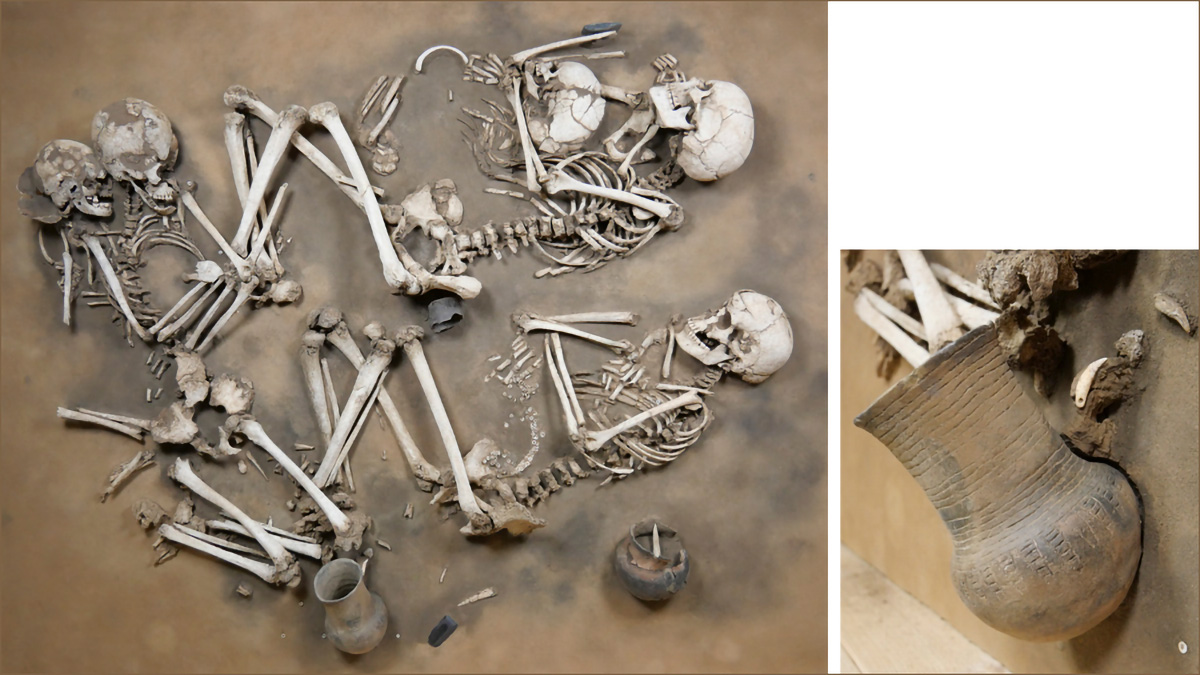
Research analyzing pottery fat residues from Central Europe shows dietary shifts over 4,000 years, linking changes in pottery styles and uses with evolving culinary preferences from dairy to pork and vice versa.
The first societies that produced agriculture and pottery emerged in Central Europe around 7,500 years ago, marked by the spread of the Early Neolithic Linear Pottery Culture. Over the ensuing millennia, this region saw the development of remarkable cultural diversity, leading to a variety of pottery styles and decorative techniques. While archaeologists have traditionally focused on studying these pottery types and decorations to distinguish between prehistoric cultures, the investigation into the contents and functions of these pottery items has been relatively limited.
In a groundbreaking study recently published in the journal PLOS ONE, scientists from the Universitat Autònoma de Barcelona (UAB) and the State Office for Heritage Management and Archaeology (LDA) of Saxony-Anhalt explored the culinary traditions of central Germany between the Early Neolithic and the Late Bronze Age (dating back 3,500 to 7,500 years), and cultural relations with changes in pottery styles and decorations. Within Central Europe, central Germany is one of the regions with the most pronounced prehistoric cultural diversity, due to the rich agricultural soils of the loess zone and other natural resources such as salt, which attracted people to settle there early on.
The study analyzed fat residues trapped in a set of 124 pottery vessels of different shapes and sizes, with samples originating from graves and settlements, and conserved in the State Museum of Prehistory in Halle. The analyses allowed researchers to distinguish residual fats derived from milk, ruminant, and non-ruminant animals, as well as of marine or plant origin. The samples analyzed in this study make up the biggest archaeological data series for Germany so far.
Results reveal a variety of changes in the use of pottery and food preparation during this period, as well as complex relations these prehistoric populations established with food resources and the main means to cook, store, and eat them.
“This has allowed us to see how specific culinary practices and tastes for different ways of cooking with pottery were developed, a diversity that would be very difficult to detect using other archaeological indicators,” states Adrià Breu, a researcher at the UAB Department of Prehistory and first author of the article. “Although livestock populations, dominated mainly by cows and to a lesser extent by goats, sheep, and pigs, remained stable over time, the consumption of animal products changed substantially during the period we studied,” he added.
From dairy in cups to plates with pig-derived fats
The results show that in the Middle Neolithic period, some 5,500 years ago and coinciding with the Baalberge culture, came the first signs in the region of a generalized consumption of dairy products. This dietary change was linked to the creation of small cups and handled amphorae. The former would have been used to scoop milk products from other larger vessels frequently found in the settlements. This would be the first known case of prehistoric cups having a specialized use.
“It is easy to imagine that in this period milk and its derivatives, cream, butter, cheese, and yogurt, were highly valued, and a tradition of drinking or eating them in such characteristic cups would have developed, similar to how we have breakfast cups,” explains Adrià Breu.
At the end of the Neolithic, 4,500 years ago, substantial changes occurred in the shapes and decorations of these cups, amphorae, and vessels which gave name to the Corded Ware Culture arriving from the Eurasian Steppe. The analyses detected that these types of pottery, particularly the double-handled amphorae, contained new marked culinary preferences for pig, with dairy products falling into the background. This change surprised researchers, since it was not accompanied by an increase in the population of pigs, and reinforces the idea of this animal’s social value.
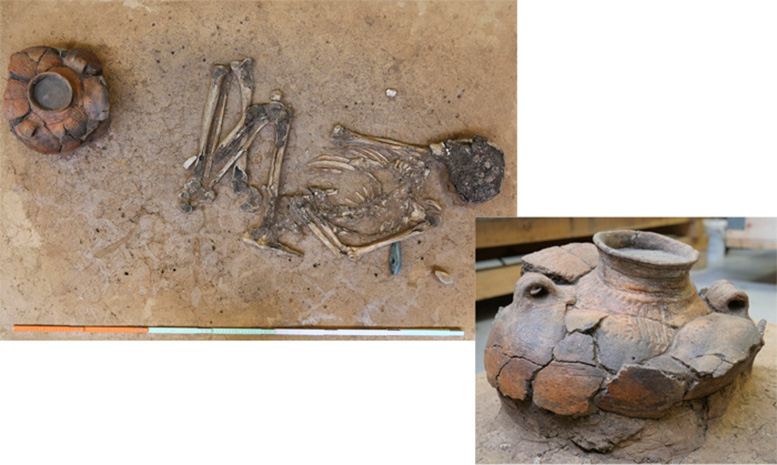
The analysis of corded ware vessels also challenges previous considerations. “The contents show that milk-derived food sources were not as important as expected among the populations arriving from Eastern Europe, which were considered to be pastoral nomads, nor does it confirm that the vessels were used for drinking beer, as has been previously claimed,” explains Roberto Risch, a researcher at the UAB and co-author of the study.
The intensive use of dairy products continued particularly amongst the Bell Beaker populations, who did not seem to have the same preference for pork. The use of carinated beakers to store and serve dairy products was particularly common in burials near the circular enclosure of Pömmelte. The majority of tombs presented one single drinking vessel as a grave good, in what would have been a specific funeral rite of this archaeological site.
A varied diet in standardized and multifunctional vessels
At the beginning of the Bronze Age, 4,000 years ago, the food of the Unetice culture was characterized by a greater variety of animal and plant products. Despite already having horses, this culture maintained a taste for pork but abandoned the tradition of consuming milk in small cups.
Unetice was one of the first state-structured societies in Europe, along with El Argar in the Iberian Peninsula. Highly hierarchical, with powerful masters of time who encoded astronomical knowledge in the Nebra Sky Disc, they developed specialized crafts, such as earthenware. The consumption of food was produced in standardized and multifunctional vessels.
“However, this increased standardization was not a response to a more specialized use; on the contrary, the same cups, such as the typical carinated beakers, were used to prepare and consume foods related to a wide variety of fats, perhaps in an attempt to appear equal in a society that was becoming increasingly unequal,” explains Roberto Risch.
In sum, the study demonstrates how combining fat residue analysis with more conventional contextual and typological studies of ceramics can reveal complex realities of changing culinary attitudes and practices that would otherwise be missed by other dietary indicators. “The complex trends detected in this work merit the development of future studies that include a larger number of samples from each period,” researchers conclude.
Reference: “Pottery spilled the beans: Patterns in the processing and consumption of dietary lipids in Central Germany from the Early Neolithic to the Bronze Age” by Adrià Breu, Roberto Risch, Elena Molina, Susanne Friederich, Harald Meller and Franziska Knoll, 16 May 2024, PLOS ONE.
DOI: 10.1371/journal.pone.0301278
Never miss a breakthrough: Join the SciTechDaily newsletter.
Follow us on Google and Google News.
1 Comment
much to the chagrin of paleo and carnivore dieters, vegans and vegetarians: as long back as we can see, humans have been omnivores.