
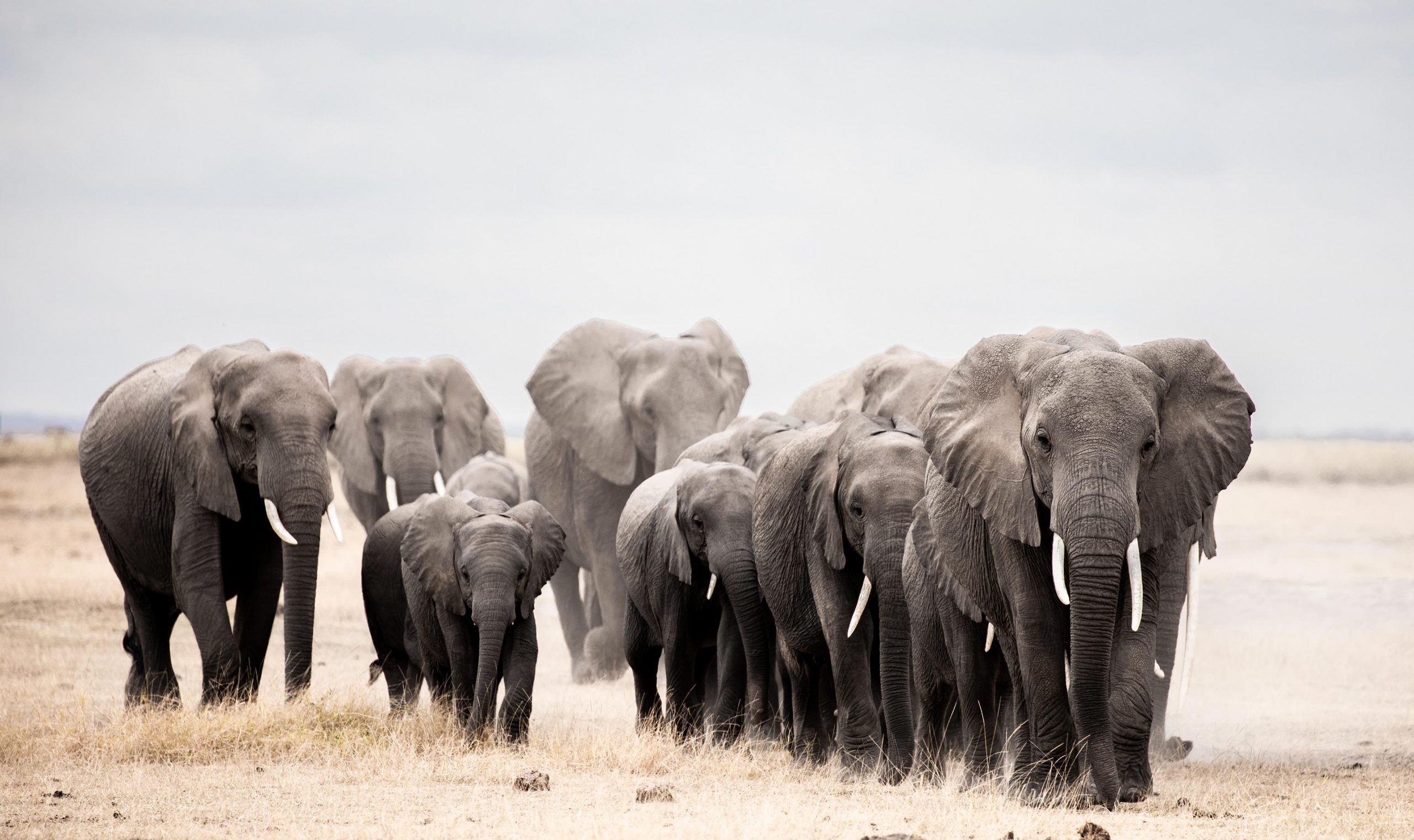
African Elephants Only Occupy a Fraction of Their Potential Range
Many wildlife species are threatened by shrinking habitat. But according to new research, the potential range of African elephants could be more than five times larger than its current extent.
Due to 2,000 years of human pressure, African elephants have suffered dramatic population declines, and their range has shrunk to just 17% of what it could be, say researchers who led the new study published April 1, 2021, in Current Biology.
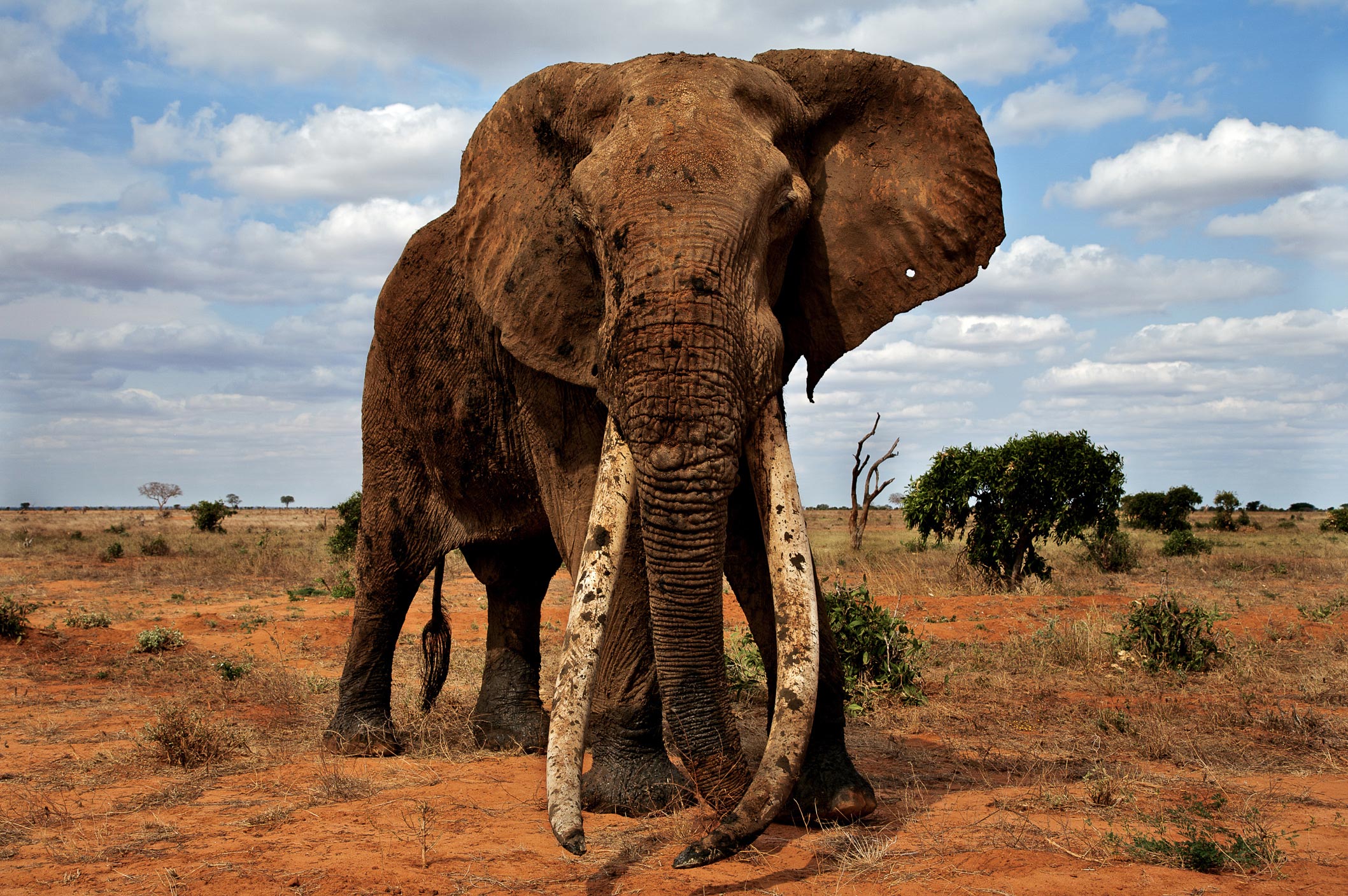
The dramatic reduction in range is due to poachers who kill elephants for their ivory and humans encroaching into elephant habitats. Evidence for elephants being drastically reduced in certain regions by the trade in tusks goes back to ancient Rome but reached new levels from the 17th century with the arrival of European traders and colonizers in Africa who fed the demand for ivory. Ivory poaching remains a critical threat to elephants, driving declines across Africa over the past decade.
If released from the threat, elephants still have great potential for recovery into areas where the human footprint is minimal.
“If we can turn the corner and stem the continued declines of elephants in Africa, this work highlights the enormous potential to expand elephant distribution and numbers in their natural habitats across Africa,” said Wittemyer. “It is conceivable that we will be undertaking ambitious efforts to rewild elephants to suitable habitats identified in this work in the near future.”
The study found that 62% of Africa, an area of over 18 million square kilometers – larger than Russia – still has suitable habitat for elephants. This huge zone includes areas where there is still room for peaceful coexistence between humans and elephants, and where they could potentially live but where conflict with people may make it unrealistic.
Satellite, GPS Devices Helped Researchers Track Elephants’ Movements
The team used data from GPS tracking collars and satellite imagery to investigate where elephants roam and why. By looking at the extremes of where modern-day elephants live, they learned where elephants had the potential to live today.
“We looked at every square kilometer of the continent,” said Jake Wall, the study’s lead author and director of research and conservation at the Mara Elephant Project in Kenya. “We found 62% of those 29.2 million square kilometers is suitable habitat.”
To analyze how acceptable the habitats might be over the entire continent at a kilometer-level scale, Wall and his colleagues drew on data from GPS tracking collars fitted to 229 elephants across Africa by Save the Elephants and its partners over a 15-year period.
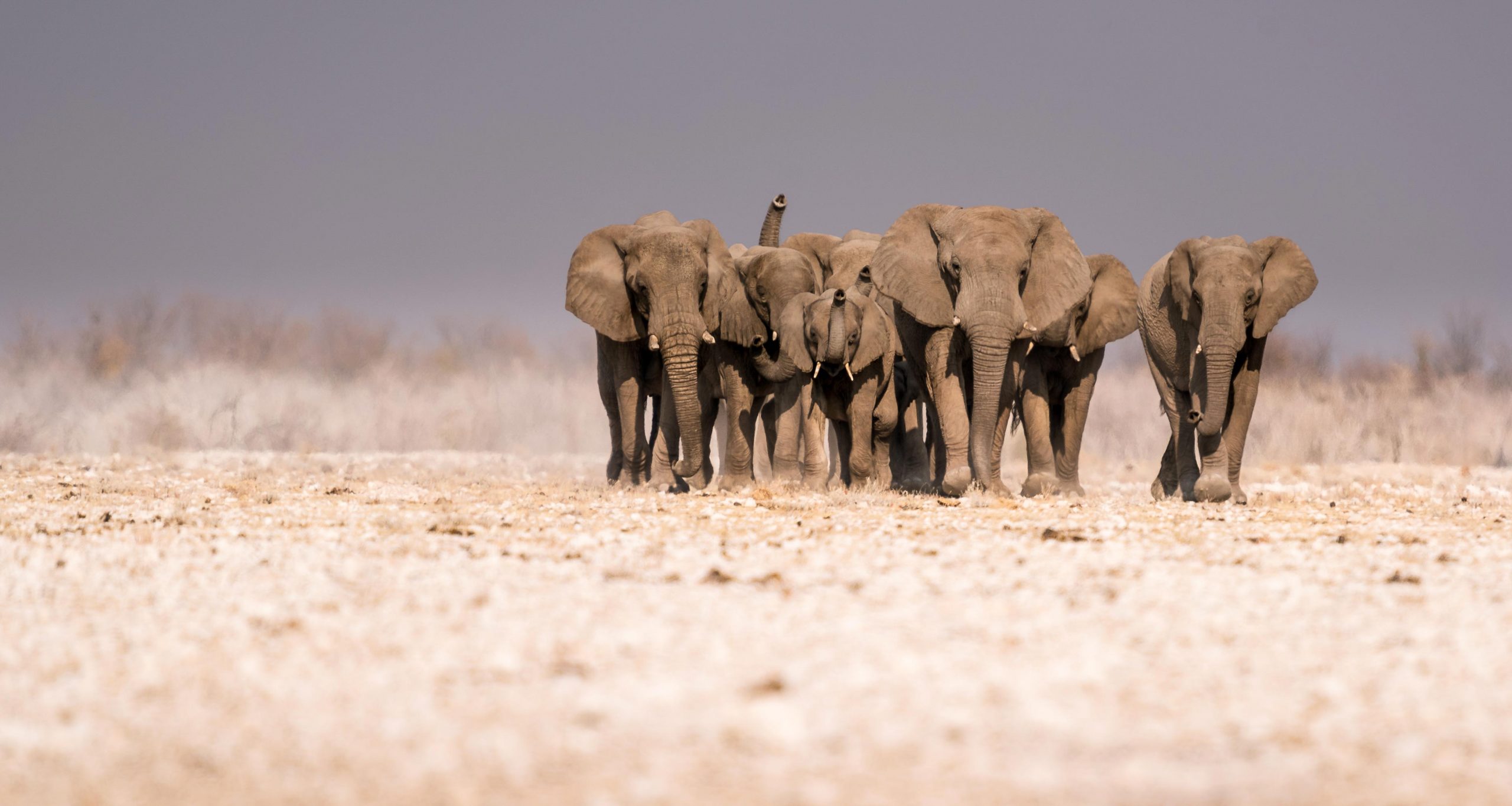
Using Google Earth Engine, a satellite-imagery computing platform, the researchers examined the vegetation, tree cover, surface temperature, rainfall, water, slope, aggregate human influence, and protected areas in the areas the elephants traversed. This allowed them to determine which habitats can support elephants and the extreme conditions that they currently can tolerate.
In the future, the research team aims to further refine the model with regard to the density of human impact that is viable for coexistence between people and elephants and to include the connectivity of habitat to other areas of elephant range.
Where They Roam, and Where They Do Not
The large swaths of potential habitat include the Central African Republic and the Democratic Republic of Congo, whose forests recently held hundreds of thousands of elephants but today hold only an estimated 10,000 animals at most.
The study also highlighted the extreme habitats that African elephants do not visit.
“The major no-go areas include the Sahara, Danakil, and Kalahari deserts, as well as urban centers and high mountaintops,” said Iain Douglas-Hamilton, the founder of Save the Elephants. “That gives us an idea of what the former range of elephants might have been. However, there’s a dearth of information about the status of African elephants between the end of Roman times and the arrival of the first European colonizers.”
Adult elephants’ main predators in the wild are people and elephants avoid humans by staying as far from human activity and influence as possible, which is usually in protected areas.
“Elephants are quick to recognize danger and find safer areas,” said Douglas-Hamilton.
The tracking data reveals that elephants living in protected areas tend to have smaller home ranges, probably because they feel unsafe ranging into unprotected lands.
The study found that 57% of current elephant range is outside of protected areas, highlighting the limited space presently reserved for their safety. To secure the long-term survival of elephants, habitat protection, protection of elephants themselves from illegal killing and an ethic of human-elephant coexistence will be essential.
“Elephants are generalist mega-herbivores that can occupy fringe habitats,” Wall said. “Their range may have shrunk, but if we gave them the chance, they could spread back to former parts of it.”
Reference: “Human footprint and protected areas shape elephant range across Africa” by Jake Wall, George Wittemyer, Brian Klinkenberg, Valerie LeMay, Stephen Blake, Samantha Strindberg, Michelle Henley, Fritz Vollrath, Fiona Maisels, Jelle Ferwerda and Iain Douglas-Hamilton, 1 April 2021, Current Biology.
DOI: 10.1016/j.cub.2021.03.042
The work was coordinated by Save the Elephants and included researchers from Colorado State University, Mara Elephant Project, the University of British Columbia, Oxford University, the Wildlife Conservation Society, the University of Stirling and Elephants Alive. George Wittemyer, professor at CSU, serves as chair of the scientific board of Save the Elephants.
Never miss a breakthrough: Join the SciTechDaily newsletter.
Follow us on Google and Google News.
2 Comments
… Ivory Trade should have been eliminated years ago, but we are still stuck with this story…
Humans should stop poaching more elephants for ivory and hunting them for trophies! Killing elephants is not very nice or fun to do that! It’s cruel and mean!In future, we should order conservationists around the world to help build elephant breeding centers so we can breed more elephants to rebuild their populations and to protect these beautiful creatures! If you don’t sort it out right now, they’ll sadly go extinct and we don’t want anymore trophy hunting and ivory poaching again. Ivory markets and Trophy hunting on elephants should be banned forever! And it mustn’t happen again!