
Close Menu
    Facebook X (Twitter) Instagram
    SciTechDaily
    • Biology
    • Chemistry
    • Earth
    • Health
    • Physics
    • Science
    • Space
    • Technology
    Facebook X (Twitter) Pinterest YouTube RSS
    SciTechDaily
    Home»Biology»Predicting the Next Pandemic Virus Is Harder Than We Think – Here’s Why
    Biology

    Predicting the Next Pandemic Virus Is Harder Than We Think – Here’s Why

    By PLOSApril 20, 2021No Comments3 Mins Read
    Facebook Twitter Pinterest Telegram LinkedIn WhatsApp Email Reddit
    Share
    Facebook Twitter LinkedIn Pinterest Telegram Email Reddit
    Virus Pandemic
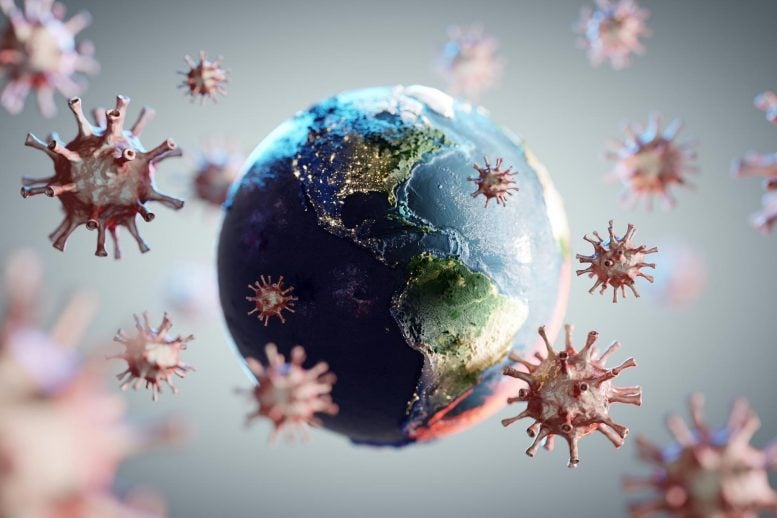
    Extensive sampling of animals and humans at the animal-human interface allows for early detection of novel viruses before they lead to pandemics. Such enhanced surveillance may help us prevent something like COVID-19 from ever happening again.

    Predicting the next pandemic virus is unreliable; scientists urge real-time surveillance where humans and animals interact to catch threats early.

    The observation that most of the viruses that cause human disease come from other animals has led some researchers to attempt “zoonotic risk prediction” to second-guess the next virus to hit us. However, in an Essay publishing today (April 20th, 2021) in the open access journal PLOS Biology, led by Dr. Michelle Wille at the University of Sydney, Australia with co-authors Jemma Geoghegan and Edward Holmes, it is proposed that these zoonotic risk predictions are of limited value and will not tell us which virus will cause the next pandemic. Instead, we should target the human-animal interface for intensive viral surveillance.

    Zoonotic Origins of COVID-19 Highlight Prediction Limitations

    So-called zoonotic viruses have caused epidemics and pandemics in humans for centuries. This is exactly what is occurring today with the COVID-19 pandemic: the novel coronavirus responsible for this disease — SARS-CoV-2 — emerged from an animal species, although exactly which species is uncertain.

    Therefore, a key question is whether we can predict which animal or which virus group will most likely cause the next pandemic? This has led researchers to attempt “zoonotic risk prediction,” in which they attempt to determine which virus families and host groups are most likely to carry potential zoonotic and/or pandemic viruses.

    Dr. Wille and her colleagues identify several key problems with zoonotic risk prediction attempts.

    First, they’re based on tiny data sets. Despite decades of work, we have probably identified less than 0.001% of all viruses, even from the mammalian species from which the next pandemic virus will likely emerge.

    Viruses Are Evolving Faster Than We Can Track Them

    Second, these data are also highly biased towards those viruses that most infect humans or agricultural animals, or are already known to be zoonotic. The reality is that most animals have not been surveyed for viruses, and that viruses evolve so quickly that any such surveys will soon be out of date and so of limited value.

    The authors instead argue that a new approach is needed, involving the extensive sampling of animals and humans at the places where they interact — the animal-human interface. This will enable novel viruses to be detected as soon as they appear in humans and before they establish pandemics. Such enhanced surveillance may help us prevent something like COVID-19 from ever happening again.

    Reference: “How accurately can we assess zoonotic risk?” by Michelle Wille, Jemma L. Geoghegan and Edward C. Holmes, 20 April 2021, PLOS Biology.
    DOI: 10.1371/journal.pbio.3001135

    Funding: E.C.H. is funded by an Australian Research Council Australian Laureate Fellowship (FL170100022). M.W. is supported by an Australian Research Council Discovery Early Career Researcher Award (DE200100977). The funders had no role in study design, data collection and analysis, decision to publish, or preparation of the manuscript.

    Never miss a breakthrough: Join the SciTechDaily newsletter.
    Follow us on Google and Google News.

    Biodiversity Bioinformatics Ecology Evolution PLOS Popular Public Health Virology
    Share. Facebook Twitter Pinterest LinkedIn Email Reddit

    Related Articles

    A Perilously “Profound Ignorance” – As Plant/Animal Diversity Wanes, Is Microbial Life Changing Too?

    New Research Finds SARS-CoV-2 (the Virus That Causes COVID-19) Jumped From Bats to Humans Without Much Change

    Climate Change May Have Driven the Emergence of SARS-CoV-2, the Virus That Caused the COVID-19 Pandemic

    Remarkable New Species of Snake Found Hidden in a Biodiversity Collection – Occupies Its Own Branch on Snake Tree of Life

    Artificial Intelligence Discovers Surprising Patterns in Earth’s Biological Mass Extinctions

    Timeline Unveiled for One of the Most Important and Puzzling Events in the Evolution of Life

    Understanding Species Coexistence Through Mathematics

    Wild Animals Lose Fear of Predators Quickly After They Start Encountering Humans

    Different Groups of Bats Have Their Own Unique Strains of Coronavirus – They Have Been Evolving Together for Millions of Years

    Leave A Reply Cancel Reply

    • Facebook
    • Twitter
    • Pinterest
    • YouTube

    Don't Miss a Discovery

    Subscribe for the Latest in Science & Tech!

    Trending News

    JWST Finds a “Star” 100 Billion Times Brighter Than Any Star Should Be

    Scientists Find a Hidden Biological Link Across Different Forms of Autism

    Astronomers Discover a Ghostly River of Stars That Could Reveal Dark Matter

    Why Is Colorectal Cancer Rising in People Under 50? New Clues Point to the Environment

    Quantum Fluctuations Break a Crystal’s Symmetry Rules

    Why Does an Irregular Heartbeat Strike 40 Years Early in Some People?

    Scientists Reveal How ADHD Could Fuel Creative Thinking

    Scientists Find Just 3 Minutes of Sprinting Can Transform Blood Chemistry

    Follow SciTechDaily
    • Facebook
    • Twitter
    • YouTube
    • Pinterest
    • Newsletter
    • RSS
    SciTech News
    • Biology News
    • Chemistry News
    • Earth News
    • Health News
    • Physics News
    • Science News
    • Space News
    • Technology News
    Recent Posts
    • Common Vape Flavor May Disrupt Early Human Development
    • Ultra-Processed Foods Linked to 30% Higher Prostate Cancer Risk
    • More Screen Time, Better Thinking? An 8-Year Study Finds a Surprising Link
    • A Vast Clean Energy Source May Be Hiding Beneath Australia’s Red Soil
    • Scientists Uncover Signs of an Ancient Climate “Tipping Point”
    Copyright © 1998 - 2026 SciTechDaily. All Rights Reserved.
    • Science News
    • About
    • Contact
    • Editorial Board
    • Privacy Policy
    • Terms of Use

    Type above and press Enter to search. Press Esc to cancel.