
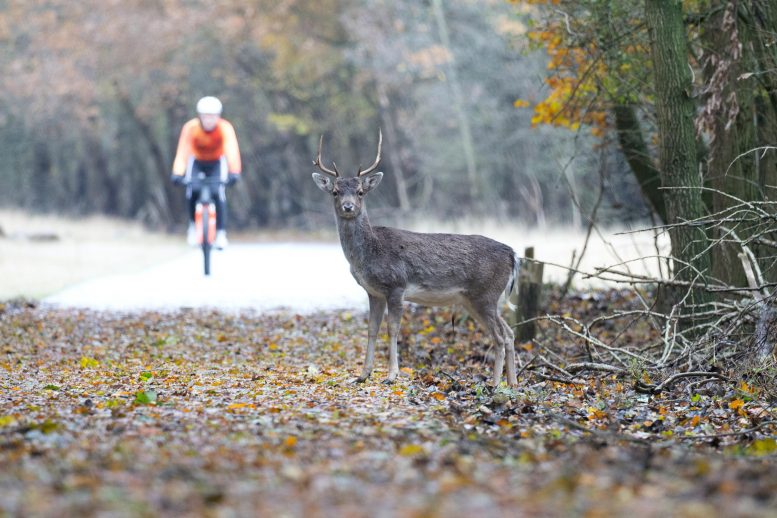
Most wild animals show a suite of predator avoidance behaviors such as vigilance, freezing, and fleeing. But these are quickly reduced after the animals come into contact with humans through captivity, domestication, or urbanization, according to a study led by Benjamin Geffroy from MARBEC (Institute of Marine Biodiversity, Exploitation and Conservation), published on September 22, 2020, in the open-access journal PLOS Biology.
The international team of researchers analyzed the results of 173 peer-reviewed studies investigating antipredator traits (behavioral and physiological) in 102 species of domesticated, captive, and urbanized mammals, birds, reptiles, fish, and molluscs, while taking into account their position in the Tree of Life.
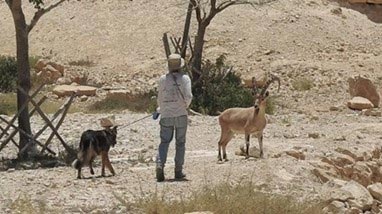
The scientists found that contact with humans led to a rapid loss of animals antipredator traits, but simultaneously the variability between individuals initially increases and then gradually decreases over the generations in contact with humans. The authors suppose that this two-step process is caused by reduced pressure from natural selection as a result of living in a safer environment, followed by artificial selection by humans for docility in the case of domestication.
Animals showed immediate changes in antipredator responses in the first generation after contact with humans, suggesting that the initial response is a result of behavioral flexibility, which may later be accompanied by genetic changes if contact continues over many generations. The researchers also found that domestication altered animal antipredator responses three times faster than urbanization, while captivity resulted in the slowest changes. The results also showed that herbivores changed behavior more rapidly than carnivores and that solitary species tended to change quicker than group-living animals.
The study demonstrates that domestication and urbanization exert similar pressures on animals and can result in rapid behavioral changes. The loss of anti-predator behaviors can cause problems when those domesticated or urbanized species encounter predators or when captive animals are released back into the wild. Understanding how animals respond to contact with humans has important implications for conservation and urban planning, captive breed programs, and livestock management.
Dr. Geffroy adds “While it is well known that the fact of being protected by humans decreases antipredator capacities in animals, we did not know how fast this occurs and to what extent this is comparable between contexts! We also integrated physiological traits in the study but they were much less numerous than behavioral traits. We believe they should be systematically investigated to draw a global pattern of what is happening at the individual level. We need more data to understand whether this occurs also with the mere presence of tourists.”
Reference: “Evolutionary dynamics in the Anthropocene: Life history and intensity of human contact shape antipredator responses” by Benjamin Geffroy, Bastien Sadoul, Breanna J. Putman, Oded Berger-Tal, László Zsolt Garamszegi, Anders Pape Møller and Daniel T. Blumstein, 22 September 2020, PLOS Biology.
DOI: 10.1371/journal.pbio.3000818
Funding: DTB is supported by the National Science Foundation and the Australian Research Council. But the funders had no role in study design, data collection and analysis, decision to publish, or preparation of the manuscript.
Never miss a breakthrough: Join the SciTechDaily newsletter.
Follow us on Google and Google News.